[00:00:05] Speaker A: Yoga is stillness.
[00:00:09] Speaker B: Yoga is self awareness.
[00:00:13] Speaker A: Yoga is time tested.
[00:00:18] Speaker B: Yoga is unity.
[00:00:22] Speaker A: Yoga is secular.
[00:00:26] Speaker B: Yoga is evolution.
[00:00:30] Speaker A: Yoga is spiritual.
[00:00:34] Speaker B: Yoga is
[00:00:37] Speaker C: connection, presence and calm.
This is yoga scushion.
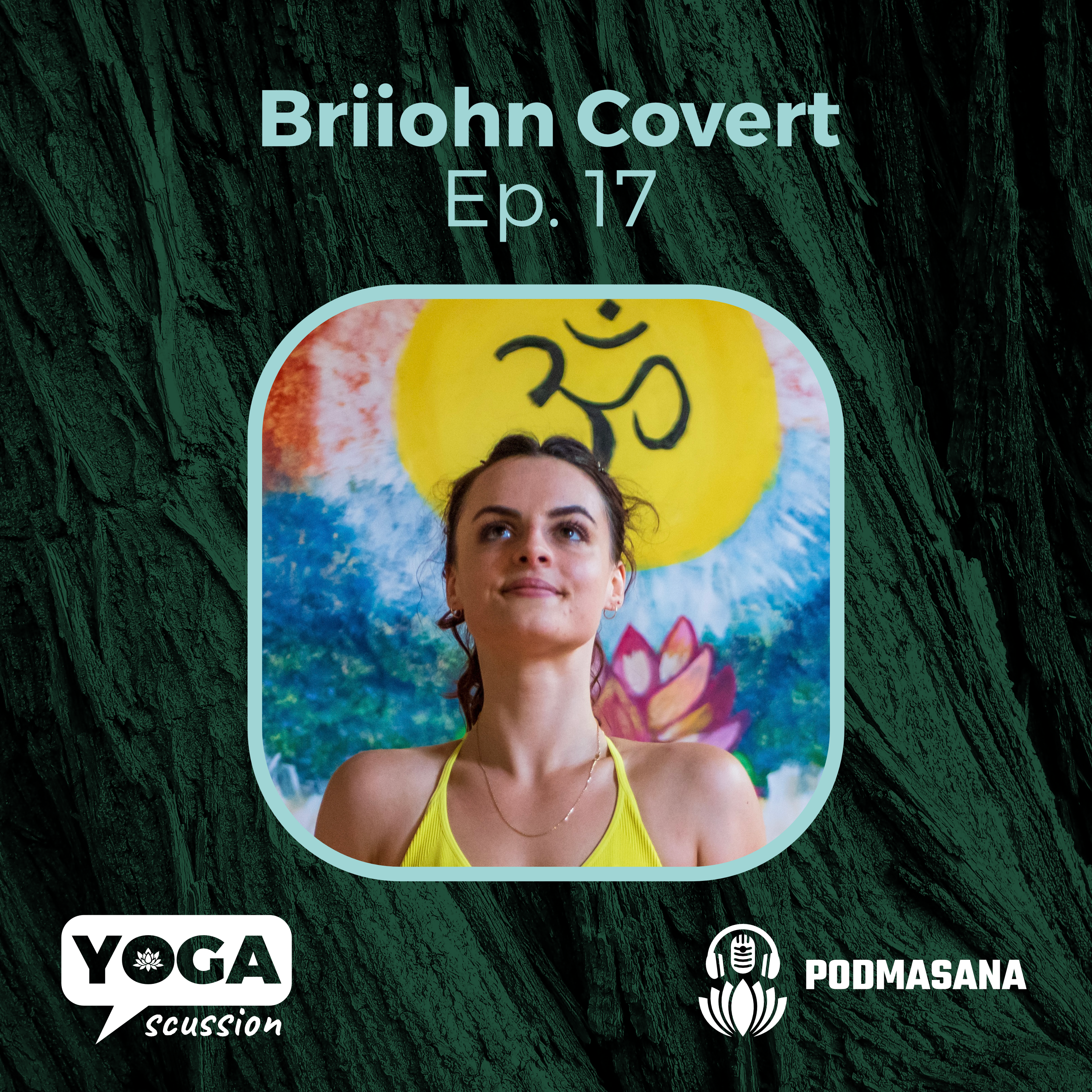
[00:00:45] Speaker B: All right, Gina, we've got a great guest on today's Yoga scution. We have Brian Covert, who I met at a studio in Kansas City. And Brion is just this great combination of embodied silence and grace and genuine bubbly happiness. And she's another teacher, and it's just been great to get to know her.
And I think we're just gonna have a great discussion today about her background, how she came to yoga and where she's going with her teaching career.
[00:01:21] Speaker A: Great. I'm so looking forward to it.
[00:01:24] Speaker C: Hi.
[00:01:25] Speaker B: Hey, Brianne.
[00:01:27] Speaker C: What's up?
Hey, Deanna. Nice to meet you.
[00:01:32] Speaker A: Nice to meet you too.
[00:01:33] Speaker C: Brianne.
[00:01:33] Speaker A: I love your name. It's so beautiful.
[00:01:36] Speaker C: Thank you.
[00:01:38] Speaker B: Yeah, so we really. It's great to have you on. I was just telling Gina that, you know, if I was describing Brianne, it would be like this wonderful combination of like, embodied silence, grace, and genuine bubbliness. What do you think? What do you think of that? Take Brianne, Is that apt?
Yeah.
[00:01:57] Speaker C: Oh, that is so nice. Yeah, the silence, grace. Yeah. Like, one of my favorite compliments is people telling me I'm calm or, like, calming to be around. So that's so nice.
But, yeah, I try to stay bubbly too. I feel like that's my disposition.
[00:02:12] Speaker B: Yeah, yeah, yeah. And so, you know, what we like to do a lot of the time on yoga discussion is just give the guests an opportunity to talk about, you know, do they recall the first yoga class? You know, do they recall that moment where teaching is what interested them or pulled them? Could you maybe speak to that a little bit? Some of those early yoga experiences and how you got to the point where teaching was something you wanted to do?
[00:02:35] Speaker C: Well, I would say it probably the wanting to teach didn't come until probably about like, eight years of practicing yoga. My first yoga class, I was brought to a yoga class and I felt like since I was brought to yoga, it just kind of kept coming back to me in little ways throughout those eight years, like, whenever I first was drawn to yoga, I wanted, like, a gentle workout, basically. Like, I wasn't super into sports or like, having an extreme, like, loading the body with too much, like, hard exercise to push myself too much. And so yoga was a really good way to like, oh, this feels good for my body. And I know it's actually doing something good. And then I would say the wanting to teach yoga. I found a really good yoga teacher on YouTube that I liked a lot. Her name's Helen with Floating Yoga. Floating Yoga School. Through those, like, through doing those videos consistently, I started noticing how my perception outside of the classes was changing and how it was helping me. Like the off the mat. Whenever people talk about how you're acting off the mat, I noticed that, like, had a lot more stability and calmness and less of like a knee jerk reaction to things. Even just like, like driving or road rage or something. That's where I noticed it the strongest. First was I used to just be so, so angry and, like, scrunched up while I was driving through rush hour traffic every single day. And then, like, I realized, oh, why am I having this strong reaction, letting these emotions come out of me that don't really, aren't really necessary. They're based purely on perception. And so, like, through changing my perception and then dealing with some stronger, like, darker mental illness and like, boredom phases of my life, that I was like, oh, yoga is the one thing that's really kept me coming back. Like, in the beginning, it felt like it was coming back to me, and then it felt like I kept coming back to yoga. So basically I was like, I want to spread this with as many people as possible because it's making me feel so good throughout all these areas of my life.
[00:05:05] Speaker B: Boy, we can identify with that, right, Gina?
[00:05:07] Speaker A: I sure can. Especially the part where you're talking about the darker times, like, oh, it's so helpful for that. But you don't. It's so sneaky too, because it's like you don't really notice that it's helping you while it's helping you until you kind of just. It's like a snap one day. It's like, oh, yoga's actually making my mind not so such a scary place to be.
[00:05:32] Speaker C: Yeah, a hundred percent.
[00:05:35] Speaker A: Yeah. And the perception thing, like what you nail, you nailed that so well, like, perception. And even in, even in, like the mental health stuff, it's like my internal perception is not always correct, you know, and sometimes just getting on my yoga mat and doing some yoga, it's like, oh, I can see where I might be, like, going down a path of thinking. That's like, not true.
[00:06:01] Speaker C: Yeah. You know, it's literally like seeing that, like, light, like you're in all this darkness and then you're suddenly doing your yoga and you're in a meditative state state, and you're like, now I'm being truly present. Oh, like this light that's coming in now is abundant. And it's not just. Just for this one moment. It can be for any moment of my life, too.
Yeah. And so I really dealt with that, like, darkness throughout the pandemic, like, I'm sure a lot of us did.
I got laid off pretty early on because the company I was working for was based in Hong Kong. And so they were like, in November 2019, like, before it really hit in the States in the next March, they were like, no, we're shutting down, and they laid everyone off. And so after I got laid off, like, I was in this very, like, dark. Like, I don't know what to do with my life. And it felt, like, very overwhelming. But throughout that darkness, like, I was still doing the asana practice every day. I would say I didn't get really deeper into, like, the, like, yoga philosophy and, like, deeper concepts, but I was still doing yoga every day and noticing how much it was affecting my mental health still. And at that point, when I didn't have a job, I was like, I want to teach yoga so bad. Like, if I could just figure out how. But I had no idea about teacher training or, like, how you audition at a studio or anything, because I was coming from an accounting world, and I was like, I don't know what training is. Like, I.
I, like, basically just kept doing yoga. And then once I finally went to a studio, that's when I was introduced to, like, oh, they have actual teacher trainings and things like that.
[00:07:51] Speaker B: Yeah, well, learning during the pandemic is really interesting, too. Or going through a teacher training program. Do I understand that correctly, that you'd gone through teacher training during the pandemic
[00:08:02] Speaker C: or it was just out of the pandemic, but it was about 2022 whenever I went through teacher training.
Yeah.
[00:08:11] Speaker B: Yeah.
And you have this background, right, with kind of the back pain. You know, you touch on this in your. Your bio, and how that pain maybe kind of led to a certain sense of disconnection with your body. I'm wondering, you know, was there either a first moment where you were realizing that this practice wasn't just managing pain, but helping it, helping you maybe connect deeper along with it, helping to manage the pain. Could you maybe speak to those experiences a little bit? Brion?
[00:08:40] Speaker C: Yeah.
So the back pain first was coming from having scoliosis. Like, I have a small case of that, but it would just hurt so bad. Whenever I was, like, laying down in bed, I just could not get comfortable. I'd be, like, tossing and turning all night. So it Wasn't only affecting my back, but it was affecting my sleep too.
And being able to do, like, a more gentle exercise helped with that. And I realized it helped. Like, I noticed the pain went away probably about after three or four months of like, consistent, like three times a week yoga, asana practice. And the pain, I think, like, the actual back pain went away just from movement. Like, there's a really good.
One of my teachers says, like, motion is lotion. And so it felt like that, like continually lotioning the joints in the body over time.
So it slowly went away, but then attached to the pain that I was feeling. I also noticed that I was really trying to separate my mental from my physical.
So, like, I would try to. If there were pain sensations coming up in the body, my mental response was like, ignore. Just push that out.
Disconnect from the body feelings. So, like, what's going on in going to school or going to work, you don't have to constantly be thinking about the pain. We're just gonna straight up disconnect, put the blinders onto it. And obviously whenever the blinders come off, whenever you're trying to just go to sleep at night, and you can't.
You can't actively avoid the pain anymore and distract.
So through doing yoga, like, we talk about body awareness and like the body mind connection all the time. And I think that's really, like, what helped me alleviate pain going forward.
Because through becoming connected with my body more and not having that ignore response, I was able to say, okay, what. What is this telling me about my body? And then what do I need to make it go away?
And it's like, it sounds like such a simple concept. Like, you see a pain response come up in your body and you just help it instead of just ignoring it.
[00:11:09] Speaker B: Yeah.
[00:11:10] Speaker C: But it was a habit that I just had for so long. This, like, disconnection from my body.
[00:11:16] Speaker B: Yeah.
[00:11:17] Speaker C: And I also struggle with endometriosis, which, like, one in four women have these very hard, painful periods. And that was another way that I was trying to disconnect from my body. Like, don't think about the pain.
It's very extreme and intense. But your face has to say that you're happy.
So life goes on.
[00:11:41] Speaker A: Wow.
[00:11:41] Speaker B: That's very honest. Yeah. Gina, I don't know. Do you have any thoughts? Because you could probably connect with a lot of them.
[00:11:46] Speaker C: Yes.
[00:11:47] Speaker A: I mean, so much. Like, so many things came up when you were talking.
[00:11:52] Speaker C: Yeah.
[00:11:52] Speaker A: I mean, I think as a society, we're just like, don't feel, don't be in your body. The body is a problem. The body is an instrument that's always giving you feedback. And we're just mind creatures. And it's like, but we're not. And when you were, when you were talking, I was thinking about how like earlier when you were talking about road rage and reacting and it's like, yeah. And so many things like, come into that. Like we, we're feeling pain all day, but we're disconnected. And then something happens and our reaction becomes really outsized because it's like, oh, wait, I'm actually in deep pain. And I've had a lot of pain in my life. And I mean, for 10 years I was in chronic pain where it was just like I hurt all the time.
And I think the Western civilization's answer to that is just like, yeah, override the body, ignore it, push it down.
What a beautiful thing. When we can come to the body and be like, hey, what do you need? Do you need to sit down? Do you need to lay down? Do you need to put your legs up for a minute and providing yourself with that space and the ability to take movement when you need it. And I think when we don't listen to our pain, we do a lot of gripping and grasping. What do they call it in medical terms? It's splinting. That's what they call it. Your muscles actually splint themselves to the bones. And so that becomes a state that over time can just lead to a lot of rigidity. And I think that's why we have a lot of people who just can't move their backs. I also have scoliosis too.
My back feels so much better when I'm moving it and doing yoga. Like, I just love the message of it. Seems like you've been on this journey of kind of avoidance and then actually like awareness and then like meeting and greeting and welcoming and inviting yourself back to your body. Which is so beautiful because as Western people in a very mind dominated society, we kind of pretend like the body is this like, thing, this problem that we have and that if we could just get rid of it, we'd be okay. And I think it's the opposite. I think it's like if we can get in it, if we can get more into the body, you know, if we can partner with the body, befriend
[00:14:11] Speaker C: it, like, and one of the like big light bulb moments for me, I feel like I saw it. I don't even know where I saw it, but someone made the metaphor, like, why do we imagine the mind as Being like held onto the body by a tether. Like it's actually like the mind is in us. Like the mind is the body. And it's like, why are we acting like there is a separation between the two, you know?
[00:14:40] Speaker A: Yeah, there's a really good book. I can't remember the title correctly but it was written by this guy about back pain and he was a chiropractor and he was. All these people were coming to him with back pain and he was like, I don't see any reason why they have all this back pain. Like there's nothing form wise in their bodies that is making them have all this back pain. So he started asking them about their lives, like, what's going on in your life? And like these people are going through really tough stuff. And so he started asking them in the evenings before they went to bed to like, just write out all this stuff. Just write it out. Just have a notebook that you just write what is driving you nuts, what's making you crazy, what's stressing you out.
And he started to know, notice, Excuse me, he started to notice that their back pain was going away.
And so he started talking about this mind body connection. Like the mind is in the body and when we're, when we're stressed or when we have all of this stuff going on, like mentally, it works its way into our, our cells, you know. And I mean we see in like genetics, like the traumas that our mothers and grandmothers went through actually does change their DNA and they pass it down to us, their offspring. And so I just love that you have come to this organically through your yogic journey. It's, it's awesome.
[00:16:06] Speaker C: Yeah, yeah. And I think what's awesome about it too is it's also like anyone could do like anyone who wants to do this could do it too. It's not like an external, you need something else to do it. It's like a deeper like listening of the self, you know?
[00:16:24] Speaker A: Yeah, yeah.
It's like I think sometimes we read books and hear people's stories and we're like, oh, I couldn't do that or oh, you're special, you're unique and, and you are like, we all are.
[00:16:37] Speaker C: Right.
[00:16:39] Speaker A: But the, the beauty is, is that like, no, we all have everything we need right here. Like right, right here, all of us.
[00:16:46] Speaker C: Yeah, that's that deep wisdom.
[00:16:49] Speaker B: Yeah.
[00:16:50] Speaker A: Yeah.
[00:16:51] Speaker B: Well, and Brianne, you know, you had said earlier that, you know, it took, you know, weeks of committed practice or like months, you know, of commit, of a committed effort and you know, we're kind of touching on it a little bit, but, you know, there's a lot of people who are hesitant to try a yoga practice or adopting it regularly. You know, we've encountered a lot of these people in our respective teaching careers, or they think that however they are is just not good enough to even start. Right. And in your bio, you talk a little bit about how all you had to do was say yes to just showing up for that practice or something along those lines. For listeners or people who may feel, like, stuck or, I guess, skeptical or not patient with this process or a committed practice, how do you think a yoga teacher can help them to kind of trust that showing up is going to. And I'm not talking about results, but showing up is enough, and that maybe creates, like, this domino effect. Could you maybe speak to that a little bit?
[00:17:58] Speaker C: So I do think showing up is enough.
I think, like, if you're breathing, you can do yoga.
That's it. And I think that it's. It seems like I feel like it's my personality to kind of be like, I want to teach whoever is coming to me. And it kind of does have to be, like, an interest from whoever is coming through. But if you're listening to this and you're asking if it's a yes or a no, like, take this as your moment to say yes and try it out. The way that I think the way that the body works is actually, like, a lot simpler than what we can think. Like, if you're looking to get into a yoga practice for help with, like, emotions or, like, grief or a big breakup or something like that, literally, like, the more that you're staying sedentary and the more that you're staying in your restful, like, not doing anything depressed state, you're just exacerbating those.
The. The.
You're, like, making it very easy for your brain to keep producing those anxiety or, like, worry thoughts or, like, questioning thoughts, and then the other side of your brain can, like, once you finally take that step, then you can get out of, like, the restful state that you're in and, like, take action. So basically, what I'm specifically thinking about is breath work itself.
I've been learning a lot about, like, the way that the nose dilates throughout the day, and whenever we're, like, laying down and whenever we're in a state of anxiety or, like, we're more so breathing through the left side of the nostril and airflow is able to make its way to the prefrontal Cortex of the brain. So, so basically, like your body needs movement and it also needs, like, action taken.
And whenever you're give allowing your body to take that action, to show up or like to show up to move or to show up to just breathe, you're giving your body a chance to breathe more through the right side of the nostril, which is giving more airflow to the other side of your brain. That's allowing you to balance out the. Those anxiety thoughts and those worry thoughts. So like, literally, just by taking the action, whether you know it or not, like, your body is going to be able to balance itself out, at least start to.
[00:20:44] Speaker A: Yeah.
[00:20:45] Speaker C: Does that make sense?
[00:20:46] Speaker B: Absolutely.
[00:20:47] Speaker C: Absolutely. I kind of have like, I feel like this is such a question where I have, like so many other thoughts, like, pulling me in different directions for it. But I'm obsessed with this idea right now of like the left side and the right side of the nostril. Like the left nostril, the right side, the right nostril, and like blood flow to the brain.
[00:21:10] Speaker B: Yeah.
And so can you maybe speak a little bit to, like, how your teaching or approach to teaching has maybe evolved as you've continued to do your own learning, like this yoga teaching? I don't. I'm not going to call it a job, but, you know, I mean, this, this choice that we make to do this type of work. You've touched on how, you know, as you grow in your yoga teaching, it's really important to be able to teach to those who show up. You might have a plan for a class and maybe some pieces of that plan remain, but you really are ultimately teaching to those people who show up. Can you maybe speak to how you've drawn from your own learning or experiences and maybe brought that to any of the classes that you teached?
[00:21:54] Speaker C: Yeah, I feel like definitely I have to improvise a little bit whenever people show up.
Yeah.
So I think this is kind of like a question of, like, how do you teach yoga to anyone? Right. Like, anyone who walks in the room, how do you start teaching them?
And there's this really good metaphor that I heard recently where it's like a nice way. Like one idea of a way to teach yoga is you can think of it as if you're looking up at a night sky and you see a lot of really bright stars. And then you see very, very dim stars off in the distance. And the bright stars are like the very easy to grasp concepts in yoga. So, like, moving your body is good for you. We know that most people Know that that's like an easy to grasp concept.
And so I think like, and then leading people into the deeper concepts is like saying, using the bright stars to navigate to where the dim stars are by saying, pointing to the sky and you say, see that very bright star up to the right? Look down to the left and the dimmer star and then the tiny dimmer star next to that one.
So I feel like me as showing up as a yoga teacher, like, I try to be like that bright star. Like be like the easy to grasp concept for someone.
So if they're showing up to class and it's their first time and they're nervous or I like to try to give people as much like autonomy as possible.
And I definitely try to tell them that there's like no right or wrong. It's just keeping your body safe. And I'll help you out if you're doing something that's harmful. But like, this is a space of you doing what feels best for you. And I think like, just like telling that to some brand new people.
You can tell, like, sometimes they don't really believe you right away. They're like, okay, that's fine. But then they're like, am I doing the right thing throughout class? Like, did I just make a mistake? And then sometimes, I mean, people have, like, people will apologize sometimes for making a mistake in class and it's like, what are you apologizing for? You just step the wrong foot forward. It's not a bad thing.
So I think just like giving that concept to people and then letting it slowly sink in. Like, hopefully the person who you give those easier to grasp concepts to comes back over time and then they start to believe it that they're not being judged in this space and that there is no right or wrong, that they're just here to do something good for themselves, just like everyone else is in the room.
[00:24:42] Speaker A: Yeah.
[00:24:43] Speaker B: Yeah.
[00:24:43] Speaker A: I love that in your bio, in your bio, you wrote that about shame and body shame and how you came to yoga and you were like, why am I ashamed of my body after doing yoga for a long time? And I feel like you spoke a little bit to that in what you just said. But could you talk more about that for yourself and how.
Because I think that's something that as humans in a Western society, we have a lot of that going on where we look at Instagram or social media and it's like we see all these seemingly perfect looking people and then it's like, oh man, I could never live up to that.
[00:25:24] Speaker C: Or I Can't even touch my toes.
People love to sleep before they go into ever.
[00:25:30] Speaker B: It's almost like every teacher. It's almost like a rite of passage to hear that comment at least once, if not several times.
[00:25:37] Speaker C: Yeah, yeah, but like you said, Gina, like, it really does. It comes from a culture of comparison.
Like, we are not very forgiving to ourself. And also a culture of always, like, trying to shoot for progress and perfection.
Like, even perfection isn't good enough. You should still be progressing after that. So for me, it was like, yeah, just feeling, like, shamed of my body for maybe not, like, being something that I thought I was supposed to be based on comparison. And, I mean, I'm sure there's, like, there's so many articles and studies done on, like, the effects of social media in our society and, like, what we're seeing online affecting us, but it has to do with social media so much. Like, it's just ingrained in our culture from the beginning. Like, being. Growing up through school and being, like, just like always compared to other people. And, yeah, I feel like we're just. There's a lot of shame in our society because it's like, you should always be better, and then even perfect isn't good enough.
[00:26:55] Speaker A: Yeah. Can you speak to how yoga kind of helped you push through that to where you're meeting yourself more in a nonjudgmental way?
[00:27:07] Speaker C: Yeah, it was that. Like, it's such a slow process, and it's so funny to look back on the memories and be like, when did it really happen? Like, when did I make the switch of, like, whenever I was starting out in classes and even whenever I was doing it more consistently and, like, the back pain was going away, there was probably some overlap of me being like, okay, what's the best way to do this? Like, how can I just be the most impressive person in the class and, like, be the best one in Chaturanga or something like that. Like, and comparing myself to my neighbors on either side of me or comparing myself to the teacher.
And slowly through time, it's like you just realize, like, you're wasting your energy doing that because it's pulling you out of the practice of going within yourself.
You're, like, still reaching externally for something. So, like, once you get into a yoga asana practice where it becomes meditative, where the mind is able to relax a little bit, and you get that rush of, like, wow, I'm really present in this moment. Like, I'm just here and nothing else is wrong. Like, there's nothing else I have to fix. Right now, it's just me and this class moving together.
It's like, oh, you don't want to go back to comparing yourself to your neighbor because you realize, oh, my neighbor's not doing that. They're just getting this nice feeling of being present during the class. Like it becomes so addictive.
[00:28:56] Speaker B: Yeah.
And I think that's one of the attractive things, perhaps, or the appeal in teaching yoga is when you get to see those moments, you know, when people are doing that type of internal connection, maybe even for the first time. Right. And I think you even spoke to this perhaps a little bit in your bio. You know that maybe any teacher has experienced these moments. And sometimes it's really acute the first time where you see certain things click or you see this type of awareness really visit someone for the first time, you know, and then they pretty much light up. You can almost just kind of see this illuminant quality coming from them. Have you had some of those experiences yourself in the classes you've taught of
[00:29:40] Speaker C: seeing students light up afterwards?
[00:29:42] Speaker B: Yep.
[00:29:43] Speaker C: Yeah, it is really exciting and actually one of the coolest ones that I noticed it in. It was back before I was doing studio management and doing yoga and I was still an accountant. So when I was going through teacher training, I was still working in accounting full time and I started teaching at the bank. I worked at, like teaching to employees just for free for my student hours. And those were really eye opening sessions because a lot of the people who went, they didn't want, like, they weren't specifically wanting yoga, they were wanting like something good to do for themselves.
And then after the Shavasana, like, people really have big reactions. Like they say, like, oh, I don't know where I went just now, or like, that was the most restful I've felt in months. And then after, like having regular employees show up to the work yoga classes, they would say, like, it's helping with my sleep. Like it's helping me throughout the days with my breathing and to just be more conscious of what I'm doing. And I remember the CFO came to my like yoga class and he. So like my boss, my boss's boss came to my class and afterwards when he got up, he said like, yeah, he felt like he was just floating in Shavasana and that had to be really nice because he's the type of person who, I never saw him like sitting still. He was always like walking to a meeting or like running to go do something.
And so to like be able to see that Happen firsthand. Like that stillness and peace for even just 10 minutes.
It's really cool. Like, you just think about the effect that that could have on his whole life.
And whenever I left that job, that was one of the things that he said, like, you got me to do yoga so
[00:31:51] Speaker B: well, it seems like a teacher, you know, what we're really trying to do is plant seeds and help people figure out how to grow, you know, on their own. Sometimes we're like, okay, this is maybe orient this way to the sun, maybe this amount of water, so to speak, but we're really just trying to plant that seed. Right. And so that definitely sounds like one of those seed planting moments. Brion, you had mentioned the. Your background in studio management. And I think some listeners might also be interested to kind of hear a little bit more about that experience for you. Not only in terms of the logistics, but also how that's kind of a whole other arena for a yogi, whether or not one is teaching to kind of apply these lessons and these practices to another space. Right. Because in that space we're working with all sorts of different challenges, whether it's on the human side or whether it's on like the structure of the space side. Could you maybe speak to how your own practices kind of informed your ability to show up as a studio manager?
[00:32:57] Speaker C: Definitely with the like responding instead of just reacting thing.
Like the yoga practice has helped me so much. Whenever there is just say like a complaint or just whatever problem is coming up at the studio. If something breaks down or if the Internet's not working, WI fi is not working and we can't take payments, freaking out is not going to help.
So that's one of the big ways that yoga is like, let's take a step back and like focus on the actual action that you can take and not about what the outcome is going to be of that action.
I would also say yoga, like being devoted to, to a consistent practice has helped also with studio management.
Like that deeper noticing whenever I need to rest or whenever.
Yeah, whenever I need to take a step back, like doing studio management, there's a lot of like emotional labor kind of, or just like you're constantly talking to people who are showing up to a yoga studio so they're trying to heal or get better probably.
And there's just a lot of, a lot of sad stories, to be honest. Like people come in and they want to vent sometimes.
[00:34:30] Speaker B: Sure.
[00:34:31] Speaker C: And, and I think being a studio manager, like, it comes with it a little bit because we want to be building that community. And, like, I want to listen. Like, I really want that connection with people, but it's like knowing that balance of. Okay, now I've.
I've poured enough. Poured enough out. Like, how do I pour back into myself? And, yeah, being devoted to. Just to helping whoever walks through the door as much as possible.
[00:35:01] Speaker B: So keep your cup full even as you're, you know, filling other people's cups. That's. That's the. That's. That's the key, right, to being a good yoga studio manager.
[00:35:11] Speaker C: Yeah. And it comes from, like, listening to the body, too. Like, when my body's feeling run down now, I can be aware of that body awareness and take a step back, take care of it.
[00:35:23] Speaker B: Yeah.
[00:35:23] Speaker A: I think it's also a good thing to point out that for some people coming to a yoga class, it may be the first time they ever have a place where someone's listening to them, you know, and that doesn't mean that. I guess one thing I want to point out is that as yoga teachers, we sometimes get conflated with therapists, and it's hard to hold space for someone who's carrying a lot and to be compassionate and empathetic and to also notice, like, this is too far. Like, I'm not a therapist. I don't have that kind of training. But a lot of people come to yoga to heal, and a lot of yoga teachers are caregivers and natural carers who want to help people heal and want to show them that there's a different way to be and live. And there's a. There's a. Such a fine line there between, like, how do I hold space for someone having an experience and how do I know when to say, like, hey, there's some really good therapists in town, and, like, if you're open to it, I can give you some recommendations, you know?
[00:36:25] Speaker B: Yeah.
[00:36:26] Speaker C: Yeah. And, Brendan, I'm sure you've dealt a lot with, like, how do you think your yoga practice, like, helped you whenever you had the studio?
[00:36:35] Speaker B: Yeah. I mean, that's the interesting thing, right? Because if I'm being really honest, Brian, I was so new in my yoga journey and my yoga practice and even teaching that I think that it was almost like I was not equipped to, I think, apply the wisdom and the experiential knowledge that comes from a committed yoga practice to some of the challenges that, you know, I was going through. I think that's the most honest I could be in answering that question. That's not to say that there weren't these moments of like, oh, okay, like, here's an. Here's one of these off the mat situations, you know, or scenarios where it's a teachable moment. But I think, you know, as I've told this story to friends, family and others, or even just people who are regulars at a yoga class, that my yoga shift didn't really happen until there was a period of adversity where it seems like there's a commonality there with a lot of people. They go through a challenging situation and they turn to something outside of themselves, whether it's religion or a practice like yoga. And that through that, what comes from that, if it comes from a sincere place, is this new anchor, this new solid foundation that if you tend to. To, it becomes the foundation for anything else you navigate in life. And yoga has definitely been that for me. And I think that's why I continue to have this reverence for it, respect for it.
And I know that to answer your question a little more specifically, as I maintained my practices, I went deeper in it.
There were all these moments where, like, oh, okay, this is how I can apply this to that situation.
An earlier guest on the show, Donovan McGrath's episode comes out, and we're geeking out a little bit about how, you know, even after years of a yoga practice, I still get this very palpable sense of borderline rage when someone just comes at me with like, you know, anger or ignorance or bigotry. But we now have these tools to respond and not react. Right? And so it's given us this ability to not retreat from being human, but to be a human being. A human that is being. And I think that's what yoga is. I don't want to call it the magical elixir, but it turns humans into humans that are being. How's that for a very long winded answer.
[00:39:22] Speaker C: I love that. I mean, and it's like, yeah, like, it could apply to anything. It could apply to, like, hosting this podcast, too. I think that's what it really is, is it's like you start doing yoga and it doesn't. It doesn't stop. Like, even if your asana practice stops for a few weeks or something, like, the actual doing the yoga, like, seeing how everything living is connected, it's just so life changing. Like, you can't unsee it.
[00:39:58] Speaker B: No, absolutely. And just, even to some people, it's randomness. For some people, it's providence, you know, and then it's this universal thread connecting everything. Like, the reality is just, you know, you were working at a studio that I reached out to. To see if there was, like, an interest in me teaching there after moving to a new city. And then all these connections happen, and then people continue to learn from each other in a variety of different ways. And so, as you said, everything is connected. And I think, you know, there's this. The geeky analogy is, you know, yoga helps you see the Matrix, right?
[00:40:33] Speaker C: Yeah, yeah, yeah.
[00:40:35] Speaker A: It's like the story of Indrasnet. I don't know if you know this one, Brianne, but, like, the idea of Indrasnet is that, like, we're all these jewels and we're connected by this big web, and it's almost like looking up at the constellations.
Each star is an individual, and sometimes the stars are twinkling brightly, and sometimes they're not. But, like, through. Through Indra's Net, we're all connected. And we can, like.
We can, like, move our energy through the net to each other, you know, like, through our interactions or how. How we show up in our lives. I come back to that often sometimes when I'm feeling particularly snarky or, like, I'm always like, oh, wait, I'm just one little jewel in Indra's Net. And, like, how I send out my signal through the net affects, like, how people are receiving it.
[00:41:24] Speaker B: Yeah. I mean, how many times have we been in the situation where we've been bringing energy to the studio or even energy to our own mat?
And was our practice enough to where it actually kind of gave us this reference point to hold up our own mirror? Right. And just like, all right, what recalibration needs to happen here?
Because, you know, we are holding space for others. As you alluded to earlier, there are people who show up to a yoga class or a therapy session not because there's anything wrong with them, but because they feel lost or they feel broken or something is ailing them, whether in actuality or just in, you know, their head. And it's just a real gift, as we've all experienced, to be able to hold that space, to maybe just be a little bit of a guiding light for people to kind of navigate those rough periods. Because it seems like every person who is stuck with yoga at one point or another has had this reference point to where this practice was just a great tool set to help me navigate adversity.
[00:42:35] Speaker C: Definitely.
And even, like, so there's so many things. But I'm thinking of one simple example. Like, whenever I was dealing with, back when I was still in accounting, dealing with, like, a harder disagreement with one of my managers, at the time. And I just remember, like, literally doing a few breath work, like, some. Taking some deep breaths in the moment before, like, actually opening my mouth to speak helped us so much. And, like, that was yoga. Like, I was using yoga in that one moment in my conversation with my manager because I realized, like, oh, my body's feeling a little shaky. Oh, like, why am I feeling kind of short of breath?
I'm nervous right now. Like, I'm nervous about how this conversation's going to go. And then I could take a deep breath. It's okay.
Like, you can feel your breath start to calm your body down. And you know that, like, your body can also work with you as you're going through those hard conversations.
Just cool. There's, like, a million things that you can use yoga for.
[00:43:47] Speaker B: It does.
And so we've joked with other guests on previous episodes because it seems like we're making it sound like, oh, it's just breathe, right? And then, like, everything's going to be better, or just a yoga and everything's better. But to a certain degree, especially if you're a teacher, you've seen these experiences, you've seen these shifts happen, and that I can only speak from personal experience or my own personal perspective. But I think that is where my nagging, if I can be honest about it, maybe comes. If there are certain people in my own life where I'm just maybe insistently, you know, suggesting, like, maybe consider, you know, like, a yoga practice. Is it coming from a place where it's like, I know best? Absolutely not. It's just. Well, we. We've kind of seen this process play out multiple times. I mean, is that fair? Brianna and Gina, I mean, as.
[00:44:39] Speaker C: As.
[00:44:40] Speaker B: As fellow teachers.
[00:44:42] Speaker C: Yeah, I think so. And. And that, like, I resonate with that so much. The. Like, you just want to beg some people sometimes, like, please do it. But it's such a. It's like that giving up control, too. Like, that's a huge part of yoga as well. Like, letting go of your own control, only knowing that you can just put the action out there, give that little nudge, but give the other people the autonomy to do what they want. I feel that, though.
[00:45:12] Speaker A: I also feel like it's kind of. This.
[00:45:14] Speaker C: Is.
[00:45:14] Speaker A: This might sound a little strange, but I feel like it's kind of like an alcoholic, right?
Like, they can only come to it when they're ready. It's like you can tell someone, you know, like, I'm worried about you, or I see that you're really in stress, or I See that you're having some really tough life stuff happening. And, like, I think yoga could help you. And this is why on, like, our very first podcast, Brandon, when you asked me if I proselytize, I'm like, no, I don't do it anymore because I feel like I started to be that really annoying person in people's lives where I was like, oh, you didn't sleep well. There's yoga. Oh, you didn't digest your food well, there's yoga. Oh, you're pissed off. Let's do some yoga. You know, Like, And I think the people around me got kind of sick of it. Like, okay, we get it. Yoga cures everything. Shut up now.
And so, like, sometimes. Sometimes I'll gently remind folks in my life who, like, I really care about, and I want. I would love for them to be doing yoga, you know, like, hey, do you want to come do yoga with me? And when they say no, I'm just like, okay. Like, I just let it go. Because it's kind of like you can lead a horse to water, but you can't make them drink or, you know, and some people are kind of stuck or, like, I don't want to say addicted, but I think some people are kind of, like, Maybe conditioned into, like, whatever's going on. There's a person that I'm thinking of in particular who, like, had some not great stuff going on. And I was like, you should come. You should come practice with me, you know? And it was like, well, here's all the reasons why I can't. On and on and on with the reasons why this person can't show up, you know, and it's like, okay, message received. Like, I think sometimes the biggest.
The biggest effect we can have is maybe just, you know, it's like in. In Taekwondo, they would say, lead by example, right? Like, you don't need to tell anybody anything. You just live your life and people will see what's going on, and.
And they will see.
And, boy, I did proselytize for a long time.
[00:47:27] Speaker B: Brianne, are you proselytizing much these days or. Yeah. Have you. Have you wisened up?
[00:47:33] Speaker C: I feel like, yeah, I would love to just completely adopt, like, Gina's idea of, like, come do yoga if you want to. Like, completely. Not even doing any advertising or anything. Like, no social media. Just if someone finds me, they can find me. That would be amazing. But I mean, like, I don't know, I feel like I will also invite people to do yoga, but once I get a no, usually I'LL just kind of like, let the. Let it lie there. And I think that giving the initial offer is like, very valuable though, because, like, you never know whenever a person is going to, like, months later be like, hey, can I actually come do yoga now? Like, it's nice to actually give people an invite or like, a thread of something to grasp onto for sure.
And like, with my, like, doing little advertising through, like, social media stuff, you never know who is going to find that as well. Like, I had older, like, high school classmates who ended up coming to some of my classes and I was like, wow. I would have never, like, thought to have individually given them that invite, but they were looking for something and it's cool that they found it that way.
[00:48:57] Speaker A: Yeah.
[00:49:00] Speaker B: So one, you know, aspect of being a teacher that we haven't really touched on is this, you know, concept of, you know, challenging experiences that we've had, like in teaching a yoga class or the idea of trying to find your own authentic voice as a teacher. When I look back at my experience as I share with other teachers, I think it took me around a couple years to find that authentic teaching voice.
And the irony is that it seemed to happen when I just stopped worrying about it, you know, and then could you maybe speak to that a little bit? Brion, like, where do you think you are with, like, that process?
[00:49:47] Speaker C: That's a good question because I'm like, three years into teaching yoga, so maybe I'm like, still at that point. Like, maybe in a few years I'll be like, no, I still. I didn't even know who I was back then, you know, but whatever, we can constantly change. I think for me, like, finding my own voice in the beginning, it was so much like, oh, I just want to emulate the teachers that I really liked a lot. Like, I want to just say those same cues.
But I think what changed it is like, like actually being more present in my classes.
So, like, the.
The teachers that I was trying to copy whenever I was first starting out teaching, they probably go a lot faster than what my classes are right now. And I think I realized that, like, once I was moving with my breath in classes, like, that's whenever it sort of started to shift to where I was being, like, more present with the students as well. And with what I was saying, I always try to just think of, like, maybe like, two different things. I'll think of, like, what's helped me out with those postures or, like, what has what cues have gotten me, like, a little deeper as I'm teaching. And then also I'll think about, like, what do. What would I like to hear someone else say right now to me? And so a lot of times that's something like, you are safe right now or like, you don't have anything to fix right now. Like, there's no right or wrong.
Yeah, I love that.
[00:51:33] Speaker A: That's so supporting.
[00:51:35] Speaker C: Yeah.
[00:51:35] Speaker B: Yeah.
[00:51:37] Speaker C: So I feel like that's where I, like, find my voice the most, is just being like.
Yeah. Finding that balance of, like, what have I heard before and what do I want to hear? And then that's what I said.
[00:51:51] Speaker B: Yeah.
And so you're in the process of moving. Right. And you know, when this episode comes out, you will. Will have moved and be settled in the new place. You have told me that you have every intention of continuing to teach.
So the question I'm curious about, Brianne, is why?
[00:52:11] Speaker C: Why do I want to keep teaching? I want to keep teaching forever and ever. I never want to stop, like, spreading this. Whether, like, whether it's just to, like, my neighbors or something, it's to, like a whole bunch of people at a studio or who knows? But it's just like, for me, making myself better, helped out with helping so many other people. And so I know that it's just a huge domino effect of teaching yoga to anyone who wants to listen will then have an effect on those people's life lives, like, so much, like, exponentially. Just the effect is huge, it seems like. And it's so fulfilling. It's just so fulfilling to hear people tell you like, this helped me.
[00:53:09] Speaker B: Yeah.
Yeah.
And so where can people maybe. Is there anywhere online that people can follow you or keep track of your teaching journey?
[00:53:24] Speaker C: Yes, you can follow me on my Instagram. Neon Brion. It's Neon Period Brion.
[00:53:30] Speaker B: Nice.
[00:53:31] Speaker C: And I also have a link tree on there which has links to the studios that I teach at. And I'll just update that once I make my move to Denver.
[00:53:40] Speaker B: Nice.
[00:53:42] Speaker C: Yeah. And you can Google my name. It's very unique. B, R, I, I, O, H, N.
Not many other people have it.
[00:53:52] Speaker A: And then for our last question, what three words could. Would you choose for what yoga means for you?
[00:54:03] Speaker C: Okay, my three words would be.
Connection, presence, and calm.
[00:54:19] Speaker B: Oh, love that. Love that.
Well, Brionne, thanks for joining us for a yoga discussion.
[00:54:27] Speaker C: Thank you guys so much for having me. This has been really fun. Thank you.
[00:54:31] Speaker B: Hey, listener.
Yeah, you.
I'm talking to you, actually.
If you've been enjoying the show, please consider leaving us a review on your podcast listening platform or giving us a shout
[email protected] or you can also reach out on the socials. We are on Bluesky, mastodon, Instagram and YouTube.
Sharing a review with others helps a lot.
Thanks for listening and leaving a review
[00:55:05] Speaker A: Sa.