Episode Transcript
Brendon (00:00)
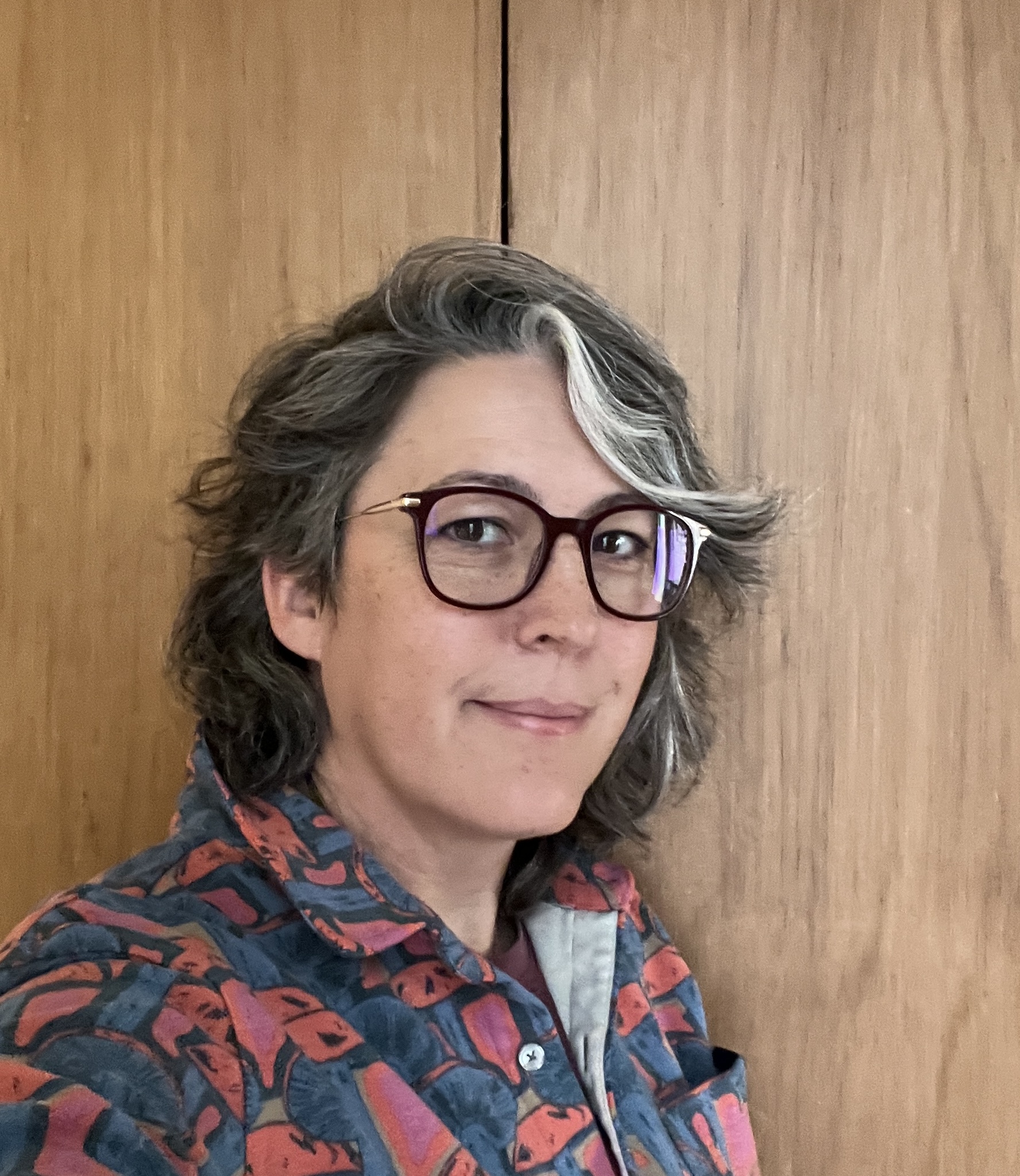
Gina, another episode of yoga discussion. today's episode is going to be with Casey Karges who was a long-term practitioner, ⁓ He was a regular attendee of a weekly class and it'll be interesting to see, what his thoughts are on his yoga journey.
Gina (00:18)
Yeah, I'm very excited to talk with Casey today.
Brendon (00:21)
speaking of Casey, looks like he's ready to join us.
Mr. Casey.
Casey (00:28)
Brendon,
great to see you.
Brendon (00:31)
Good to see you, sir. Thanks for joining Yoga Scussion It's good to have you on the show
Casey (00:35)
Yeah, thanks for the opportunity.
Brendon (00:38)
Appreciate it Casey. Casey, Gina, Gina, Casey.
Casey (00:41)
Alright, G!
Gina (00:41)
Hey
Casey, hi, how are you?
Casey (00:43)
I've heard great things, so...
Gina (00:46)
Likewise, very excited to meet you and talk to you today.
Brendon (00:49)
Casey, so to contextualize it for listeners, my memory of you is like a very focused, interested, frequent participant of a yoga class. I think we connected in maybe late 2018, if memory serves me correctly. it seemed like we had maybe a similar personality type and maybe
there was ⁓ an affinity for like the structure of an Ashtanga series. But what would you say you recall from those early days with your time with Yoke?
Casey (01:29)
Well, at the start, it's challenging and appreciated the challenge. I walked into yoga that I worked out a lot and I was in pain a lot. was, Brendon's not telling you, I'm that guy that couldn't bend over to touch my knees. So I run, ⁓ play golf and all that stuff and just...
was not aware, I think, of my body and the things that I need to do to stay healthy. when we first started, I was just fascinated with the connection between the physical and the spiritual, in that it was connecting my mind with my body with my breath and stuff that I just never was aware of before. And so,
It was a challenge that I knew that I needed to continue to do.
Brendon (02:19)
Yeah, and it's interesting, Casey, because I knew early on, based on what you had shared with me, that you were a big runner. know, like running was a common thing for you. And when I think of my time running, it did feel like there was a mind-body-breath connection there for sure. So I guess I'm wondering, and maybe you can share with us and listeners.
How did that shift or was it similar? Did your yoga practice inform your running? Did it give you like maybe even a deeper awareness of mind, body, breath, connection, et cetera?
Casey (02:55)
Yeah, well, Brendon was big into what we do with our breath in the midst of a challenge. And so it's an awareness of what you bring with your breath. Something's a little tight, or I'm not in the space at this moment. And instead of quit, if it is not hurting, in some way, you know, I think I learned through yoga is how you breathe into things.
And then in some way it's allowing my mind to settle, which allowed my muscles to settle, to in some way to kind of create, and that's what I love about running, is you put yourself in a space where you're not aware that you're physically running. You just get to the point where you allow your mind to go and it's an active spiritual activity that in some way you can just be for a period of time. And I think...
I learned through yoga was that if there were things I could breathe into them and to work with them in that way to help myself settle, which I continually try to do now.
Gina (04:01)
Casey, you feel, or maybe you could speak to this a little bit, like, is there a distinct difference between how you worked in your body as a runner and a golfer before you came to yoga and then how you work now? there a, cause sometimes I think we,
we kind of use our bodies like machines, like we muscle into stuff, right? And then it, and then like, maybe when we have more of that mind body connection, it's like, wait, I don't necessarily have to do that. Maybe there's a different quality that comes in. Did you feel that in like as the shift when you moved into a yoga practice?
Casey (04:35)
Yeah, yeah, and you know, this might not make a lot of it was my hips. Yeah, I mean, I probably could be defined as frozen. And so a lot of the yoga poses in some way, oh my gosh, I feel my hips in some way loosening and almost widening to allow me so like within the golf swing. If the golf, if you try to swing hard, the ball doesn't go very far.
⁓ If you're free the body just kind of flows and so I you know what I do is is a lot of times I'll play golf and then I'll do yoga after To in some way just allow so instead of being hurting and sore and stiff in some way I want to I want to use that not as much as muscle build-up, but probably strength build-up You know, I want my muscles to feel freer
And so I think yoga has helped me have an understanding. And then just a side note, I have a special needs adult child, visit a wheelchair, and I lift more than I should. So don't share this with anybody. Physically to move him from one space to another, my back has to be okay. And so I have a family history of not having a very good back.
And so I really appreciate what yoga does. I think to in some way loosen and strengthen and an awareness of my back and the stuff that yoga does over and over again. So it has the ability not to be strained by everything that I do. So the positions that I'm in, I feel like I'm not hurting myself. that's another thing yoga has really been helping.
Brendon (06:23)
somewhat tongue in cheek, but do you think that's your golf scores or your running experiences have improved since you've been a longer term yoga practitioner at this point?
Casey (06:35)
Well, especially for running, I think it's allowed me to continue to run. I'm not on the younger half.
Brendon (06:44)
Are you saying you're on the back half?
Casey (06:46)
I went over that hill a long time ago and it's funny because people keep on telling me you got to stop running. And it's like, you know, I think I'm healthier because of how I run. Where I have to admit before COVID I ran distance, I would go and then not quit. But now it's more of aware of that the breathing, the muscle tone, the getting my mind out to be free.
Gina (06:47)
you
Casey (07:14)
that it's just an exercise that hopefully I can continue for quite a while. And that my joints and muscles in some way, I think with my yoga practice, in some way I am freer than I was 20 years ago when I ran. ⁓ Because of I think all the stuff that I'm doing that allows my body to be in the right positions that it needs to be in just so I can enjoy myself.
Gina (07:29)
hearing.
Brendon (07:42)
Yeah, and it seems that that comes from like a certain state of awareness and even beyond like the physical benefits, Casey, would you say that your yoga practice has maybe influenced other areas of your life personally, maybe with family members or professionally?
Casey (08:01)
Yeah, I'm probably more on the intense side. And so I'm pretty goal oriented. I'm, you know, like you got busy every moment of every day. And so to learn through the physical breath, spiritual mind, to let things just kind of be.
So my schedule isn't taking over for me. Where I think you're doing your yoga practice is you're aware, but in some way you don't have to be in control all the time. I think that has been very helpful for me. And then just professionally, I run a mediation center. We do all kinds of conflict.
what we teach our mediators here and what we teach in mediation, all makes sense together in that with the things that you do with your mind to, to be present is, is yoga stuff. Sure. When Brendon started teaching all of this, an awareness of being here, but not, you know, it, it just makes sense for the stuff that we teach her, all of our media.
Brendon (09:12)
Yeah, I think your work at the mediation center, I'm definitely quite curious about that. And I imagine listeners are as well. You know, could you of course, respecting, you know, anonymity and not getting into super specifics, but could you maybe walk us through what a situation like that might look like for you or some of your colleagues where your yoga practices maybe tuned your ability to
show up maybe in, I hate using the word better, but maybe in a more evolved version or in a more evolved way. ⁓
Casey (09:46)
Yeah, and I'll use a couple examples, some great mediators that I've learned from. We had a guy out of University of Minnesota, he was one of the leaders worldwide in mediation. And then also I to use a friend of mine, an attorney in Omaha that mediated forever. And you would go to two, three day mediation trainings. And basically what they would teach you with it is before you walk into the room, you're going to set aside 15, 20 minutes.
and you're gonna breathe and you're gonna be aware and you're gonna own what's going on within your mind and it's in some way becoming kind of at peace with yourself and aware of yourself before you walk in to high conflict because in mediation what we're trying to do is we're creating atmosphere.
and people can sense it and people can feel it. And so the breathing techniques that we talk in mediation, the great mediators talk about the same thing. So you would think in negotiation, they would talk about how do you move someone or strategize and they're talking about breathing and an awareness of self and the great mediators are just aware of your presence.
as you prepare to go into stuff that's really difficult. So to me, all works together. And then in the midst of some of the most difficult mediations, it's in some way not to get triangulated into other people's conflict, there's my story, your story, and always a third story.
and you try to separate the people from the conflict. And so a lot of we do within the mediation is that you have to be in a peace of mind that in some way you're aware of your angst and your level, but you are trying to be somewhat of a peacemaker to what's going on. And for us is what are the options that are out there that they'd be willing to choose. So I think that
these lines cross, I think yoga is always helpful for me, especially in the midst of all the stress that we all go through.
Brendon (12:01)
Yeah.
Gina (12:04)
that sounds so much like holding space and co-regulating, like showing up with a nervous system that is down-regulated or, you know, co-regulated so that you're not activated and then offering that regulation from your own nervous system out to the other people who maybe are not coming into.
negotiation or a mediation, you know, as calm and it's like, that's also like so prevalent in meditation, right? It's just like, getting centered and sounds very yoga, yoga esque, right?
Brendon (12:38)
it's like a modern yogi job actually. I'm kind of reevaluating my career choices at this point. Thanks, Casey. But no, think you think of a good therapist, you think of a good mediator cultivating the ability to not react. Like earlier you were talking about how can you be aware of the energy in the room? How can you be aware of what two
⁓ sides, maybe at ⁓ two ends of a dispute are bringing to the table, metaphorical or literal, and get them to center, right? Get them to balance. Could you maybe expand on that process a little bit? ⁓ Either thinking about yoga in mind or just kind of like what helps a mediator get to extreme positions towards some sense of compromise or
you know, like a balanced energy in the room.
Casey (13:30)
Yeah, I think it fits to getting to the mat. Because in mediation, you don't walk in with the answer.
Yet you are aware of the energy and the positivity and the ability in the room. And it is you're connecting yourself to others, believing that they have answers that will be good for them. And how do we get people to express themselves to say, would meet my interest now? What's very interesting, and we would, we do what's called interest-based mediation. What I mean by
There's a variety of ways to meet the centers in Nebraska. We don't tell you what to do and we don't we try not to say, OK, if you don't agree, this is what the judge is going to do, because we're trying to see for them at their I call them core interests, things that they'll never negotiate away. What are the options they're willing to lift up that are good for them that also will work for the other party? Hmm. Yeah, it's it's it's beyond ourselves.
And so this is relationship stuff. And then we're trying to create safe spaces. Now, we do a lot of high conflict domestic violence mediation, which some states don't do. But in doing that, it's creating the safe space because if they don't agree, somebody else is going to give them something that a lot of times doesn't work for anybody. And so to me, when you get to the mat, it's an awareness of I don't have all the answers.
but I am aware of the energy that's there. And I'm willing to be open to, I'm gonna go through a process that I'm gonna open myself up to go, sometimes, you know, I get pushed in mediation to do stuff I can't do, and that's okay, because some days I hopefully get there, but there's some stuff my body just doesn't do, but I can do what I can do. And then to find...
the poses and the things that in some way in that pose that fits for me when there are people beside me that are amazing and super athletic and really cool, but I'm not bothered by that. Because I know what it's doing for me at that moment. And in some way, it's like mediation. In some way, you're almost, it's a coach. It's a support. I want to help you.
come to something that would be great for you and I'm not going to impose what I think you should do and in some way I'm going to create an atmosphere for you to to stuff even a mediation if they don't agree sometimes a great mediation people don't agree that's okay I mean sometimes it's that's my gosh I thought we would get together and you would agree with everything sometimes it's a realization we're not going to agree and sometimes you're gonna have to just realize that you know
our lives are going different directions, or we're going to disagree on some stuff.
Brendon (16:26)
Yeah. Gina, think Casey would be an excellent yoga teacher. What do you think?
Gina (16:30)
Yeah, I just wanted to like restate some of what you said because it was very profound for me. So I was writing notes. You probably saw me looking away here, but I was writing notes like, right. You don't come to mediation with the answer, but you also don't come to the mat with your answer. That's so profound. Right? Like how many times as humans do we show up thinking we know everything and that we know how it's going to go. mean, like I rehearse this stuff in my head, like, today's going to go this way. And it never goes that way. And then.
It also reminded me of this part in the Bhagavad Gita. Krishna and Arjuna are like, they're in the chariot and Krishna is talking to Arjuna about how...
things are like in what your Dharma is. And he says, ⁓ one of the, don't know which section this is in, but he says like, you're entitled to your work, but you're not entitled to the fruit of your work. Meaning that like the work is where it is. And as you were describing being on your mat and seeing like these amazing athletes doing that, I almost had this vision of like, every time we show up to our mat, it's like a mediation between what is our body physically capable of?
what is our mental and emotional body capable of and what is our spirit like capable of. And it's like a mediation between all of these layers in our practice. And it just like, chef's kiss. like, it sent me into this. It was just very profound. So good.
Brendon (17:49)
So I'm wondering Casey, if you have ever taken the energy of a mediation, let's say difficult energy from mediation to your yoga practice, either at a studio or at home, if you were practicing at home, or do you find that your personal training along with maybe whatever you've learned from your yoga practice allows you to kind of leave that stuff at work?
Could you maybe speak to that a little?
Casey (18:16)
I'm one that it comes with me. And yet I'm kind of, I'm a routine person. So I know when I'm getting to the mat. And by the time I'm done, it's not like I let stuff go, but it doesn't own me. And so I'll...
I'm not my job. I think I'm effective at my job. And I think I bring things to my job. But I can't make successes or failures at the job become me. I just need to be aware of who I am. And I think when I'm in yoga and I am challenged,
And that's where for me the routine is just so helpful because I am not worried about my gosh, what might be next or whatever. I can just allow that flow. I'm aware of how this is going to happen and that's helpful for my personality.
Gina (19:33)
Yeah. That's
a real gift of Ashtanga is that you have these set poses and you know what's coming so you can really get grounded in each one of them and like in your experience of it.
Brendon (19:48)
Casey, I wonder if you've had any specific challenging experiences in your yoga practice, either whether that was practicing with me or otherwise. Was there ever something, ever a time where you're like, my gosh, I can't do this. And then maybe that changed later, or maybe you surprised yourself when you tried to tackle the challenging asana.
Casey (20:13)
Well, there wasn't anything in a shtanga that I could do when I started. Everything was a challenge for me.
Brendon (20:21)
No, I
remember Casey, like you were just, think, I remember, I vaguely recall you pretty much telling me directly, you kind of gave me a look, you're like, so I'm new at this.
Gina (20:31)
you
Brendon (20:32)
And then I tell you, what, you know, you know what I tell a lot of people, I'm like, I was too, you know, like, yeah, it happens to everyone.
Casey (20:42)
Yeah, no, all of it was eye opening. And what I like about it is, is that you're right, you get to the point where, my gosh, I used to, you know, for me ⁓ to bend over and touch my toes, and Brendon would have us stay there for a week and a half. And I was shaking.
And now, because what that did to me was that I would take practice with friends and then I'd have to go home. And then what I learned was that was a good ritual for me. Because I would have to take the challenge of the things, okay, I need to work on these. And then I have my own kind of practice at home. But in some way, those things now have become, know, example would be I bend over now.
and my hips in some way feel like they get wider and my back feels like, oh my gosh, I have to do this for a little bit. And then you just want to stay there. you know, a lot of those poses in yoga that in some way it's like there's no way on earth I can make that happen. All of a sudden becomes something of, okay, I'm going to have to do that tonight. So I was that one and Brendon
watched me struggle with all those things that but I think and then you know what I love is is we have new people come now to Ashtanga and they pick it up like that you know they just they are yoga people and I it's fun to see how it's supposed to be and I have so much so many places to grow but I think everyone who does Ashtanga knows wherever they're at there's places to go and grow I I think it's a
It's a challenge, but I continue to enjoy to do it.
Brendon (22:34)
Yeah, I'm gonna like I was going to offer it to you, Gina, like something he said with your experience in yin. I was picking up on like wanting to breathe into a pose for a longer period of time, you know, and how sometimes like I know me, I came to like, this is really wonderful. But I didn't know at the time, you know, you're essentially breathing awareness into your facial tissue, you know, amongst other things. Could you maybe speak to that a little bit, Gina, like how
what that's like, what that can do for someone's mind to just really give themselves time to really breathe into a posture for an extended period of time.
Gina (23:11)
Yeah, mean, Casey, I don't know if you've done yin yoga or not, but boy, it is a potent practice. We'll get into a pose, like say we'll get into like a pigeon pose or other, I'll just go with some of the more intense ones, like a dragon pose, which is a low lunge, like Anjaneyasana. So we'll get into those and we'll hold them for about five minutes, sometimes six.
And boy, I'll tell you what, when I first started you and I was like, I hate this. I hate everything about it. Cause I'm a type a person or I think I'm learning how to be type B person, but I was a type a person at that point in my life. So I really wanted to like master this. And so I would go to the edge and I would try to stay there for five minutes. And it was like unbearable. And your mind is just like, chachachacha, what's happening. I'm going to have all these thoughts about this, but what I've learned.
over practicing this for like moving into 12 years of this kind of practice now is that if I can find a sustainable place to rest in these poses, I'm still feeling a lot of discomfort. But then being able to take my awareness and like, close my eyes, turn my awareness inward, like feel what that is like for my body know where where I need to stop and not maybe go so deep.
but then also just breathe in that place and like try to soften towards the sensation of the pose. It's so amazing. I started to notice that my mind really just calmed down. It just softened. Like all the chitter chatter got quieter.
still there because that's what a mind does. It's supposed to like chitter chatter and keep us aware of things. But the mind got way quiet or quieter. And then that allowed this really interesting space to open up where it was like,
I can feel deeper now into my actual physical sensation of this pose in my body, but I can also feel deeper into like who I am as a being. And that's why I love yin so much is because it feels like you were saying, right? It's like a way to get closer to myself. Yeah, it's a powerful practice, I did not, much like your first interaction with a strong, it was like, I can not do this. It's hard.
Casey (25:24)
Well, I enjoy, I do yoga on my own, but you talked about the poses. When I did it on my own, I probably, the poses are a third of the amount of time that they are in a class. Cause my mind is going, I've done this. But you get in the class and then in some way there is that I can go longer and I don't need to come out of this pose.
I need to in some way enjoy the pose instead of just going from one thing to the other.
Gina (25:55)
I was going to ask you, what is your, home yoga practice like? How do you, how do you kind of, what do you do for yourself?
Casey (26:03)
Very
similar. I have about a 45 minute thing that I do on probably three nights a week that I don't have yoga, but very similar to the poses that challenge me in Ashtanga. And so what I had to do with down dogs is I had to learn to just be in them for a while to get to the point that now, once again, with my back, and I had to learn
that that needs to be an okay place to be in for a while. And then my rotations. I mean, I am not flexible. And so I have to work a lot on my rotations. So I got to the point where I was feeling like, and it's this Brendon stuff, my body was helping me instead of some way that I was working against my body. So I was using...
in my rotation, something that I feel like I'm getting energy instead of getting rid of energy. And so the more I do them, I felt like in some way I'm getting stronger because my body is gaining that energy through doing these in the rotation. that has helped me not to be a struggle. We were for a while, Brendon, we would have
One on ones.
Brendon (27:23)
Yeah, yeah, there were some times where like a cold winter day or something and then Casey was still brave enough to show up. Whether it was the roads or the experience at the studio.
Casey (27:30)
and we're in the white
And he was like, can't you do that differently? And it's like, no, at this moment, I really can't. He's like, you need to move here. I'll get there.
Gina (27:44)
Casey, there, for you, there a difference between, so like you have three days that you practice at home and then you also go to the studio. Do you think that having a home practice and having a studio practice that there's, you get benefits from both of those? if so, could you kind of like maybe expand on those a little bit?
Casey (28:02)
Yeah, in my job, I meet with someone every hour of every day. And not having sound.
⁓ And so I, when I put the silence and not being around people, I need that too. You know, I'm pretty outgoing, people, know, energy comes from me when I'm in relationship. so I am aware that I need space to just be. And once again, being on the wrong side of the hill.
If I sit down on the couch, sleep may be coming. And I much more enjoy doing the yoga where it's quiet and then I can allow my mind in some way to do the physical, spiritual at the same time. So I enjoy that. But my favorite is when we have a group.
Gina (28:57)
Yeah.
Casey (28:58)
And we're
doing it together and in some way I am being challenged to stay in longer, learn new things. That keeps me going.
Brendon (29:06)
yeah, there's definitely some, there's some good aspects to both a home practice and, you know, practice with a group. And I think you're definitely touching on those Casey. Yeah. Yeah. Have they evolved ⁓ over the years? Do you find, or does it kind of ebb and flow? Like I harken back to those early pandemic days where we all felt a little weird being on a zoom call and continuing the classes. Right. And then I found myself thinking,
I wonder if Casey's still practicing even if he's not attending a class. mean, how has your home practice evolved over the years?
Casey (29:42)
Yeah, it stayed steady. I mean, since we started, there's not much, you know, sometimes when I'm on vacation and it's not a possibility. for me to enjoy other things, I think we all learn the things that feeds our souls.
and to be in a routine where you maintain those things that feed your soul. And I think with yoga, it's a path that I continue to learn and grow and need more of, and I think it feeds me.
Brendon (30:19)
And it seems like it's helped you offer some type of presence to other people in your own life, personally and maybe professionally. Are there any moments you'd care to share where you maybe felt like there was like a calm moment that came from a place of awareness where you think you were able to help someone's energy shift?
Casey (30:39)
Well, when you say that, in mediation and in my personal life, I think the more that we're comfortable with silence, not disengagement.
that that's where I think connection comes from. And that, you know, some of your best friends, some of your best moments are you're just okay being and they know you're connected. And in conflict, some of the most important things we do is when we don't say anything. And so I think that
carries with us and everything that we do is you sometimes sometimes I count my breaths and then sometimes you just have to allow something to be to honor people that things have been said that some quick comment could actually hurt or take away the importance I think in yoga once again we just sometimes let things be and we're
You know, yoga, you are aware. You have to be aware. But that doesn't mean your mind is racing. In some way, you're allowing your mind, I think, to have productive energy that's positive. And, Brendon, you talk about a lot of times when you're leading us, usually when you do your introductions.
A lot of times it's somewhat focused. mean, we usually work on a theme, which I think is always helpful. But then allowing your mind in some way to relax, maybe that's it. Relax to allow you to be a part of that practice in ways that, once again, you're feeding your soul.
Gina (32:24)
You know, there was a study done a while ago where they were looking at overstimulation with noise. And there were two parts of this study. One part of the study was that they found that was on average human beings need about two hours of silence a day. And this is like awake time, right? It's not sleeping. It's like two hours of awake time where we just have quiet. And then the other thing that came out of this study was that people in inner cities are like,
people living in large cities like have worse health and mental health because of the loudness of cities. So I think it's really profound that you're speaking about silence. It's something we're greatly missing right now in our modern technological world, but it's also something that is like built into our yoga practice.
Brendon (33:13)
Yeah, Casey, wonder in your line of work, seeing how things have evolved maybe over the last handful of years coming out of the pandemic, when you look at some of the struggles people are having.
what they're navigating. What do you, if you were to be like a doctor, you know, and offer a diagnosis, what are your thoughts? Like, what do you think are the struggles out there? What do you think is, you know, related to these moments of acute conflict that you're helping to navigate?
Casey (33:56)
Yeah. Well, I would say in my mediation business, we're in a growth business at this moment. Everyone has their own interests. That's a line I use all the time. I think for peacemaking, it's an, and probably the people I'm drawn to is an awareness of other.
And we have to want good for the other. And the leaders that I look to and follow in some way would sacrifice for someone else to experience the things that I do, an example would be within yoga. So it's not that I'm doing this that I can be great.
or I can get the poses down or something. But in some way, what I have, want to share.
the point I almost give something up to allow someone else to experience the same thing. So in conflict resolution, I think what we find is how do we help people turn a corner? And if you guys have stuff, it's brain stuff. When someone is attacked, our brains go into protective mode. And when we're in protective mode, we can't be creative. And we're trying to get people under the frontal lobe to get them into problem solving.
So I think a lot of what we do with yoga, with exercise and swimming and running and golf and all that stuff is that we're trying to settle ourselves down enough so we don't feel like we're being attacked. And unfortunately in the world that we live in right now, every radio show, every TV show seems like an attack on the other. I'm waiting for that to flip and that I'm working for ⁓
Hey, I'm willing to give up something great that I have because I want life to be good for you. So we got to get there. I think we will get there. But the things that we're talking about right now are the things that we do to keep us at peace. Know that there's hope for the future. Feed our souls. We see other people that are
experiencing the same thing, think it all gives us hope.
Brendon (36:01)
Yeah, it definitely comes from, you know, there's this Zen Buddhism banner in my home office. And it's essentially talking about, calmness coming from the inside, working out or, you know, the bottom, going up. And I think you're definitely alluding to that Casey. And from what I've gathered and what you've shared with us today, you know, you're definitely thoughtfully tending to that inner Casey.
So that the outer Casey can have a more positive impact on the world. and I think that's, that's kind of maybe everyone's calling to a degree. What do think Gina?
Gina (36:38)
Yeah, I do. think it's, I think that's also one of those secret hidden gifts of yoga is that like we start because our bodies hurt, or we, we come to that practice because we have something going on that either a life thing that drives us to find, you know, peace or we have, you know, pain in the body or we have something happening. And then the secret that gets revealed over time is that
we get to embody these gifts as humans out in the world. And like, you're clearly doing that with your practice and the care of your family and friends and in your profession.
Casey (37:12)
Mm-hmm.
Brendon (37:14)
So Casey, to introduce a little bit of levity, I guess, to the show, is there any embarrassing yoga experience that you wouldn't mind sharing, whether it's you were attempting a pose and landed on your face or an inner thought? Because I think we've all had these experiences in long-term yoga practice.
Casey (37:38)
good God, all the time. ⁓ The bruises that should be on my butt from every time those things have gone wrong. well, Brendon was no, I don't have the longest of arms. And so for me to try some of the things that he does, it's just more difficult. yeah, yeah. And when you say levity and Brendon, you.
Gina (37:41)
Thank ⁓
Casey (38:07)
When you get in the room and people are there, there is a connection there in a yoga group, think. ⁓ Because it's not, you walk in almost that it's not about me. I'm not trying to show off. The guard comes down and ⁓ the laughter that happens even in Ashtanga.
Gina (38:16)
Yeah.
Casey (38:30)
that there will be this moment of, know, and it, that's addictive, attractive. I mean, it's those moments of where I can be in somewhat of peace with the group, where I'm myself and I look ridiculous and everybody's afraid of that and not giving me a hard time about that. I mean, that was just pretty unusual, I think.
Brendon (38:58)
Yeah, everyone's laughing at their various states of ridiculousness. Well, Gina, did you have any other questions before we ask Casey our final two questions? ⁓
Casey (39:06)
Come on.
Gina (39:07)
Final two questions. No, I just want to thank you so much for sharing your expertise and your experience and your heart and your wonderful soul with us. It was a really lovely interview. And I had some just beautiful moments of like, ⁓ yes, exactly that. So thank you. Lots of gratitude.
Brendon (39:26)
Definitely lots
of connection there.
Gina (39:29)
If you
could sum up what yoga is to you in like three words, what would those words be?
Casey (39:37)
breath, mind, and peace.
Brendon (39:43)
Love it. Love it. Yeah. Thanks, Casey.
Casey (39:45)
This is Yoga Scussion.
Brendon (39:48)
we really appreciate you making time to connect with us and be on the show.
Gina (39:54)
nice to meet you. Thanks for such a lovely heartfelt conversations. Best part of my day today.
Brendon (39:59)
All right. Thanks Bye bye.