[00:00:05] Speaker A: Yoga is stillness.
[00:00:09] Speaker B: Yoga is self awareness.
[00:00:13] Speaker A: Yoga is time tested.
[00:00:18] Speaker B: Yoga is unity.
[00:00:22] Speaker A: Yoga is secular.
[00:00:26] Speaker B: Yoga is evolution.
[00:00:30] Speaker A: Yoga is spiritual.
[00:00:34] Speaker B: Yoga is
[00:00:37] Speaker C: attention, responsibility and integration.
This is yoga Scussion.
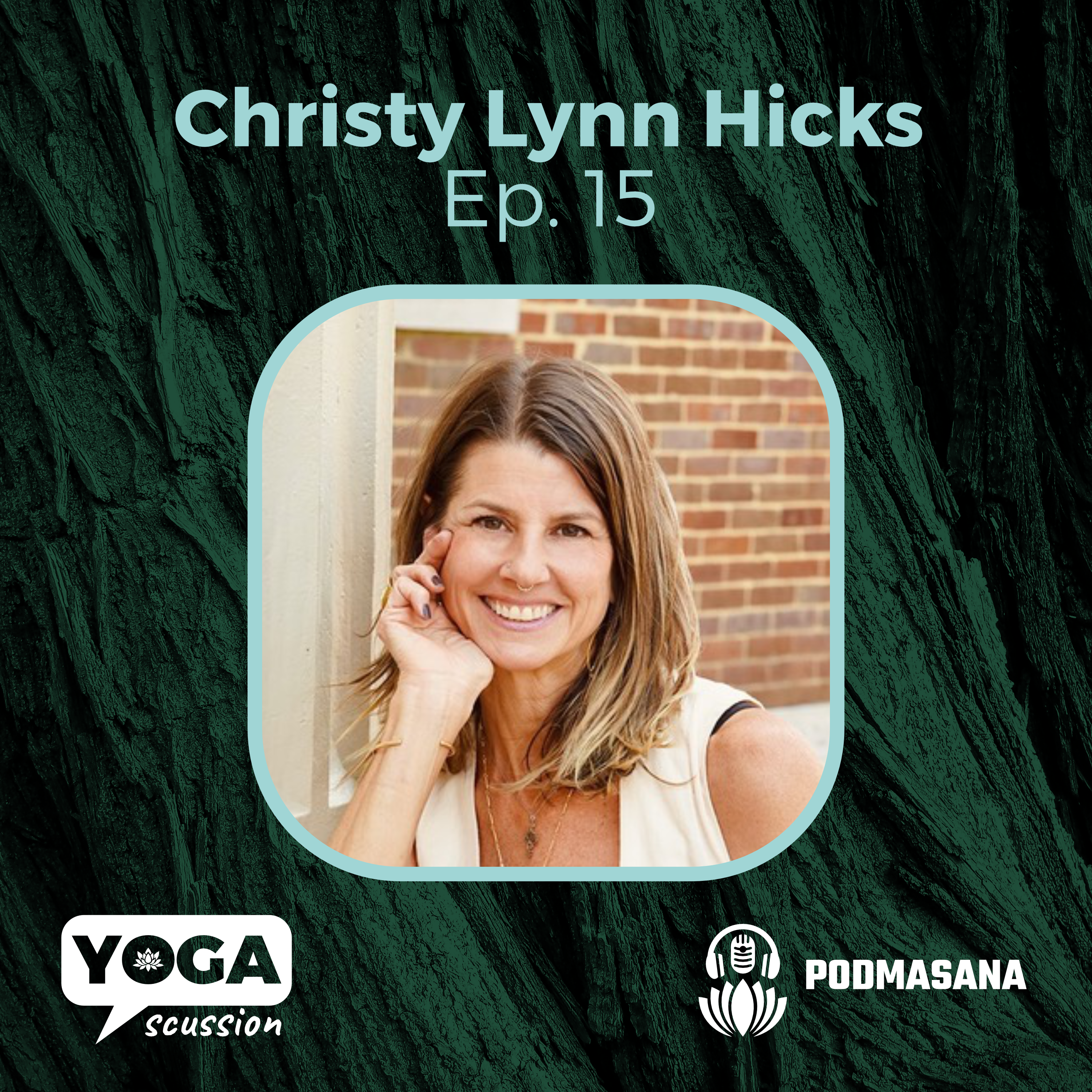
[00:00:46] Speaker B: Well, Gina, we've got Kristy Lynn Hicks joining us today for Yoga Scuttion. And Christy's relationship with yoga goes back over 30 years, which is a while as a practitioner, teacher, studio owner and educator. She founded and ran a yoga studio and training center in Los Angeles for 15 years, building a big community there and educating hundreds of teachers and practitioners. And yoga as this living, applied practice, not just a workout, which I appreciate and maybe you appreciate too, you know.
[00:01:23] Speaker A: I do, yeah.
[00:01:25] Speaker B: And she now serves as the founder of Elevation Central and the Living Arts Yoga Institute, where yoga is taught as a holistic system for health, clarity and conscious living. So we're happy to have her on today.
[00:01:39] Speaker C: Hi.
[00:01:40] Speaker B: Hey, Christy.
[00:01:41] Speaker A: Hi, Christy.
[00:01:43] Speaker C: How's it going?
[00:01:44] Speaker B: It's going good. Thanks for joining us today for a yoga session. We've been looking forward to this one.
[00:01:49] Speaker C: Me too. I love the name so much.
[00:01:52] Speaker B: We appreciate that.
[00:01:53] Speaker C: Let's have us a yoga scushion.
[00:01:54] Speaker B: I know, right? That's what we're here for. So, I mean, I love it. We've introduced you a little bit to listeners, but if you could maybe just share a little bit about your background and how you came to yoga, what your journey has been like.
[00:02:10] Speaker C: Yeah, I sure will.
So I grew up in the conservative south in the 70s and a lot of model for anything out of the box. It was very just, you know, you do this and you do this and this is what you do and that's how you do it.
And I was always on this, like, I want to do something that I love. I want to do something that. But I just didn't know what it was. So I just went through the motions of life and went and got a degree and I was very interested in psychology and sociology and I started in pre med and I thought I really wanted to go that route. And I made a pivot at the very end and went into mass communications, radio, television, photography.
And y' all ended up in this career that I don't even know how it happened, but it was very high tech, very ahead of its time, and I was in a very unhealthy relationship, did not make good healthy choices. I was drinking and smoking and staying up too late and just working way too many hours for way too little pay. But I was a go getter and I was going to climb that darn ladder. And so I did the thing and because I was a go getter and I wanted to do a good job and I'm a recovering people pleaser, like many people I know. And I just wanted to prove myself and try to climb the ladder to some destination. I had no idea where I was going, but I was like, well, you just gotta do the thing.
But I also, in conjunction with that, I developed very early as a child, like crazy early. Like I looked 25 when I was 13. You know, getting asked out by 36 year olds as a 13 year old, that kind of like I just did not look my age. So that over development and growth really did a number on my back because of the weight. And I was still developing like at 11, like I was just really popping off. And so I had major back problems.
But I was a dancer and a gymnast and just, you know, the solution was you take some painkillers and you get out there and you do the thing, you know. And so I'm sure I just continued to damage my back by just pushing through and when I had problems with it.
And I remember I was in a very unhappy situation, work wise and relationship wise. And someone said, have you ever thought about trying yoga?
And my brain broke. It was kind of like, why did nobody ever say that, you know? So the next day I looked in the yellow pages because that's what we
[00:04:38] Speaker B: had, good old yellow pages.
[00:04:39] Speaker C: I found a yoga studio and went to that yoga studio. And as I was in that first class, it was probably the first time I'd really tuned into me like for a long period of time.
And I mean, it could have been 90 seconds for all I know, but it felt like a lifetime that I actually was tuned in and I was like, wow. And so I remember laying there in Shavasana and this was in the early or like 90s, 95. And I remember thinking, I have no idea how this is going to happen. I have no idea because my life is so far from this. But one day I will figure out how to open a yoga studio so that I can get paid to get educated on as much of this as possible. And this could be my life path. And again, my life was nowhere near that. It was a hot mess. And so I started diving into yoga and learning and my life got worse before it got better because it was the first time I was looking at my responsibility in the whole thing and how much of what I was creating was my own sort of making. But I continued to climb the corporate ladder. And this part's relevant because now it's so clear. But at the time it wasn't because I was such a go getter and do gooder, you know, working hard. They promoted me a lot. I just kept working my way up and I could figure things out even if I didn't know what I was doing. I knew how to figure things out. And I ended up in satellite engineering.
Oh wow.
[00:06:15] Speaker A: I just am like, what?
[00:06:16] Speaker C: Yeah, well, I know it's crazy looking at it now because it seems so obvious, but at the time, because there was this, it was a really high tech building way ahead of its time. Robotics and sound stages and terabytes of storage, digitizing all these old formats into digital so people could access. And I think, honestly what I think happened, they're like, well, she's a go getter, she'll figure it out. We don't have to call her an engineer, but let's put her, she'll carry the pager and she'll be the one to go in at three in the morning and feed to CNN and CBS and you know, take the feeds and send them out. And so I didn't at the time realize, you know, I was in there doing the thing. And they would always be like, okay, whenever you're ready, put the engineer on the phone. And I'm like, well, there's nobody else here. I guess that's me. And I did this for years and just continued to work my way up. Ran, we ran like eight networks out of there. So I just really lear a lot about telecommunications.
So then fast forward starting to learn yoga and learn about the energetic system and the subtle anatomy. I started to see the comparison of like we are tiny little transmitters and the signal if we go up. What I learned in engineering, like if you go up on a signal and you modulate or send out your power or your signal and you're on the wrong frequency, you'll blow everybody off air. And I started to see in subtle anatomy and energetics and the chakra system and like how that all related and how if we go up and we send out our signal on the wrong frequency, there's a lot of static and a lot of noise and a lot of. So I continued to do that for many years until I felt really ready within my own self. I knew there was no way I was going to open a yoga studio the way my life was at the time.
But I did workshops and trainings. But this was before yoga teacher trainings really became a thing, before Yoga alliance was even formed. This was back in the 90s and I did it Old school apprentice style with a senior iyengar teacher. Four years of apprenticeship and assisting and running her studio when she was out of town, and really just learning everything about it. And I went headfirst into all of it. I studied every style I could get my hands on. I just was into it, and it was changing my life slowly, painfully. And I continued to do that. And then finally I was with my. The father of my son. We're no longer together, but he's a dear friend of mine, and he's like, you light up when you teach. Like, I want to support you in this. I got you.
You know, it was no big funding. It was just like, here's a little bit of money to get you started and you gotta make it happen. Like, this is what I can do, and I can help you by helping you with the rent and things like that. And I was like, okay, great. Opened this little yoga studio in Burbank, California, and it was everything. It was everything to me. It gave me everything I ever even dreamed of, and more than I could even imagine at the time, because I didn't have the capacity to see how good it could be.
And it was beautiful. And it was in the middle of la, you know, Southern girl coming along, opening a yoga studio. And they really loved it. You know, the Southern hospitality is a real thing. And we just had a beautiful community. And I got to travel and study with some of the greatest teachers and lead teacher trainings and retreats and workshops and spend time with people I love, hire my friends. And it was just everything. It was literally beyond what I could have imagined. And it did really, really well in such a huge market. Like, it just. It had its little sweet spot there and sustained for a very long time until 2020.
[00:09:44] Speaker B: Warren. So I was thinking of Christy, is that there's so many parallels with your unique experience with other people's experience. You know, I was picking up on that first Shavasana, or an intense period of struggle that kind of pushes someone or guides them to embarking on a journey like that. Would you mind just speaking a little bit about either of those two pieces of your.
[00:10:11] Speaker C: Yeah. For me, you know, not really knowing myself, really, and not knowing. I just looked to always outside of me for the answers. I was always looking for some sort of validation or some sort of inspiration. And there wasn't a lot of people doing anything outside of the box. And so I didn't feel like I had any sort of examples of how to live a creative life and how to live a life that was Filled with joy and something I really wanted to be doing.
And ultimately, like, I love people. I love people and I love empowering people.
Even when I was a boss and working in the corporate, like I really loved, I was always for the employee, like, and trying to be that bridge between the upper management and the employee. Like, I really was always protective and wanted to help people and wanted to see them shine. And ultimately I wanted to see myself shine, you know, that was it. And in doing that, helping other people was helping me to see how much I loved seeing people recognize something in themselves and open themselves up to something greater, because that's what was happening to me. And when I did started doing yoga, like I said, my life was a hot mess. I was just still drinking and smoking in a terrible relationship. But it started to give me an insight into a way that I could live differently in a way that, you know, the eight limbs were really powerful for me to start looking at. Like, what are the ways that I am contributing to my suffering? You know, in the yoga sutras, it's like the reason we're led to suffering is so that we find a way to lead us out of suffering. It's this, right? And the caps 22 of that. And I just started to see how I was contributing to my own drama in my life in a lot of ways. And I was the one that was actively participating in the choices I was making. And I really wanted a different life. I wanted out. I felt like I was trapped in this just facade of outward appearances. You know, the good job with the good money and traveling the world and having the nice car and having the nice house and the nice clothes. And I was just drinking myself into oblivion, you know, at night and just miserable. And so yoga really opened up possibility for me. It was like, for me, I was like, I just want to know as much as I can about this because it felt like it was like my whole life everyone had been speaking German and all of a sudden someone spoke French. And I was like, I had no idea I spoke French.
That was the language of yoga. For me. It made sense. And it was like, because I grew up in the conservative Christian south, there was a lot of things that didn't make sense to me. A lot of things, say one thing, do one thing. And so it's confusing as a child and a fear based sort of culture.
And so yoga was the first time. And you know, at first I got real edgy when the word God came up. I was like, but it really started to, to, it wasn't like a shaming sort of thing. It was more of a tuning into your own inner wisdom and nature, which just never was presented to me until I started doing yoga. Like to really start listening to that and clearing out all the noise that had been just bombarded me my whole life.
[00:13:41] Speaker B: Thank you. Thank you. Wow.
[00:13:44] Speaker A: Yeah, wow. Your story's very powerful. Like, I have so many thoughts swirling in my head right now, but there's. There's so much about being disconnected from your inner voice or your inner intuition and cultural messages coming in so quick and so, like, pervasive that it's like the idea that we have to climb somewhere to show our value. And I think you've pretty much said this, but, like, what I feel like is coming out is that as you explored yoga, you started to come closer and closer into like a self knowledge. And I was just wondering if you could talk to about like how the philosophies, the. Maybe the eight limbs or maybe, you know, the yamas and niyamas or whatever philosophy speaks to you the most how that kind of started to sneakily. We always say this kind of sneakily. Yoga. So sneaky. Because it like you start with just moving your body and then all of a sudden you're like, yeah, I guess I don't really want to smoke those cigarettes, you know, or maybe I'm not going to go out drinking tonight. But how it started to reshape you and like, what were some of those big moments for you where you were like, boom.
This thing I just learned is like blowing open maybe these habits that I've gotten ingrained from my society or, you know, just feeling like you don't fit and you're like, I want to be something else. And these big moments kind of. Can you speak to those? Or any and all.
[00:15:06] Speaker C: Yeah, yeah, yeah. Any and all. Yeah, yeah. So I remember. I'll never forget this. I was in one of the most miserable corporate jobs. I mean, y', all, I did the craziest stuff. Like it was webcasting, industrial auctioneering, satellites. I was like, how did I end up here? You know, I was just this really bright personality that was like, I feel completely disembodied. Every experience I had was just a disembodied. Like I was checked out, but just chugging along, you know, doing the thing. And I really started to look at the way I was eating and the food I was eating. And I started to look at the way that I was speaking and the way that I was thinking and the way that I was choosing you know, and it was almost like a.
I was watching a video game, you know, sort of like play out. And I'm like, well, you did that thing and then you made. Then this is the result.
And I remember I was in this just wretched corporate job and where, I mean, lying was the thing. That's what you did. You know, everybody just greed and just manipulation. And I just. It was terrible waking up with anxiety attacks and panic attacks and, you know, just so bad. And I was having major thyroid problems and I was going in to get radioactive iodine poisoning. That was what the solution was. And I remember I was looking in this book. Now, it didn't happen this way, but in my mind there's not even a window in this office, but the windows part opened and like this book flew in through the window and landed in front of me. Like, I don't know how, but it opened up to the page on the throat chakra. And it basically said, you know, if you have these symptoms, you know, there could be a potential of if you weren't allowed to speak up, if you are covering people pleaser, repressing your truth, saying the thing that doesn't rock the boat, not knowing how to say the truth or telling lies to yourself. I was like, oh my God. And then over here, it was like thyroid issues. I was literally looking at this radioactive iodine poison. I had a schedule, it was on the schedule. And I saw Lockjaw, which I had dealt with, chronic laryngitis, mono, strep, throat, tonsillitis, I mean, smoking, you name it, every single piece of it was my life. And I was like, the call is coming from inside the house. You know, like, I just had that awareness that, like, I have spent my whole life trying to be the good girl and trying to do the right thing and not rock the boat and not get fired and not do this and get promoted and do the thing that. I've become a liar. I've just become a full blown liar. I didn't even know it. You know, it was just trained to, like children should be seen and not heard. Don't question that is the devil talking. You know, just like, things like that. And so I had no idea who, who I even was and what I was capable of. And so yoga really started learning about the chakras and this Yoga Sutras of Patanjali is sort of my main philosophical blueprint for the practice. And I just started to see, you know, the causes of suffering and how I was contributing and how yoga is more preventative and you know, and then going through the eight limbs and being truthful and being kind, and how do I learn the balance of that? And how do I learn to enjoy the senses but also control them? And how do I learn to move my body in a way that's intelligent and not performance based? That is inner wisdom. How do I get my mind from getting all messed up and projecting all kinds of thoughts and ideas and images and out my mouth? You know, how do I get that organized and get it to where it's clear so that I come from a place of truth rather than all the things that I have repressed and covered up and been shown and taught my whole life? So it just. It was like the more I could learn, the better I was. I was. I will admit, I got a little addicted to trainings. I got a little bit like, you know how it is, you get in
[00:19:00] Speaker A: there and you're like, happens to the best of us.
[00:19:02] Speaker C: I was like, wow, there's so much. The more I learned, the more I realized there was to learn. And that's what I think really drew me to, is because I never felt like there would be an end, it would be a lifelong journey.
And that was exciting to me, you know, to have something that I could be just really put my whole everything into.
[00:19:20] Speaker B: And there was kind of a shift, Christy, right? I mean, closing the studio after the pandemic, which obviously was hard, and there was kind of this shift, but you had some experiences, or maybe lessons from those, if you want to call it, like, high stakes corporate leadership, you know, days. And then you were deepening your practice, and, you know, you've said that, like, this idea of success without self awareness is fragile. And I thought that was really. I thought that was really interesting. And especially when you think about it in terms of, like, that corporate leadership sense or framework. And I'm wondering, like, was there a moment or pattern that made you realize that yoga philosophy itself wasn't just complementary to leadership, but maybe an integral part or essential to it?
[00:20:08] Speaker C: Yeah, absolutely. And for me, when I decided to leave corporate and open the studio, I made a vow to myself. I was like, if ever the business starts to overrun the yoga. Like, I wanted to do yoga, but I just happened to have business experience and I'd been doing yoga. I think it took me from that first class till my doors opened. Ten years, until I opened the doors.
But I knew from the beginning, I was like, I'm going to do it a different way. You know, I'm going to. Because even in the toxic world That I was in, I was doing my best to bring the joy, to bring the, you know, positive attitude, to bring the can do, everybody wins energy. I just didn't have a lot of skillset within myself to organize. But I remember like distinctly when I open this business, if the business ever overruns the yoga and the philosophy that I'm learning, I'm out. Like, I'm not interested in doing it the way that I did it. That made me so sick, waking up at five in the morning just with full blown panic attacks and stress. And I just knew that if, if business became more important then I was not going to do it. Because what was changing my life and making me feel better was the practice of yoga and in every interaction I was doing. But I did learn a lot of skills in corporate, you know, just the basic how to run a business. That was huge. I also learned a lot about what not to do and how not to treat people and how not to, you know, the contrast was really wonderful because I knew how I was going to treat people and I knew that it was never going to be about the bottom line for me and that people would come first and they would be valued and I would do what I said I was going to do. And if I didn't, I would clean up my mess and I would take responsibility and own it and communicate in a way that empowered people instead of made them feel bad. And that was priority number one because I'm like, what's the point of opening a business and based on my passion if it's just going to lead me right back to that place of stress? And then, you know, like, LA is no easy road. It's not a easy place to run a business and that. But I was very determined that and you know, of course I made mistakes and of course there was times where I didn't know what to do and. But I did my best to clean up those messes and walk with integrity and get right back on track and surround myself with people that I trusted to give me really good reflections and feedback and always, you know, choose the road of kindness and honesty, but kindness first, you know, and not blaming people or things like that, like those were all the things that were so important to me in establishing the business. Because I didn't, the word success to me started to look very different. Like success was, I wake up excited to go to work, I'm happy to see the people I'm working with.
I am, you know, inspired to create, to teach, to lead.
I love what I do. I Wanted success to be redefined for me.
And that was like the foundation of opening the studio. It was like, I want it to have a powerful impact on my life. I want it to pay me to live my life and get educated as much as I can so I could stay ahead of the student base and be of an integrity to be in my practice. And those were the things that were like, non negotiables, because I was like, I already been to hell. I'm not going back.
I'm not going back.
[00:23:32] Speaker B: Like that.
Yeah. And the yoga of responsibility that we were reading about and how that kind of rests on a few different pillars. Christy, would you mind talking about that a little bit? Maybe within the context of maybe like some real life scenarios that you've maybe dealt with, either on the business ownership side or any other area of life.
[00:23:52] Speaker C: Yeah. So what. When the pandemic happened and I closed, I had been.
I have this wellness center now in Tennessee. And it was my childhood home. My dad built it, and it's on four and a half acres of creek. It's really beautiful. And I knew that I wanted to have a boutique wellness center out of here because that's what I fell in love with. Like, I loved the classes in the big community, but what I loved was the deep dives at retreats, the teacher trainings, the workshops, the longer format where we have time together, we soak in the hot tub after a meal and discuss or chant or, you know, whatever. I love that piece of it. So I thought I was gonna do both and kind of started putting a little energy into here and going back and forth. Cause my family was here and needed help, so I thought I was gonna do both. Well, when the pandemic happened and everything shut down, and in three months, I was financially ruined, and I just was like, I gotta get out. And fortunately, they were locked 14 months. So it was devastating to me, though, because it was everything. And it was my business, it was my livelihood, it was my community, My everything was there. And so I went into a really, really deep, dark depression. Like, just devastating.
And what's so wild and y' all will appreciate this, is knowing all I know about the yoga philosophy and, like, seeing it unfold in my life of my over identification with form, you know, the Kleshas. Right. Like, I was so deeply identified. That was who I was. The studio owner, the teacher, the community, you know. And all of a sudden I was like, I don't have my community. I don't have a class to teach. I don't have A role I had to let go of. So many people that worked for me for, like a decade or more. I was 15 years in LA, and some people were there 12, 13, 14, 15 years. Like over 15 people had been with me that long, and I had to lay them all off. And so I was. And so now they're jobless, too. It was just. And I sank to the bottom. I just sank way down into a dark, dark depression. And of course, the world was falling apart. You know, I wasn't the only one affected. Everybody was affected. And I was just disheartened by the way that people were talking to each other and about each other. And I just went dark and went deep inside. And it was, you know, knowing everything I know almost made it worse because I was like, I have all this knowledge and I'm so stuck in. I felt like I was sinking in quicksand. But I started to really look at. And this is where the yoga responsibility sort of was birthed. I mean, I'd been teaching it that way, but I didn't understand it in the way I did after I lost everything.
And to go, wait a minute, like, what am I responsible for? You know, what part of, you know, people judging people or people saying, where am I judging?
Like, what am I doing that is contributing, even if it's this much, Right? Like, there's a part of me where am I not of integrity in whatever it is or my thoughts about what's going on? Like, I gotta get my thoughts right. And so it started to be this healing path for myself is to really say, well, I've gotta take responsibility for everything. And regardless of what's going on out there, there's so much I can't control, and I've got to let that go. And I've got to really do the inner work to go, okay, I'm responsible for every single thought, like, every judgment I have, every word, every, you know, choice I'm making, every single thing that I'm doing.
If I've got a problem with something outside, I need to go inside and find out where that's at, Whatever it is that's causing me agitation or fear or anger or judgment or frustration or the call's coming from inside the house at some point, you know, like, I've got to. And so I. It was like I regressed a little bit back into. Before I even discovered yoga almost. But I had all this knowledge, which was almost worse, you know, and so I really had to do some churning on. Well, you know, I've got To get up and take responsibility for how I'm showing up in every situation, you know, and if I'm in conflict with someone, what is it inside me that's creating that?
What part of me is causing, you know, and that's where the responsibility came from, is being able to really direct my attention towards exactly what I want without any interaction or noise from the outside.
And to be able to hold that attention and to be able to regulate myself in conversation and to be able to be completely relaxed and, you know, the stira sukha, you know, the steady and relaxed in every posture.
So I practice it on the mat so that when I'm in a difficult situation and faced with something, I can maintain a posture that's steady and relaxed in my face, in the ways I'm speaking in my heart, you know, and not just saying the words, but like, I need to feel completely steady and relaxed in this interaction. And until I do, I got work to do. I gotta go handle that like it's on me and not putting the responsibility on someone else to need to do something for me, to make me feel good or safe or whatever it is. Like, that's not.
I need to take care of that. And so that's where it was really born from as a framework.
Even though I'd been practicing it in ways and teaching in ways, it really became this concept of, like, I got to take full responsibility for every single part of my life that I can possibly. And then of course, there's always going to be chaos and asteroids. There's always going to be some kind of. Right. But if I'm really taking full ownership of my life and directing my attention and regulating myself and owning my part, then things start to rearrange around me in accordance with that.
And that's where that comes from.
[00:29:48] Speaker A: That's so Jungian, you know, I mean, it's like what you don't uncover within yourself will just keep rising to the surface and you'll keep doing these things and you'll have not really a reason why until you go down into the unconscious and, you know, get in there and kind of look around and go, what's this? I mean, that's like. So I just want to say that's really metal. Like, you're super badass.
[00:30:11] Speaker C: Thank you.
[00:30:12] Speaker A: To just like sit down and be like, okay, everything is. Is inside. And it's. And if I don't take responsibility for every single thought or judgment I have, then, I mean, that's like hardcore. That's really hardcore. I'm just kind of like blown away by, by that.
[00:30:30] Speaker C: But it's the only thing that got me out, like, of the, the darkness. It's like, this is me. There is something in me. And whatever judgment I have, I gotta find it. Where is it? What am I doing that I'm judging? You know, where is it? And it's, it's not work for the faint of heart, I will say, you know, but it helped me heal. It helped me to say and, you know, to not really link, you know, yoga, the detachment, the vairagya is the, you know, the delinking to be able to detach and to detach from thoughts about what other people were thinking or whatever, whatever it was to really delink from the external and to be able to continue to go. There's something in me that I've got to resolve. There's something going on in here because I wouldn't be feeling that if there wasn't, you know, and it definitely was not easy. I will say, and it's confronting as can be, but I'm willing to do it because I know that my lane is to help people find their lane. And if I can't find my lane, then I'm gonna have a hard time helping other people find their lane.
[00:31:32] Speaker A: I'm super curious how this plays out in like a boardroom because, you know, we went to your website and read everything and it's like, how did, how do people react to this when you show up and you're like, I'm going to like, first of all, how do you do this? Like, how do you go to a bunch like cold call, you're going to a bunch of like, business people and being like, hey, I'm gonna teach you the yoga of responsibility. And then second part of the question, how do they react? Like, I'm so curious.
[00:31:59] Speaker B: Well, if those satellite engineers, you know, you just give them a call, hey,
[00:32:05] Speaker C: your signal is staticky.
Yeah. So a lot of the work I do comes from referrals because people know how I am.
And I always.
Because one humor is necessary. Like the humor piece. And I come from the south and so there's something about some good old fashioned redneck wisdom, Southern values that just. I always say that the thing I do first is I get them in the get you get you goo. You know, once I get them in the get you get you goo. I got them, you know, because it is funny, the whole thing to me and sad and devastating and painful all at the same time. But to be able to present something in a way that's super down to earth and super just grounded in humor. But also when I'm taking responsibility and not pointing the finger outward and showing how it plays out in my life, people respond to it. And two, because I do my very best, I'm so dedicated, practice every day, I have to. I mean, I'm one of those that will slip real quick if I don't stay on track, you know, And I know that I've got a big personality, I've got a lot of energy, and if I don't manage, goes willy nilly.
So that's a big part of it too, is they feel it. They feel that there's no bs. There's not this sort of everything's Kumbaya and everything's perfect. But, you know, the first thing I start asking them, you know, is questions. And then if they say, well, our employees are late, nor I'm like, how often are you late?
[00:33:41] Speaker A: That's very Terence Real of you. He's a therapist and he's always like, okay, so if you have a problem, let's ask ourselves, how often do you do that?
[00:33:50] Speaker C: And it's like, how often do you do that? And just with even like, with interrupting or passing the buck and like, you know, whatever it may be, the question is always like, okay, let's look at your life. Like, how does your morning look?
And because if you come in dysregulated, as someone who's leading people, people will feel they're looking to you and they feel it. No matter what you're saying, they feel it. So if you come in jacked up on coffee, you get on your phone the first thing when you wake up, you don't do any sort of cleaning of the internal pipe system or satellite transmitter. You don't clear out the signal and you come in, they are going to reduce, respond. And because you're in a leadership role and a position of power, it is your responsibility to be the most regulated person in the room. And if you're not doing that, we gotta start there. And we've also got to start getting really clear on concrete, specific actions. Because a lot of people live in the abstract and I'm sure y' all know in the, in the yoga world, it's rampant too. Abstractions and words that people think mean something, but if you bring it down into the concrete, we're actually talking about two different, different things, you know, and so I work with them a lot on language and posture and breath and how, you know, the way that they're speaking, the way that they're allowing others to speak. So we do a lot of these practices and work and. And you know, I asked them, like, okay, I see some tension forming. What's going on in your mind right now? Like, it's cool, I can take it. Like, I'm fine, you know, like, tell me what's going on. What judgment are you having? It's okay. You can judge me wise because I have a piercing. Like, is that cool? Like, you know, and I really try to make it very relatable and human. And because I did grow up in the south and I have these, like, really, you know, Southern hospitality roots. And my dad was like, to me, he's the only hero. I mean, it's really hard. There's a lot of people I'm inspired by. There's a lot of people that have made an impact on my life. But to be impressed, he made the most powerful impression on me by not saying, by doing and watching that. I feel like it gives me a lot of grounded confidence because for him, he was just very much, like, complaining, no. Can you do something about it?
If not, I don't want to hear it and no one else does. Either handle it or stop it. Do something different. And so when I bring that into people in that world, because I was in the corporate and because I've run my own business for 20 years, it's not just theory. It's lived practice. And I'm around a lot of people and I'm an observer and I'm always watching and asking questions. But I do it in a funny way. And humor just is sort of the great equalizer. Once you get them laughing, I got them. I'm like, all right, got him.
And so they take to it really well. But like I said, I get referred to a lot of people that know my work and they're like, you gotta meet Christie. You know, like. So that's how it usually. I don't usually cold call in to some random corporation.
It's usually referral based that people are wanting it. They're more of a conscious businesses that are looking to have a wellness culture within.
And they need some tweaks because it's not quite going the way they want. So that tends to be the work that I lean into more because I'm not trying to force anybody. I want them to want it just as much as I want to help them.
[00:37:17] Speaker A: I think it's a really great place right now in time, in the timeline of how. How we are as human beings, the work you're doing. Because I think People want their work to be meaningful. Whether you work for a communication satellite company or, you know, like a federal agency or, you know, you're selling kombucha out of the back of your car. I think people want to be like, they want meaning in their jobs, and they want to be seen as humans and not cogs. And I think this is what your work is doing.
But it's starting from. I sometimes think that revolutions in these kind of ways start from the bottom up, but you're kind of going top down, right? It's like, leadership has to show up in a way that's real leadership in order for everyone below to kind of be like, oh, you know, yeah.
[00:38:10] Speaker C: Because what we want is for people to be inspired to do a good job, not browbeat into it and not feared into it. Because the thing is, is that, like, if. If the top levels in leadership take responsibility for the way that they're showing up and communicating and the way that they are thinking even, and the way that they are taking care of themselves, people, they won't have to beg and plead for someone or they won't have to have all these weird negative interactions. People will be inspired and want to do a good job.
They'll want to show up because they feel that that person is a true representation of leadership. And so until people start to see that, what every single thing they're doing, whether it's spoken or not, people feel it and are observing it and are taking it on, you know, and a lot of times people are afraid to speak up or whatever. And for me, when I was a manager, I'm like, come, let's talk about it. Like, don't be afraid to speak up. You know, And I was always willing to sort of stand up and say, hold on, I'm calling BS on this. Like, this is not, you know, exactly the most helpful thing for everyone involved here. Like, aren't we on the same team? Like, aren't we going for the same goal here? And so why wouldn't we want it to feel better? We spend 40 hours or more a week at a job.
Like, why not make it the most positive environment that we can in every way? And you'll see that the numbers will be a representation of that. It's not the other way around. We don't. Fear is not. Not a motivator.
[00:39:47] Speaker B: Yeah. And picking up on what both of you were saying, I was thinking that, is this related to something that's happening in the current times?
In my mind, it seems like there's somewhat of a Corporate squeeze happening. Right? So for the people who are in executive roles, maybe managerial roles, maybe in like the upper echelons of an organization, maybe they're feeling particularly squeezed, you know, right now. And I'm wondering if that's energetically related, you know, to why there's a little bit more of a, you know, what word would you use? Interest, thirst, hunger for this type of work. Do you have a take on that, Christy?
[00:40:26] Speaker C: Yeah, I think so. I think people are starting to go, there's gotta be a better way. There's got to be a better way. There is just hot mess after hot mess floating around out there. As a culture, as a society, as a people, we tend to look at like, like everything that's wrong and everything that everyone's doing that's, you know, not good. And it's like, okay, but what am I doing that is not in alignment, like. And so often, unfortunately, people will say they want something, but their actions aren't a reflection of that. And we have more knowledge than we could ever want at our fingertips within seconds. And it's very much like the Vedas, you know, there was all the knowledge we could ever want. People were still suffering. And then the, the Darshanas came and the sages that codified the Darshanas, it was like, well, people are still suffering even with all this information.
And we're in that same place, is that we have all this insight, we have all this knowledge, but wisdom has taken a back seat. People are on the fast track, and wisdom is lived experience. And, you know, we are committing crimes against wisdom every day. People know better and they don't do better.
And so that's causing this sort of like, squeeze of people are saying, here's all the things I value. And if I go to their house, I'll be like, don't look like it. Don't look like you value any of that. So talking about it causes a misalignment. And it's literally like a signal that's being, like, completely distorted within their own being. And so people are feeling that pressure and feeling that need. There's gotta be a better way. This can't be the end. This can't be the goal of us to just keep grinding and churning and, and, you know, compromising our values. And every time we do that, we suffer, whether it's overt or invert. Like, we're suffering because it's not a clear channel for us to be able to express our spirit or the, you know, the, the purusha to be able to express itself in the world. It's like all these different things are happening and everybody wants to point, like, who's the problem? And it's like, well, how about I start here? Because I'm the one that's been here the whole time. I'm the only one that I should trust myself more than anyone because I'm the only one that's seen me through this whole journey.
So if I could do that, it can take the pressure off of everybody else needing to fix themselves for me to feel good. And so I think people are looking and I think wellness is starting to be a part that people are realizing that we can't have a healthy business without healthy people.
[00:42:58] Speaker B: Yeah, you have observed, I believe. And I was thinking when you were talking about this idea of what we don't really need in modern times is more information. What we need is to kind of integrate what we know to be true on a deep level or what we're aware of. And so, I mean, you've trained, you know, hundreds of instructors like Christy, like, what's one practical way that listeners could maybe move from knowing a yogic principle to maybe embodying one or living one when things get stressful?
[00:43:33] Speaker C: Yeah, I think the biggest thing and, and the thing that I feel like is the answer for me every time is they have to practice doing the thing they say is valuable consistently without interruption, with enthusiasm and a conviction. You know, a sutra that says that, like, we have to, instead of knowing something, we have to integrate and that is through. So for example, if we say that, you know, healthy eating is important to us, then we need to start practicing cooking healthy meals, home cooked meals, where we sit down, there's no screens, there's no television, light conversation only, no intense conversation about the ways of the world. Maybe a conversation about how delicious this food is and how grateful we are that we get to eat this. And wow, thank you for helping me cook it. And because we're not digesting our experiences and that comes with slowing down. You know, it's like, I mean, all the problems with IBS and all the problems with the stomach and digestion and gi like problems is, is people are putting all their energy out when they're doing a simple thing like eating instead of it being an inconvenience, it's the thing that fuels us. And the mind, as y' all know, can, I mean, it can do a lot of things, but it does the best when it's one pointed, focused.
And so that ekagrata, like being able to focus the mind on one thing at a time is how we can take information in, process it and eliminate it. What we don't need and take in the nutrients, whether it's a physical experience or an emotional experience or a spiritual experience. But everyone's just shoving so much up in the head and then it's getting all congested and confused in different images and people aren't able to pull it down into a simple sit down, have a meal, turn your phone off, off, talk a light conversation, chew your food, you know, so one getting good at like and, and in the corporate, you know, multitasking is like the big thing, you know, like multitasker. Well, you know, what I understand and what I have come to really know in my own practice is that one thing at a time is way better.
You know, that we, we are more complete, we're more absorbed with that thing. You know, we have more of an experience of knowing of what it is rather than all these different things. So practicing slowing down, like slowing down and doing the one thing you're doing with your whole everything and giving yourself a chance to really see the value of what it is that's right in front of you. And that's one of the things that I usually start with people, if you are not sitting down and having a home cooked meal like at least two or three times a week, start with once a week, week, one time where you light the candles, make it beautiful, make it a sacred act. Because your mind will always prioritize what you give your attention to over the, you know, automatic functions. It will always give its attention to what you put it towards. So if you put it towards an email or a phone or a computer or whatever, it's going to go, that's more important. Shut down digestion, you know. Have y' all read why Zebras don't get Ulcers?
[00:46:46] Speaker B: No, no, that's a new one for me.
[00:46:49] Speaker C: Well, and it talks about that, is that like, like, you know, if we are putting our attention towards something other than what we're doing, that's disembodiment. And when we do that, all the other systems go, oh, shut down because there's an emergency here. But with a zebra, when they get chased, they eliminate immediately all the circulations, you know, goes up to the heart to help them run and they do the thing and then when they're back they calm down and everything goes back online.
Right? Because there's no need to digest your food if you're about to get eaten, right? So just. But we're doing that all Day long. So it's like, stress isn't the problem. It's the lack of recovery and the overload of information that's just telling everything to be on high alert. So all the systems and circulation and digestion and everything starts to shut down because it's like, okay, we're under threat. And so slowing down and choosing to go, all right, for the next 30 minutes, I'm going to do this one thing, and I am going. If I have to tell myself five, five thousand times to come back to the one thing I'm doing, I'm gonna do it to put a timer on, you know, and just. Even if it's like, okay, I drifted again. Okay, I drifted again. Okay, I drifted. Okay, I'm here. I am washing a dish. This is what I'm doing, you know? But that's. Mindfulness is really sort of starting to be aware of how we disembody. We think about something else while we're doing something else. And that's the definition of it. Right. Is that we're out of our body and we're not integrated. The mind does so good when it's aligned with the action that we're taking.
And it's much more of a peaceful experience inside and outside.
[00:48:21] Speaker B: I'm taking notes. Christy and Gina, in addition to being more like a sloth, be more like a zebra.
[00:48:29] Speaker C: Be like a zebra.
[00:48:29] Speaker A: I like this. I'm always looking to the animal world for guidance and knowledge, because I do think that we are animals. We have the nervous system of an animal. I mean, we have a lizard brain. We've got more than just a lizard brain, but, like, at the base, you know, And I. I have to remind myself that nature is a powerful teacher.
[00:48:50] Speaker C: Yes.
[00:48:51] Speaker A: Because we live in systems that are trying to divorce us from nature all the time. Like, we live.
[00:48:56] Speaker C: That's right.
[00:48:56] Speaker A: We live in systems that are trying to harm us and trying to grind us to bits, you know, in terms of productivity and like, oh, man. I don't know if you guys have read that book 4,000 weeks by. I'm not gonna. I can't remember his name.
[00:49:09] Speaker C: I haven't read it.
[00:49:10] Speaker A: It's really great. But basically, you only get 4,000 weeks. That's what a human lifespan consists of. And that doesn't sound like much time. Right. And so the premise of the book, which is also based in mindfulness, is to focus what you want to do spend your 4,000 weeks on.
[00:49:29] Speaker C: Yeah.
[00:49:31] Speaker A: And I think that we.
And the guy is very into productivity hack. He used to be into Productivity hacks. And he was like, I was always trying to be more productive. And what I realized was I just destroyed my attention span because I was trying to hack my way out of a nervous system that is animal and hack my way into a system that was just seeking to grind me down by being more productive. And that's like not what we need. We need less. Not that we need less productivity, but it's like the more focused you are in, the more single minded you are, the greater the product that comes out.
[00:50:06] Speaker C: That's right. Right. And the greater you feel too. Yeah, yeah.
[00:50:09] Speaker A: Whether that product is being in relationship with someone, whether that's raising a child or processing paperwork or, you know, we all have roles that we play in society, in our jobs and our many relationships, but it's like the more pointed and connected and present you are, the better everything is.
[00:50:30] Speaker C: That's right. That's right. And that was another tip. I was gonna say A non negotiable for me is time in nature. Every single day, like every, every single day, go outside, put your feet on the ground. Like, get outside, take a walk, sit on the grass. Like whatever it is that's such an important piece to what you were talking about, Gina, is that we are from nature, we're children of nature. And when we get back there, it's the great equalizer for our nervous system. And so many people spend so much time indoors and just grinding and in cars and jacking up on coffee and things like that when we have the natural elements to support so much of our healing. And so being in nature, to me, like, first thing in the morning, the first thing I do is go put my feet on the ground. Doesn't matter how cold it is, doesn't matter. You know, whatever. If it's raining, doesn't matter. I'll just get out there and get wet. I can take a hot shower. It doesn't matter. Like something to connect me to the thing that is continuing to regenerate every single year, despite humans attempts to make sure that doesn't happen, you know, it continues to blossom and we can connect to that energy that is always regenerating and really get ourselves in alignment with that power. You know, being in the sunlight and getting that information first thing before we start, like, it's such a huge part of my practice is outdoors. Outdoors, outdoors as much as possible.
[00:51:57] Speaker A: Yeah. I'm thinking about our listeners who maybe live in, you know, urban areas, but we still, I mean, there are a lot of trees interspersed. Even just touching a tree or just sitting Outside and listening to the birds. Like, there's so many birds that live in cities and urban areas that we aren't really tuned into because we're not looking, you know, we're not paying attention.
[00:52:20] Speaker C: And the sun, you know, the sun still shines even in an urban area.
[00:52:24] Speaker A: We are solar creatures. We are the original solar panels.
[00:52:29] Speaker C: Yes, that's right. No, I totally agree. And so even if it's just walking in a very industrial area, you're still outside, you're still getting the sun. Like, it doesn't have to be grass and trees and you know, even if you're an apartment, like, get outside, walk. Just get out there and let the sun, you know, rejuvenate you.
[00:52:48] Speaker B: Yeah, I was gonna make a joke about petting pigeons in New York City, but I've also like, I've also experienced the, like the wonderful observational moments of feeding pigeons on a rooftop in Bangalore, India.
And how you, when you, when you, you know, when me and my father in law will go up, you know, and we'll lay out some bird seed and rice just like in the middle of the roof. And we can already kind of see, you know, there's our. Because, you know, creatures of habit. Right. So there's already maybe a few pigeons who have perched like at adjacent buildings or whatever. And, and they're watching us. They're like, it's, you know, it's time, but they won't come down like if we're, if we're hanging out right there. So we just kind of move over. And I eventually learned that I, that they didn't need me to completely disappear if I was willing to go a little bit further away and just sit still for a period of time. They eventually kind of started trusting that. And then just them coming down and doing their own thing, that's observing nature even within an urban environment. So thanks for bringing that.
[00:53:48] Speaker C: Yeah, absolutely. It can be done anywhere. You know, get outside and. Yes, that's perfect. Like, I love nature meditation. Just observing, just watching and seeing how they do things and getting out of your own drama for a moment to see, you know, what's happening outside.
[00:54:05] Speaker A: And yeah, even just watching bugs, I mean, bugs are everywhere, I am telling you. But like watching an ant move a stick back to wherever it's going, it's absolutely absorbing. And for a moment you become the ant. Like you are, you know, you are back into that mindset of like, oh, I am part of nature. Like, I understand this in some very deep way.
[00:54:29] Speaker B: Yeah. I guess I have one last question for You, Christy. So what I was really touched by is that you're passionate about like preserving yoga's integrity while still kind of understanding that, you know, it's always been evolving and we're trying to apply it to modern understandings, modern audiences. But you did kind of see the importance of thinking of yoga beyond performance or something. That's about a perfect form, the commodification of yoga. I appreciated you acknowledging that. Is there any classical teaching that resonates with you that you think is maybe a little bit more misunderstood in Western minds or audiences?
[00:55:13] Speaker C: You know, I think that a lot. Well, I'll just start from where I'm at, which is in the South. And a lot of people don't understand the context of yoga as its own Darshana. And that is separate from Vedanta, which is the Hinduism and the Buddhism and the Tantra. And a lot of people won't practice yoga because they think it's Hinduism. And look, I blended all of it. My yoga studio was called Yoga Blend. I blended everything. But I knew I was doing, doing it, you know, like, that could educate people on that. But I think a lot of people are turned off by. Because they think it's like a religion, like a lot of people, particularly in the South. And it's like, well, the way that I've learned it, again, you know, we all have different teachers and different paths and different, you know, lineages that we've studied. But yoga is its own Darshana that offers God as a super tool. It offers it as, you know, there's six sutras about it that offer it as, as a really deep, powerful tool for bringing us back to wholeness. But it also offers faith in yourself and all that you've overcome to get here. We're living proof that we'll overcome everything that's come our way because we've overcome everything that's ever been our way. So that means it'll always happen because it's always been true. And to really relate it in that way of you don't have to believe anything specifically, but tune into your own knowing and your own beliefs. And that's why I love that the Yoga Sutra, specifically, because it offers tools. It's very tool based and psychology driven.
And the Sankhya philosophy doesn't really say one way or the other. It just says here's how it is. And yoga's like, and here's what you can do about it, you know, like. And I think a lot of people don't understand that differentiation and they think it's either a religion or it's a workout. You know, some of the things. And y' all know, I mean, y' all been doing it, too. Like, you know, going into a class and there's, like, bass music playing. I'm like, what is happening? You know, so that turns off people, too, that are looking for more of a quieter, internal sort of practice. They think it's performance based, and everybody puts things on the Internet and whatever. It'll be, it'll be. But I think it just really discourages people from giving it a try, whether they think it's a religion or they think it's a fitness that you have to wear certain outfits and perform poses and play really loud, obnoxious music.
There's, you know, I think that there's a place for people that don't have to believe anything. They just want to feel more whole, and then they can decide what's important to them, and they can decide how they want to live their life and how they want to take responsibility for the world that they're creating and really care for the things that are right in front of them. You know, it's like the best way to show people you care is you act like it.
And so yoga can teach you to really care for. For your whole system in a way. And then you naturally want to extend that out to everyone around you, because you realize that if you're not here, what's the point? So I should start here taking care of this, and then a natural effect of that will be to care for others.
So it's not selfish, you know?
[00:58:23] Speaker B: Yeah, I appreciated that answer, Christy. And, you know, I love this, you know, analogy of a river. Yoga is river and, you know, hop in whatever canoe or kayak you really want, have whatever style of stroke you know you want. But there's a lot to be gained from getting in the river at some point, you know? Yeah. So I really appreciated that answer. Thank you.
[00:58:44] Speaker C: Yeah, you're welcome.
[00:58:45] Speaker A: It was a beautiful answer. And I was just. I was in the river, you know, I was like.
[00:58:49] Speaker C: Yeah.
[00:58:49] Speaker A: So I'm just. I just want to say how grateful I am to have this conversation and get to know you and get to, like, receive your experience and. And, yeah, it's been very profound.
[00:59:03] Speaker C: Great. Thank you so much. I love it. I love talking about it, and I love talking about people who are interested in it. So thank you.
[00:59:10] Speaker A: Our last question is, what three words would you use to say what yoga means to you?
[00:59:19] Speaker C: Attention, responsibility, and integration.
[00:59:26] Speaker A: I like those.
[00:59:27] Speaker C: Those.
[00:59:27] Speaker A: Yeah, yeah.
[00:59:28] Speaker B: Like that. Christy, well, thanks for joining us for a yoga discussion, Christy. We really loved having you.
[00:59:33] Speaker C: My pleasure. Thank you for having me. I love what y' all are doing, and I just. I'm happy to be a part of it.
[00:59:39] Speaker B: Yeah. Hey listener.
Yeah, you.
I'm talking to you, actually.
If you've been enjoying the show, please consider leaving us a review on your podcast listening platform or giving us a shout
[email protected] or you can also reach out on the socials. We are on Bluesky, Mastodon, Instagram and YouTube.
Sharing a review with others helps a lot.
Thanks for listening and leaving a review.