[00:00:05] Speaker A: Yoga is stillness.
[00:00:09] Speaker B: Yoga is self awareness.
[00:00:13] Speaker A: Yoga is time tested.
[00:00:18] Speaker B: Yoga is unity.
[00:00:22] Speaker A: Yoga is secular.
[00:00:26] Speaker B: Yoga is evolution.
Yoga is a never ending practice.
[00:00:36] Speaker C: Yoga is therapy, education, way of life.
This is yoga scutan.
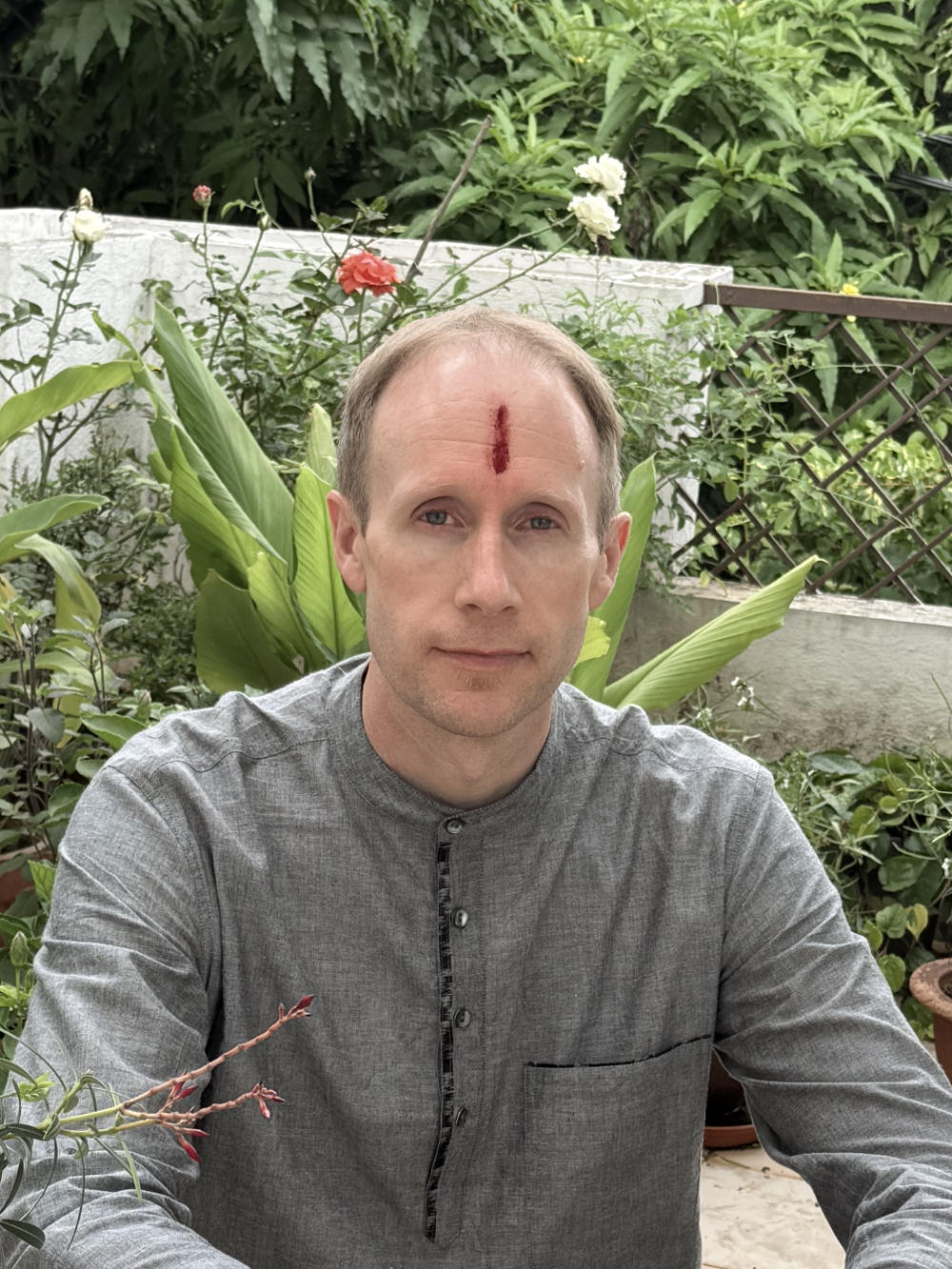
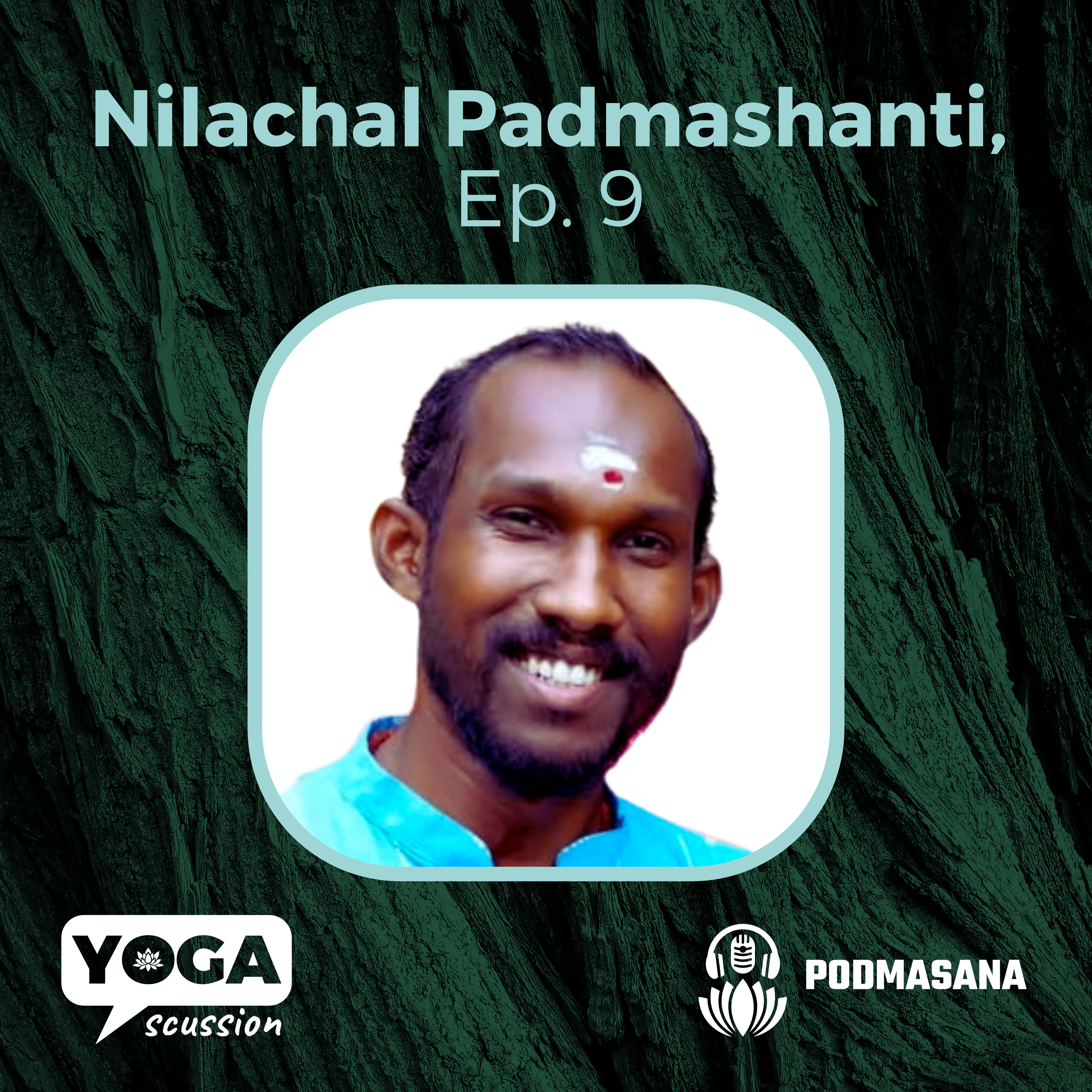
[00:00:45] Speaker B: So Gina, we've got another great guest here on Yoga Scution, Yogacharya Neelachal Padmashanti. He is a yoga teacher, yoga therapist and researcher and entrepreneur that's currently based in Pondicherry, India. And I almost was able to meet with him in others on a recent visit to India and was really bummed that I wasn't able to connect food poisoning, had other plans that derailed the plans. But he's being very kind to join us on this episode of a yoga scussion and we will welcome him on.
[00:01:21] Speaker D: Oh.
[00:01:22] Speaker B: Namaste Nila Chow.
[00:01:23] Speaker A: Namaste.
[00:01:24] Speaker D: Namaste. Namaste, Brandon. Namaste.
[00:01:28] Speaker B: It's so meaningful to connect with you. I was just telling Gina that Meenakshi and I weren't able to make it out to Pondich Cherry in part due to a bout of food poisoning for me and also our schedule in Bangalore. But it means so much to connect with you this way now, Nilachal. So thank you very much for joining us on Yoga Scussion.
[00:01:49] Speaker D: Thank you for this opportunity and especially to Meenakshi ji. And it wouldn't have been possible we had a conversation like I actually have a conversation with Meenakshi ji and I couldn't have a talk with you but I think we were in the loop somewhere and definitely the roots that has been connected is definitely where I am staying here, the Pondicherry. So definitely it is a wonderful. The world is round in a way.
[00:02:16] Speaker B: Yes, yes. Yeah. So just introducing you to Gina and yeah, we definitely wanted to ask you some questions after reading up about you but we thought it might be best for us and listeners if you'd be willing, Neil, a child to just talk a little bit about your background, how you came to yoga, its role in your life and where you are now with that journey.
[00:02:39] Speaker D: Yeah. Thank you. Thank you, Brendon.
So basically I am from the background yoga has given me. It was not at all as a professional career that I how I started and it all as a way of living lifestyle and as a student we had very competitive in India if you see it is more of the career options with a doctor or an engineer. That was the background basically.
And in my family background and cousins and all relatives we have the engineering background and I have seen their condition in the work life balance they used to have. So all the cousins and the brothers, sister, they all added the IITs, NITs and all those institutions where engineering is a very important subject.
So I have grown up seeing all of them. So I didn't.
I didn't want that to happen actually in my lifestyle and the healthy lifestyle that was missing in that whole duration of the work life and the family time that they're giving.
So from that time only I had it in my mind that something healthier career option should be chosen which is actually helping you to grow in yourself.
So that time I had the understanding of various aspects. There was a defense academy, the army to join. Another one is the yoga. Where I chose the yoga option because nobody in my family wanted me to go to army. Then I wanted to just go into that options how yoga can be helpful.
So during that time I was very much confused with the career options because that time yoga was not selected as a career option. It was back then when we were not celebrating International Day of Yoga. It came a little after that.
So I was in a dilemma and I thought of giving up doing any career options and job. And like that I will try to go somewhere where a lifestyle can be in a healthier way. So I went up and I went to a place where naturopathy center was there.
And it was all around a very good place. It was in the center of India. It is called Madhya Pradesh. And the name of the place was Sendva. So I went to that place and it was a naturopathy center built around the Indian ecosystem, the culture that it has there. So the cows were there. It was built around the cows.
How the cows and the milk and milk products can be helpful for a healthy living. And they have made it in such a beautiful way that it was made a naturopathy. And the products from the cow with the different health benefits, medicinal purposes. So they were built in that one. So I loved that place.
So I went there and actually after my higher studies I went there. So it was very new for them as well that someone who is not going for some career options and coming here. So they also accepted me as a like come here and if you want to do some seva or something like that, you are very welcome there. So I was learning all those things like milching the cows and naturopathy. The various aspects of the yoga and naturopathy, the asanas, the pranayam, the naturopathic practices that they were doing. The various aspects, the hip bath, tab bath, jalaneti. So all the practices were there. So I was not knowing the names and all those things.
Then one day, what happened? One of. I used to get chances to meet new people over there. People come for over a period of nine days to get their body cleansed up like the Shatkaram and the body cleansing processor detoxification.
So one person came there and he, I got the opportunity to meet him and he said like I, I was very familiar, I got very familiar with that person. And he was explaining about the career options that the yoga can provide. And I didn't know who was he. So he was mentioning he used to come twice that place he wanted to get his body cleansed twice a year by Shank Prakshalan, a cleansing process in yoga. I didn't know about that at all that time.
So that was the time I got the chance to know that there is something in yoga that career can be made. Then he told me there is an institute called Deva Sanskriti Vishwvidala in Haridwar. So I got the name there and he said like there are many courses.
[00:07:25] Speaker A: That's amazing. I was looking at all your articles that you've written and all of the studies you've done and I'm just, I just have to say I am completely blown away by your, your devotion and your passion to your studies and your research. And I just feel really honored to be able to talk to you today about all of this. It's such an amazing story to get started.
Well, one question that I kind of had already, just from listening to like your introduction and how you got into yoga and it kind of sounds like, but maybe you could speak to it a little bit is do you think that yoga as a profession in India is like becoming more widespread, like becoming more available as a, as like a way to make a living to be in, you know, like in, in America we have like yoga teachers or yoga therapists and yeah, I'm just wondering what your thoughts are on that which you've noticed through your career.
[00:08:22] Speaker E: Yeah, the scope of yoga that you want to talk about here.
[00:08:25] Speaker D: India.
[00:08:26] Speaker E: So that's the really a good question. And since the Yoga Day was being celebrated, it was when 2015. And in the United United nations it actually announced that we will be celebrating 21 June as the International Day of Yoga in worldwide.
Various career options open as you said, like in Western countries it is a lot.
And in India also there are a lot of various other options apart from being a yoga instructor or teacher. So the options are in multiple variants.
Just to give an idea about that, I will say there is one way where we are teaching as a yoga teacher as an Indian studio. So there are studios here who actually hire the instructors, yoga instructors to teach them, to teach their clients, their audience and all.
The second is the therapeutic part where in the hospital setups we have the yoga instructors, yoga teachers, yoga therapist, where they are being invited or they are actually being trained. They are actually being trained in their therapy, therapeutic aspects and they are being given the jobs.
Another aspect is the education where they are being taught, for example, as an assistant professor in universities like that.
And it the qualifications are there, you have to be eligible for that. So there are different examinations that have been conducted.
And the question you asked, like how it is being in western countries.
The career opportunities are there, but because there are a lot of yoga instructors, we have yoga teachers, we need a recruitment in that one.
So according to the present scenario, we have a lot of yoga teachers and we have a lot of qualifications. And there is a body called Indian Yoga association so that is growing up here. And like the Yoga alliance in west, you know about that. So that gives the affiliation accreditation for being a yoga teacher. So in India we have Indian Yoga association and that is a private body linked with the government. And they are trying to make it happen in a different way. So they have some criteria to select what kind of teachers can teach, what kind of audience or what their requirements eligibility are there. So Yoga certification board is there in India. So according to that, whoever qualifies that exam, like for example a yoga teacher and evaluator, there is one level, so there is a yoga instructor. According to that they can teach yoga therapist, yoga master. So there are levels in that. So they have to qualify for that exam. And according to that they are being recruited in different bodies, both private and the government. And government is giving a lot of opportunities there. Here in the government schools there are Kendra Vidyalaya where they are being recruited as a yoga teacher. And apart from that, the studios hire definitely as I already mentioned and in.
[00:11:37] Speaker C: Universities like where I'm working, I have.
[00:11:39] Speaker E: Experience of all these three. Just to give an idea, I was being in a yoga studio where I was teaching as a yoga instructor. Then I opened my own institute where I was like teaching the same. The second I got the chance to teach in a sports authority of India, one of the body in Jharkhand where I was to train our rehabilitation program were being maintained by me. I was a assistant coach there teaching the yoga for the sports person.
Then I got an opportunity to work in a university. I qualified the national eligibility test which actually qualifies you for a junior research fellowship and for assistant professor post. In that I got a chance to work as an assistant professor in a university in the department of Yoga Naturopathy. So all three aspects are there now. I am presently working presently as a research scholar here in Shivalaji Vidyapet University under the institution of Institute of Cell Progenesis and Complementary Medicine.
So here I am doing a research part as well. And I'm also trying to work as a yoga therapist. So there also recruitments are there. So there are multiple variants of yoga teachers. So they can be yoga instructors, yoga teachers, yoga therapists, yoga professors, or yoga like teachings in bodies. So like that I hope I answer you.
[00:13:06] Speaker B: No, it's great. And like, Gina, like, and maybe some listeners are thinking too, I really wish that at, you know, North American institutions, could there just be like a yoga school or a yoga college?
[00:13:19] Speaker A: There's one. There's one.
Yeah, I know of one. There might be two. I know of one for sure. But Naropa University has a master's degree in yoga. But I just. Man, Man. Nilichal I was just looking through like all. I read some of your articles this week. Like, I. I just went and read a bunch of stuff that you'd written and the breadth and the depth of your explorations in yoga is really profound.
And I downloaded the observational study on the intersection of Ayurgenomics, Deha Prakti and yoga therapy and cancer oncology. And like, I read the abstract and I was like, wow, this makes total sense to me. It just makes total sense to me. And I, yeah, I just feel kind of at a loss for words at how different our countries are approaching yoga and yoga therapy. And I feel like just looking at your research that you've done, like, wow, there's. They're actually taking yoga practitioners and like integrating them into a medical setting where, like, I just don't feel like we do that in America. It's like, you know, you can go to PubMed and search like meditation, or you can go to PubMed and search like yoga or whatever and get art, you know, get studies that have been done by scientists, but they never talk about the people who are teaching the yoga or the people who are doing the things. And I just see a big difference. So, yeah, I'm very humbled.
[00:14:47] Speaker B: Yeah. If I can pick up on what Gina was saying. Nila Chal. Like, that research is really fascinating from what I was able to take from it. You're kind of looking at how someone's ayurvedic Constitution, their pocrity. You know, some listeners may be familiar with that term, some might not be affects how they respond to yoga therapy. So, Right, so you've got like a vata person with chronic back pain. They might need something different than like a pitta or a kapha person. Again, these are terms that some listeners may be looking up after pressing pause. But you know, there's obviously listeners who are familiar with these terms.
So you're literally mapping this with like genetic profiling in a way. And this feels like. I don't know if you want to say it's. If I'm in a position where I can say it's cutting edge. But it really seems fascinating. And so could you maybe speak to your research a little bit that Gina and I were talking about?
[00:15:40] Speaker E: Definitely. And just to go into the roots like able to mention. And one thing more, I wanted to add to the previous question that you asked about the yoga teachers. So in India we have a very wise or very deep rooted system of the tradition, the yoga traditions. And you will find the savage tradition, the Bengali Tantric tradition. So there are a lot of traditions actually that has formed. If you go into the history of yoga and these traditions actually has built the yoga, what it is actually what we see today. The lot of appropriation is there, lot of disintegration, there is lot of mixing of a lot of things are there. So which we see today may not be yoga. But I just wanted to mention that yoga has its roots in its tradition, how it came from. And I had the very good opportunity to be in one of the tradition called Gitananda Yoga tradition. It is called Rishi culture, Astanga Yoga, Meenakshi Ji and all like Brendan, they all have like know about this. And also the modern traditions you will find like I already mentioned the Deva Sanskriti University, they has the Shanti Kunji where the Panishiram Sharma Acharya, he actually founded that patent founders of that institution. Similarly Kabalya Dham, the other institution there is a Bihar school of Yog Mungir. So these traditions actually build a lot of like Swami Shivananda. It is all over the world, Shivananda Ashram and all. So these are all spread all over the place. Here in Pondicherry you will find the Gitananda Yoga tradition, the Aurobindo Ayushramshi, Aurobindo and the other institutions. So these are all the roots of the yoga. And from there, if you see this is whole ocean that we try to see. So yoga as we can consider as ocean. And the thing that we're going to see about the Ayurogenomics at the Vata Pitta and Kapha is like the therapeutic approach.
And this approach is like a small part of that ocean. So we should not mix it in that one. So it is a part of the ocean. So we are trying to help the individual with an aspect or with the understanding of yoga as a way of life. And when we understand yoga as a way of life, it actually help us to build awareness, it educates us, and then it helps as a therapy. And that is where the magic happens.
So talking about the yoga therapy or like the Ayurogenomics, the Ayurveda and yoga, they both hand in hand. It is not like both are separated. Like how meditation is a part of yoga, it is not different from yoga. Asana is a part of yoga. So Asana, Pranayama, meditation, Dhyan, Dharana, all integrates and makes up yoga. So not a single entity is different.
So coming back with the question that you have about the Ayur Genomics or the observation study that I had done here in the Institute of Self Regenesis and Complementary Medicine High School of Yoga Therapy.
[00:18:47] Speaker C: So what happened?
[00:18:48] Speaker E: The in basic terms, we have the term of the body composition. We know the ectomorphic, mesomorphic, endomorphic like that. So that is more physical aspect. So in Ayurveda, if you go into the Sushrut Sahimita and the Charak Samhita, the Ayurvedic text, Vagabhat Ashtang Hidayam, Ashtang Sangraham. So in Ayurvedic text, the body is considered to be made of some compositions. And body is not only the physical body, but is subtle and the causal body as well. That is actually the yoga anatomy works the physical, the gross, the subtle and the causal one.
And in that aspect, the body composition is divided into certain categories. And the mental, the body or the subtle bodies also categorized into some bodies. So talking about the mental bodies, it is which is very vastly categorized is like Sat Raj and Satwik Rajastic and Tamsi. And they have been categorized multiple dimensions. So this is the mental division in the Prakriti. If you can just want to understand a very simple language. Coming back to the body composition, according to the anatomy that we have that physical aspect, then the physiological aspects, the functioning of the body, the digestion, the respiration, the sleep, metabolism and all that is another aspect.
And the third is the psychological aspect. Psychologically, how we think, what are our behavior, how we react to certain things. So all three coming together makes a composition. And that is what Prakriti is called. It is called Prakriti and the sages have named it as like V in three categories. Vata, that is the ear element, you can say, but not actually the ear, but vata. There is a very interesting thing that we can't translate each and every term in Yoga or the Ayurveda to English. So just it is relative.
So vata, ear element, pitta is the fire element. And kapha, that is the, the building up, the body metabolism or the fat, all these things make up in that one. So vata, pitta and kapha, all three are actually a part of our body. Without that, we would be surviving.
So this is body composition, which is built at the time of conception, when the male and female gametes come together. That is how the Ayurvedic text explains it. And at the time of that period, the prakriti of the individual is defined. And that lasts till you die. So from the birth to the death, that is, that doesn't change. So that is individual Prakriti. And when this happens, like, and this is what identity, what entity that has. And the environment where we grow up, the food that we eat, the place, the change of the seasons, day, night, afternoon, all these also have their own nature. So how our individual body, the composition, the vata, pitta and kapha relates or deals with the day, afternoon, night, the food that we eat, the seasons that we are experiencing, the place we are here in whichever part of the world they all come into.
[00:22:17] Speaker C: A composition of vata, pitta and kapha actually relates or it actually deals with the environment that we are here, the environment from the morning, day, afternoon, at night, then the surroundings that we are and also related with the seasons that we have. And also the phases of life, the childhood, adulthood and the old age. So all these aspects also are. You can make permutation and combinations. And according to that, our whole Prakriti works. That is what the Ayurgenomics talk about. And Ayurgenomics is nothing but an understanding of the body composition in terms of vata, pitta and kapha, that the physical composition, deha Prakriti and also the satisfaction, Raj and Tam, something that is called the manas Prakriti and that is more complicated one, I'm not going to go into that. But all these two together makes a whole Prakriti. And that is what Ayurogenomics is about. Each individual will act differently for Example a Kapha prakriti person will need a more sleep than a vata person. Vata person tries to be having less sleep, more active person will try to have more sleep and will try to do a very productive work in less time. So that is how it works. The pitta prakriti will be very aggravating. It will be in the middle of both of them. So this is how works quality that they have is like the Kapha Prakriti. People will have more behavioral aspect of giving and vatan.
The person will try to have more of the taking and pitta will have a both in a mixed one. So these are interesting aspects that were being mentioned in Sushru Sahita. So there are huge categories of qualities that actually make up a human being. And I'm not do not want to demean in that. Vata is good, pitta is good, kapha is good. All are good in their own way. And in Ayurveda we have to grow up with as an individual. That is where the a lot of things Yoga teaches us in understanding our own being. Where the Bhagavad Gita there is one definition of spirituality.
So knowing oneself is what it is that spirituality is all about. So that is what Yoga teaches in its all learnings with all practices. It is not about just doing some asanas or postures but it going beyond. So coming back. In Ayurveda there are considered to be seven body compositions and there are individual composition. Individual like some can be vata, one can be pitta, one can be kapha. Then the three more are there which is a two of combining two vata, pitta, vata kapha and kapha pitta like that. So there are two, two combinations and there are. There is one more where all the three compositions are together. Vata, pitta and kapha.
So in all these compositions basically you will find in real world scenario the compositions or combinations of vata pitta. The two combinations you will find very commonly put two, you end up three more. And that is what we found in our studies. And we were applying that like vata Pitta is not same as pitta vata.
So one is dominant, one is less dominant in that way. So in that scenario it becomes more like 10 types of prakriti in a body. And we tried to understand how individualistic approach can be given to different care seekers who have different kind of problem. So in this observational study we have the chance to experience the people who were suffering from cancer of different types of we were Seeing how the orientation of or the. How the onset of the cancer comes and how it spreads and how fast, slow and what are the progression of that condition. So this was the observational study that I had for six months in our institute where the Mahatma Gandhi Medical College. We have the oncology department there and they kind of integrate with the yoga therapy and all. So trying to bring another point here that the integrative aspect is very much required. So here we try to approach in that way.
So in this observational study we observed that different Prakriti, different compositions of vata pitta and other kapha have different impacts on different kind of cancers. And there was interesting fact that most of them were women here like with the breast cancer and the ovarian cancer, it is very common these days with a lot of reasons and all.
So we found that with the same conditions and all it was the progression was different with different person, different women and they were experiencing differently.
So just to make things short, the result we found with different Prakriti the progression was different.
And if you need, if we need to give something to them, the, the us, the therapies or the tools that we need to deal with them will be different. And it has to be individualized. Thus the conclusion comes that the therapy that we need to give in such kind of condition should also be individualized. And if we look upon the Prakriti then we can give a better yoga therapy.
Also if we try to give in terms of medical management, also if we understand their body composition, their physiological, physical and the behavioral aspect or psychological aspect. The allopathic medicines can also be customized or individualized. They can also be given in terms of the doses more or less and how it works. That is how like we came up ending up with this discussion with in this study. So I was working a similar topic in my PhD work where I'm working in the very common problem of back pain, non specific chronic low back pain. And it's very common everywhere. And I studied and we have made one protocol, one specific protocol for all the patients over there. The care seekers come to the hospital, they were being given specific therapy and we try to understand the Prakriti with a specific software that we have and by question answer with the Ayurvedic doctor that we have. And with that we try to find out what works for whom and we end up with a very good results. And the different Prakriti will have different impact of the yoga therapy that we are giving to them. So this is how the prakriti and the yoga therapy and the extra experiencing of that yoga therapy will be different for different people. So this is how it.
[00:29:18] Speaker B: Well, there's all sorts of questions that come to mind. Gina, do you have any?
[00:29:24] Speaker A: I mean. Well, one thing that came to mind as you were talking is how interesting these approaches are.
Because I think, you know, when we went. When humanity went through the Enlightenment period and it was like science, we really divorced science from the human body. Like, we started to look at ourselves as if we were, you know, machines or something like that. And as you were talking, I just. Sometimes I have, like, my mind goes into images. Like, I'll just see things in my mind as people are talking. And I was just seeing, like, just all these different human shapes and bodies. And I was thinking, as you were talking about prakriti and the different koshas and.
Or the different doshas, I was just thinking, like, this makes so much sense. Like, a westernized view of medicine is very robotic. It's very mechanical. It's very like, I'm gonna give you this drug and you're going to get better. But it doesn't actually take into account, like, the state of mind that we might be in or what our emotional body is. Like, what's going on in the emotional body. Or like, yeah, if I am more coughic in nature and you give me too much Earth energy in my medicine, like, I'm not gonna be. I'm gonna be too much Earth energy, right?
So I just. It seems revolutionary to me, but it's. It's actually just really simple, too, to like, think of human beings as organisms and we're made up of these elements. And how that individualized idea of approaching medicine from a very, like, organic place, where I. I think of Ayurveda as like a kind of organic practice in and of itself, right? It's like, what food are you eating? What are you drinking? You know, what kind of light are you getting? What kind of exercise are you getting? Like, that's all gonna affect your tissues and all of that.
So I just think, wow, you're kind of on the cutting edge of things there. Like, it's.
It's just really kind of hopeful in a way. You know, like, it's integrative.
I know that's not a question, but it's just what was coming up for.
[00:31:33] Speaker C: Me, I understand, like, how it is, and I would like to bring one very core aspect that we had earlier and now, how we are moving towards, like, the earlier and this. Like, my teacher and my guide, Dr. Ananda Balayogi Bhavanani sir. He is one of a kind. Like, he is the best person that you will find anywhere. And hope like Brendan Mali will come back, come here to Pondicherry. He will definitely meet him.
[00:31:57] Speaker B: Yeah.
[00:31:58] Speaker C: So he is like a superstar in the yoga therapy that you can see. So he has been guiding me through this PhD. And he is a wonderful human being really. So he talks about concepts of cellular genesis. And when we talk about like the health, we also talk about the diseases. So we know about pathogenesis. When we like how the diseases orient how it happens, the pathophysiology and all those things about diseases, we talk about diseases.
So there is a concept that is also need to brought upon which is about health. And Aaron Antonovsky, he was the originator of this term. It is called celtogenesis. And in Yoga, celtogenesis and yoga is very Much widespread by Dr. Ananda Balogi Bhavrani where he mentions. Back in earlier times we had the concept, concept of alternative therapies.
Either yoga or allopathy or naturopathy or alternative was there.
Then the complementary medicine came into a scenario where the complementary like either this and we can complement something else or the other.
Now the time and the period is of the integrative approach.
Whatever suits the person the best. The objective is to heal the person and to heal that person. Allopathy can help 20%. Yoga can help 10%. Naturopathy can help something more. Ayurveda can help more. And that all together can help that whole person to get healed. So that is the approach now we are looking upon.
So when we have the exact aspect of how to deal with the things, how to.
How to actually deal with the condition of the patient. Because nowadays this is very interesting. Like I would like to quote Dr. Ananda every time he is such a wonderful person.
He mentions like when patients come to him, they always talk about that I am a diabetic, I am like. Or I have the arthritis, I am. I am like that. The person is there, I am allergic. So where everything is like, individually, they are considering themselves as a diabetes, themselves as some disease. But instead the disease is one condition that happened to their body. They are not the disease. So we should differentiate ourselves from that condition. And that is what yoga does. And in this concept of cell to Genesis there are three aspects which is called sense of coherence. If they are in tune with us, we are healthy. And if we are not with the continuum, we are not healthy.
So it is comprehensibility how the our thought processes cognitive thing works and how the world looks around me. Then second is the manageability, how things can be managed. And third is the meaningfulness. What is the purpose of life?
If the purpose is a self base, individualistic, we are confined to our own life and not think about the others, it will mean different.
If our goal is little wider, we will think about our family and the relatives, it will mean different. If we have our goals bigger than that, the society or the community, it will mean different. So according to that also the sense of coherence, the health, the wellness can also depend. All these three things, comprehensibility, manageability and meaningfulness are in tune.
Or the score, you can say the sense of coherence score is higher. We are actually in tune with the health continuum. We are actually healthier. And if they are not in tune, we are not healthier. And yoga therapy helps to bring all things together and help us to have a cognitive mind where we are able to think how the situation is. For example, if I am here, sitting here, how the world look to me? What is my perception? What is my Drishti? What is my Drishti Kun? How I look the world, is it happier to me? I'm seeing the Brendan I'm happy with to see him here. Think all about the Yoganjali Natyalayam, the Anandashram and all. First time I'm seeing you and it's wonderful talking to you. So how I am perceiving things from my end. So if that is how the yoga builds in a way. So the comprehensibility, the manageability is about like how I deal with the situation. Situation. If something problems comes up to me, am I able to deal with a solution or a solution approach or the. The problematic approach. I'm just talking about the problems and not the solution. Finding the solutions for that problem.
So. And the meaningfulness, my purpose is little bigger than my own self. So when yoga therapy and yoga helps to bring all in a very. There is a verse where it calls the Vasudev Kutumbakam. So whole world is a family.
And this talks about that like you take care of yourself and also the people, surroundings and nature all around here. So that is what like I just wanted to mention here. This is there.
[00:37:05] Speaker D: Yeah.
[00:37:06] Speaker C: So Salvadorans is a very good concept where we really need to understand. It is related with the concept of Swasthya, the health defined in the Ayurveda, where it has a very beautiful definition.
The WHO has a definition that we all know that health is a state of complete physical, mental and social well being and not merely the absence of disease. Informative. So we were being wrote it like in the our college time and all. So this were being taught. But interestingly a better and broader version of or broader definition of health was given in Ayurveda where it is said samdhato malakriya.
So what it says some dosha, some is the balance. Balance. It talks about the balance when there is the doshas we got vata, pitta and kapha. So these are the doshas. Doshas are the body composition. So when these doshas are in a balanced state, agni, the body has a lot of fire element.
Basic understanding is the food that we eat, it is being digested with some kind of heat energy. So that is called jatra agni. So there are other fire element in our body which are according to the five elements that the Prithvi, Jag, agni, Vayu and Akash. And also the saptadhatus that are being formed, Rasaraktamas, medha, shukra. So all the dhatus that are being formed the transformation takes because of some fire element so considered to be agonies in our body.
So seven plus five plus one. So they come, they complete 13.
So 13 when they are in a balanced state, some dosha, some agony. So that 13 fire elements are in balance state, some doshi, some are some dhatu. So I told about, I said like seven dhatus are there ras, the one who eat food that it is it forms the rasa then the rakta, the blood. Then these other elements are being formed when they are formed in a very balanced state or it has to when it forms in a state where it has to how it has to be formed it is called, it is in a healthier state. So it talks about the dosha, Dhatu and the agni. So three are the in the some state. Then he talks about the mulla, the waste elements that is in our body. It has to be eliminated in a very regular basis because if it is not eliminated properly there will be diseases. There will be a lot of conditions in our body which will lead to diseases in some time now or later.
So that has to be eliminated.
Then it talks about the physical but the psychological aspect aspect. And it talks about the mana, Indriya and the atma. So the sense organs that is related with the mana both can be considered together.
So the mind has to be happier. And by happier it doesn't mean like it should have all these things. But it is state of equilibrium of Peacefulness and the atma. It talks about the spiritual health also where we have the spirituality, when we have the purpose of, when we understand ourselves better, then it is called whole as a health. Health is a complete package of all these things. When talk about physical health, the mental or emotional health and the social health and the spiritual health all together. So this is the definition that we get from the yogic and the Ayurvedic perspective. So all together combine as a health. And when we take it as an term as whole person centric approach, it actually helps then the therapy, whichever therapy, yoga therapy or any other therapy, it works phenomenally.
[00:40:57] Speaker B: No, and I, I appreciate all that. Neela. Chal. Like it's. I've been thinking the entire time, you know, while listening to you about some of the differences, right. That Gina touched on earlier with, you know, the different approaches from eastern medicine, western medicine within this context of cellular genesis and that approach.
And you know, to me the takeaway is that this approach is about generating well being rather than just treating an illness or disease. And that way of thinking is different from that of many people in the West. So could you maybe just speak a little bit about that?
[00:41:38] Speaker C: So here in India also we have like in our institution it is also in a very initial stages like the university that where I work here, the integrative approach and it is now being understood in many ways like the concept of cell genesis is not very like familiar with everyone.
So here in our institute we have this approach of integrating the modern medicine with the yoga therapy. And also we have music therapy. So the institute of Celtogenesis and Complementary medicine we abbreviate is iscm. So it has two schools, School of Yoga Therapy, School of Music Therapy. And under School of Yoga Therapy we work basically.
So in our institute it is one of a kind. It started with that where they found the need of the wellness component. You also mentioned the whole person centric approach requirement and that requirement led to such kind of innovations in a way. So there is interesting fact that happened here in our institute when it was newly inaugurated and there were very less patients and people were very skeptical like how yoga therapy should be here, why it is there. So there was one condition of the psoriasis and patients in this psoriasis department, they don't know what to do with them. And they were being treated with medicines, but it was not helping them.
So they were being sent to yoga therapy. So nothing works. Then they were sent to yoga therapy department.
So we have our principal, Dr. Meena Ramnathan, she is an amazing woman. And she's a yoga teacher. And she was there at that time and she was dealing with those patients. And the patients who were being sent to the yoga therapy, they were given some practices. And it was very difficult to deal with them at that time with a different. With limited response and all.
So when they used to come to the department and they were giving treatments and they were at the same time given the medical management, standard medical management, whatever they were being given.
So when the yoga therapy was included with them, their symptoms of psoriasis, the skin changes were being observed. And that was a drastic thing that came up with this kind of incident. And later on they understood, like, yes, with this approach, this can be done in a more better way. And gradually the department came into its real form, how it looks like. And it was interesting to listen. And when it was, it was very difficult for sure. Like how it all started in the beginning.
And because they were not having the mats, the mat. The story when we listen to this, it is like they were being in a mat coming for the yoga session. And it was very difficult for them because we have to change the mat because they were shed this skin every time. So it was very difficult in that way. But they were continued with that. So here there is very consistency and with the real time and correct approach and the very core in essence of yoga and yoga therapy comes when it is practiced, when it is practiced in its full way, how it is to be practiced. It gives it result in a very holistic way. And it not only will help the person to just to get treated for the problem that he has or she has, but apart from that, it works on the other areas of the individual. So it is interesting to understand, like yoga for obesity, yoga for cancer, yoga for. For different diseases, it is not like that, but instead it is yoga for the whole person is how the yoga therapy works. And that worked phenomenally. It worked beautifully to those people. And they understood those concepts. They understood that how yoga therapy can play a very important, indispensable role in that university.
And gradually the orthopedic department, then the cardiology department, OG department, then the oncology that I mentioned earlier. So all those departments realize that these things are necessary. So they start sending these patients to the yoga therapy as well. And with the. Along with the standard medical management, they were getting the yoga therapy, music therapy, and they were getting benefited.
So this came up here with certain kind of incidents. And it. It was a struggle. It was not very easy in that way. And gradually, when the integrative medicine came to in a scenario like, yes, we need an integrative approach.
And all these concepts comes came up. And there is a concept I just like to mention here that is called the pharmacogenomics. So it relates with the azonomics where the approach is individualistic and it is based on the Prakriti based something like that. I was trying to mention earlier that each individual should have a different kind of medicine instead of having same medicine for all. So that is so coming back. So the approach. We have a very good roots to our different kind of systems. And we value all, all of them. And now with the recent advancement and because of the promotion of yoga and we have Ayush ministry where the different therapies have been given importance. We have Ayush department in the government bodies and homeopathy. So all these come together and we have support where we are given chances to work on these areas. So Ayurveda can be integrated. We have integration in different parts. And for example, my guide, the co guide who is in who is a Ayurvedic doctor, she is in Haridwar. She is from Dev Sanskriti University where I studied my bachelor's and masters. And she Dr. Vandana Srivastava. So she works on a very interesting aspect where she is integrating various aspects of cancer. In terms of Yagya therapy. It is the Homa therapy that we call. They have named it Yagyopathy. So Yagya, the Yajna that we do. And the therapy aspect, when the fumes are being inhaled, the Pranayam practice are being included in that one. So instead of giving Ayurvedic medicines orally through the nasal by the inhalation, they're trying to do these things. So what I am trying to say that we have been given support in many ways. And the roots, the knowledge system that we have, the Indian knowledge system has a vast resources that is being applied now and is not something new that we are doing. And it is something very old, ancient and we are trying to integrate with the modern thing. And when it is being done, we are able to see the changes. And I hope in the west also because of a lot of maybe misinformation or a lot of other aspects. It is not being introduced there. And also in. In one way what I understand that in India we have openness to all and all the medicines are being given equal importance. If you want to take allopathy, allopathy, you can to take Ayurveda, Ayurveda, homeopathy. Siddha or whatever it is. So you are given liberty and it is given equal importance. Whereas in the western countries it is been confined, it is put in a box that if you have to do yoga it is like only limited with the studio and you have to do certain practices only physically, only.
And that is what like it is getting limited. Yoga is more seen in a physical benefit. It is compared as an exercise. It is not considered as a way of life. And because of that it is not getting that much of space in other parts of the world. And that is what the reason I believe it is not being more into that. But what I understand with the researches and all now it is coming up study in the functional dyspepsia that we had done and Dr. Garima Satya, she did a wonderful work on that. And nobody has done that study earlier. And the gut health has never been thought in that way. And it was a wonderful study. I just like to mention her and the study, if you can just functional dyspepsia and yoga therapy and you can name the doctor Garima Setia, you can search in the PubMed or anywhere in the research domain and it's a wonderful work. And this work actually shows how yoga therapy shows its impact with our gut health as well. And various techniques, not only techniques, the lifestyle also help to change the individual. So these kind of researches are coming up and as the more researchers will come, the understanding of yoga as a therapy, yoga as a lifestyle and yoga's education will broaden and the world is now coming together. So I think it will come soon.
[00:50:51] Speaker B: Yeah, and I appreciate that. Neilachal, like it's a good segue. Like in addition to the world starting to see yoga as this multifaceted, you know, thing, not just fitness, you know, you yourself, you know, you haven't just been in India, you've taught in Lithuania and you know, you've trained medical students, worked with cancer patients. So we're watching yoga evolve, right, and spread in real time. And obviously we're talking about the importance of maintaining like the cultural integrity of this ancient practice. When you see yoga practiced globally, the way that it has evolved maybe in some ways away from its traditional roots. What gives you hope, Neela Chal? And what maybe worries you or what maybe are you concerned with? Like, do you think we are honoring yoga's tradition enough while allowing it to continue to evolve? Do you have any thoughts along these lines?
[00:51:53] Speaker E: Yeah.
[00:51:54] Speaker C: So for yoga there is one very much interesting thing. Like when we talk about therapy, I will start with this that yoga as a therapy, when you look upon it has a. Has a very interesting quality. Yoga has interesting quality. It can go with any therapy. For example, if it is Ayurveda, it is allopathy, it is Siddha, it is unani anything. It has the preventive, supportive, any other aspects like the palliative. And all the aspects are there where yoga can be integrated with any medicine.
That is its benefits. And that is what it gives hope and that be used in any form. And it is not needed to you to perform any asana to get benefited. You can also practice the yamas and niyamas the.
Like that.
So. So these practices can also benefit like all the yamas and yamas can also benefit the individual to help them with. And this is what we saw in different aspects.
The different aspects in terms of mental health, the way we can behave.
It gives a lot of capsules in many ways. Like maith 3 corona mudita. How to do the.
How to deal with the other people, with the different kinds of people. We just to give an example, if we are in a corporate workplace and we really have different kinds of people. A lot of things happen in everywhere. We have to think about ourselves people we have to deal. So these kind of capsules actually help us to understand. Like for example the Mudita I told about the Corona Mudita Upeksha. So mudita is very interesting quality that you will not find in other literature. Like you will not find the concept of mudita elsewhere.
What it is mudita is try to being happy in others happiness.
So this concept, if you try to adapt, you will just.
You will get rid of the problems that you have. And you will become in a very different state of mind. And you will get rid of your problems for that moment. So that is very interesting. Maitri like Maitri is like to be friend.
Being friendly with the friendly people. Corona is like for some who is not. Who is ill, who is disease, who is not able. We trying to show compassion. So that is Karuna Mudita is like how I mentioned. It is like to being happy in others happiness. And those with whom we can't deal with them. It is Upeksha like just to ignore or just to maintain a certain distance with them. So these aspects are there.
So coming back to the question that you asked, like, these are the hope and these are the qualities that yoga has. And it Yoga has immense. Like if you talk about Ashtanga yoga there I just let you know there is no. Not only the Ashtang yoga, there is Chaturang Yoga there Is Shadang Yoga. There is Saptang Yoga. If you go into the text there are a lot of glimpse of Yoga. But Ashtang yoga is very popular because a lot of reasons. So that is why yoga has a huge potential and huge chances of getting in all around. But at the same time when like how the it comes in a Spider man movie when it was said like with great power comes great responsibility.
[00:55:27] Speaker B: Ooh, love it.
[00:55:30] Speaker C: So with this yoga with great qualities and its abundance and its ability to merge with all the modalities, with all the therapies and it can be used in many ways. It also gives some concerns to get that. And since the Yoga Day International Yoga Day is celebrated, people want to use this term yoga in everything.
And whether it is something not related with yoga, it is being made yoga. So that is the concern that we have at present moment. And a lot of aspects in cultural appropriation or cultural. Cultural misappropriation happen. And I have an opportunity to work with the ideas of cultural appropriation and misappropriation appreciation and yoga. Charity Padma and Yoga Charin Male they worked with Dr. Ananda Balogi Bhavanani Ji and they had made a very compiled a very interesting book where they it is titled as Yoga and cultural Misappropriation. I got a chance to translate it in Hindi for the Hindi audience and it has mentioned a lot of areas where the concern has to be taken. Just to give a brief in that it talks about the terms that we use.
We have yoga. Yoga is a term.
The term yoga is very popular and but it is a Sanskrit word. But the people nowadays don't want to use Sanskrit as the language of yoga. So yoga as a word like it has three meanings actually Yogi, it is like samadhi, the other other meaning. And the other meaning is the saiyam, the to have the Dharana, Dhyana, samadhi. So they are when come together, when we are balanced in a way. So it is saiyam itself in that way. So it has three meanings. Union and samadhi are taken together. So in terms of yoga that we have from our ancient Rishis or the sages, it meant only the samadhi. The real objective of yoga is always samadhi. I I should not tell it in the where it is in this way that the real purpose was never the health. Health was never the purpose of yoga. It was always the transcendence. It was always the samadhi state, the kaival layer, the nirvana if you can. If you can understand in that way.
So that was the actual objective.
So Yoga is a term which is a Sanskrit term. And today we are desensitizing the yoga. So we don't want to use Sanskrit terms in yoga. So that is actually one of the concerns.
And also like for example, there is a posture. And posture is also not exactly the term which resembles the term asana. Asana when it is defined, it is said is thiram sukham asana. And the result of asana is tato dhundwa anabhi gatha. So what it means, like when you are in a city posture, you are in tune with your own self.
So asana is not equal to the posture using the term in that way. So not all the Sanskrit terms can be translated. So that is one thing that is concerned in that way. Like in asana there is a asana called nataraj asana. And the natraj asan is defined from the Lord Shiva, he has done the cosmic dance. And from that the nataraj is the lot of the dance in that way that is not actually dance in the natraj. The asana came from that scenario.
But when we try to do the postures or the asanas that they are saying that is dancer's pose, it is not a dancer is different and natraj is completely different.
So that thing comes up. So this is of a huge concern. And similarly, the.
The postures that we do, the.
The mountain pose that we have and meruvasana is there. So it is not exactly the same. So there are different terms that we use in asana, tree pose and vrikshasana. So they may resemble in that way, but it is not exactly the vriksha is like it is. It is the same, but it is not give you the same feeling with that vriksha and all. So in the that way, the terms that are being used, some are used in a little closer to that way, but there are some which are completely away, like the adho mukha svanasana that were being used. It is Sanskrit term, but also it is not apt as it is. Or if you take in another way downward facing dog and the merusana if you say, or the parvatasana if you say. So downward facing dot dog and parvat asana are not at all same.
[01:00:26] Speaker B: So.
[01:00:29] Speaker C: One you can feel with the term that is being highlighted and one is the mountain. So you'll get a different picture in that.
So these are of concern the cultural misappropriation or cultural appro. This is cultural misappropriation where we are trying to keep the yoga, but we are not trying to keep with its roots, we are trying to keep it away from the roots roots. That is one concern.
And there is some places where there is considered appropriation. Is there where for example, there are a lot of practices that were not being acknowledged. For example, I can just. The practices that we do, like the yoga Nidra. Like it is termed as Yoga Nidra, just to take the name. But it is not the yoga nidra in many ways. But instead of yog nidra just to not to call it as a yoga practice, they can call it something else. There are many terms being used all over the Internet. And they're using the same techniques, same practices, but they will not acknowledge the practice. So that not acknowledging is being one of the another concern. And because it sells, it works. So because of that they want to use it, but they don't want to call it as an unique practices. So these two aspects are very much of concern. One is cultural misappropriation. Where are the yoga in terms of the language, in terms of the teaching, in terms of the studying, in terms of the dharmic aspect. And dharma doesn't relate with the religion.
Dharma is say Dharayati Dharma. Your duties.
So what are the duties of being in yoga? Like the yamas and yamas? Sadhana is very much important.
One very three important terms I learned in Vishwadalai, the college where I studied is the upasana Sadhana and aradna. Upasana is to sit to near the God or the deity or the divine. It may be in terms of idol, anything that you believe for 10 minutes. Something for small duration. Sadhana is like 24 into 7. Like you have to work out on yourself continuously. It is like how the India we have well to take out the water from the well. And we use the ropes. And if you find that if the. The edge of the that well is made up of rock. And the rope, if you pull it up multiple times, it makes the some marks so that mark or. Or you can understand in a way that pressure. The diamonds are not built with less pressure and less temperature. It needs continuous the pressure and the temperature. So that is what Sadhana is all about.
And Aradhana is to help people in whatever way possible the whole. If we want to see God in a way the society is the actual manifestation of the God. And we can help.
We can help society in many ways. So that is how the Upasana, Sadhana, Aradhana. So what I want to say that aspects of culture misappropriation is there where we need to adopt These principles and when talk about the cultural appropriation they are needed to be acknowledged. And if they are not acknowledged and they're being using, then it is a theft, isn't it?
[01:03:42] Speaker B: Yeah, yeah, yeah.
[01:03:44] Speaker C: So yoga, there are a lot of things that were not being patent. So we are patenting all those things. Copyright.
[01:03:51] Speaker B: Oh for sure.
[01:03:53] Speaker C: Knowledge should be in, in that way which should be available for all, in all the possible ways. So these the two areas that I feel that we need to think and we need to work on. And it is good that we are trying to work out on those areas.
[01:04:10] Speaker B: Thanks.
[01:04:11] Speaker A: So we've talked a lot about yoga in terms of like health and how it's integrated into these systems that help us manage health. And you've just given us so much to like think over. But I, I want to ask you a personal question which is what is yoga for you? Like what is it for you in your personal life as a human being, as a spiritual being, as Neelachal, like what is yoga for you?
[01:04:35] Speaker C: Thank you for that beautiful question.
[01:04:37] Speaker D: Actually.
[01:04:39] Speaker C: Yoga, from the beginning, if I say it as a, it always being a transformative yoga has made me understand myself in a many folds as where I was not able to understand it in a. As a goal approach it gives me a meaning. And when I try to understand in deeper way it gave me an understanding of the health, not only the health, the wellness in aspect.
And gradually when I understand health and wellness it helped me to go deeper into that it is more than health and wellness. And it gives you an awareness of how unaware you are in many ways. And this I learned when I started doing my research work. And here and here like would like to quote Meenakshi Ji and like the Yoganjali, Natyalayam and Ammaji so here where they were being taught the four fold awareness. And it is actually five fold awareness.
So in that awareness there is one awareness which talks about the awareness of how unaware you are. So yoga helped me to understand how unaware I was in many aspects. And still I'm growing in that way. And it helped me to grow each and every movement and in the way I am the way. And I am trying to learn something in the way I am just talking to you people the way I'm thinking about many different ideas, think, doing some activities, ideas that come upon.
So it is in a way like, it is not like I am a very perfect human being but I am understanding myself in a better way every day. So that is helping. And it's not like I am not stressed with Some work or I am not like sad or I am not in a very difficult situations and all. But something happens magical. I would like just to give you an example that the practices that we do in yoga helps.
So there is a practice called Savitri Pranayama. It is a rhythm and it is a very important, very basic and a very crucial practice in Gitananda Yoga tradition. And I have been practicing since long. And I also like to do running. I do a lot of running. So I have seen that a drastic change in that. So for this Savitri Pranayam, I would like to mention one very specific thing. When you practice, it is a practice just to give an understanding. It is a practice which is like two is to one is to two is to one. Like for example, if you breathe in for six counts, you have to hold for three counts, then again exhale for six counts and hold for three counts. So 6, 3, 6, 3 is the basic pattern that we follow.
You can do it in erect sitting, an erect position of a spine or lying down in position in a Shavasana. So there are ways to do it. So when I started practicing it and for longer time you get a very clarity about your thoughts. And like in the tradition we practice it for 369-3 multiples of three times. When you do for longer duration, it gives amazing benefits. Just to give you one example with that. And like there are many other practices as well. And it is not limited with the asanas, the Drishti. I mentioned the perspective.
So these practices actually helped me to understand the thought processes that I have. And with a lot of things in the life that we have. For example, like we have the relationships and all the breakups and all those things we have in modern day to day life. So we have lost. I lost my father, mother when I was joined here as a PhD. So during that time I have to keep myself also in a very stable condition and the family also. And when I have a very difficult situation, relationships and all. So these things all actually help you a lot in those circumstances.
The the attachments that you have with a lot of things. The bondages that we call Raga Dwesha, the Kleshas are there Avidyasma Maharshi Patanjali. He says like this, like there's a. A sage in yogic text is called Mahashipatanjali and he has given us like 195 sutras. The for the sutras which actually helps to understand yoga in a better way. So it is called Yoga Darshana in many ways.
So he talks about his Kleshas. Avidya said so in that Raga and Dwesha, these are the attachments that we are very much suffering. We can say in many ways like we are attached to some people, we do not like some people. So both are a kind of attachment. So raga is like we are attached. Like we want this, we want this and that, like that and another way like we want don't want to see this person, we don't want to deal with that person. We. We don't want this at all. So that is also Dwesha. So Rag and Dwesha, so those are the two attachments that we come in day to day life.
And when I have this experiences like just to give you an understanding. I was introduced to yoga in 2014 and now it is around 2026. And all these years with some way or the other I am practicing and like it is like, like going on. Like I still am growing. It is not something I have achieved. It is always growing. It is continuous process. So till now what I have experienced now I have a very better understanding of these attachments. Both the Raga and Dvesha. And I know how like all we, all human beings are very important, essential. And we need to be lovingly with all each of us like in that way. So we should love each other. So that concept came upon on its own. And the feeling that, the very feeling, I can't describe it in words. When you have this understanding, when you have these practices help you to grow with all these things you actually end up with dealing with person in a very better way. There's a beautiful concept of Pratipaksha Bhavana. Like when you are like you have and when you see a person who is very angry to you or who is very not good to you, how can be you good to that person.
So this is how Yoga teaches this. This is in a very layman's language, the Pratipaksha Bhavanam. So you have to deal with that person in a good way. So what is the correct way in that way. So with these practices over a period of time I have got some like it is automatically happened. I can't tell you like how it happened, it happened, just happened. Just like in a Lehman's language you can say, say like if you fall in love, you don't know how and why you fall in love. You just fall in love like that way. Similarly you have this experience.
When you are able to see things in a different way. When you are able to See, like only. Okay, front side is there, but now you're able to see from the second floor, third floor, maybe over the clouds like that. So we can have a good Google map so we can see. Okay, this is the thing that is there.
So that was developed over a period of time and that is what yoga is for me.
[01:12:09] Speaker E: And it is.
[01:12:12] Speaker C: Energy, you can say, which is helping me to grow every time. It's an. Yoga is a therapy, Yoga is education, and yoga is a way of life for me now.
[01:12:22] Speaker B: That is great stuff and I'm really touched to know that we kind of came into yoga at similar times, all three of us. I believe you said 2014, you know, and that would have been around the time where, you know, I think Gene and I were really getting into it. So it's nice to know that we have that connection.
[01:12:39] Speaker A: Yeah. And then can you describe what yoga means to you in three words?
[01:12:46] Speaker C: As I mentioned, yoga is therapy, Yoga is education, Yoga is a way of life.
[01:12:53] Speaker A: Beautiful.
It is a much.
[01:12:57] Speaker B: Yeah. It is just a huge honor to have you on Yoga Scution. Thank you very much. Hey listener.
Yeah, you.
I'm talking to you actually.
If you've been enjoying the show, please consider leaving us a review on your podcast listening platform or giving us a shout
[email protected] or you can also reach out on the socials.
We are on Bluesky, Mastodon, Instagram and YouTube.
Sharing a review with others helps a lot.
Thanks for listening and leaving a review.
Want to get early access to ad free episodes of the entire growing Yoga Discussion archive as well as live recordings? Want to submit comments and questions to the guests and the hosts?
You can join the Yoga Discussion Circle and receive a link to join each Yoga Scution episode as it's recorded. During the recording, you will have the chance to ask questions and participate in the Yoga Scushion yourself.
Feel good about being a sustaining member of the show while also joining the Yoga Scution with us.
Thanks for listening and we look forward to you joining the Yoga Scution soon.