Episode Transcript
Brendon Orr (00:00)
All right, Gina, we've got another great person on for another fun yoga discussion. What should we know about Megan?
Gina Clingerman (00:08)
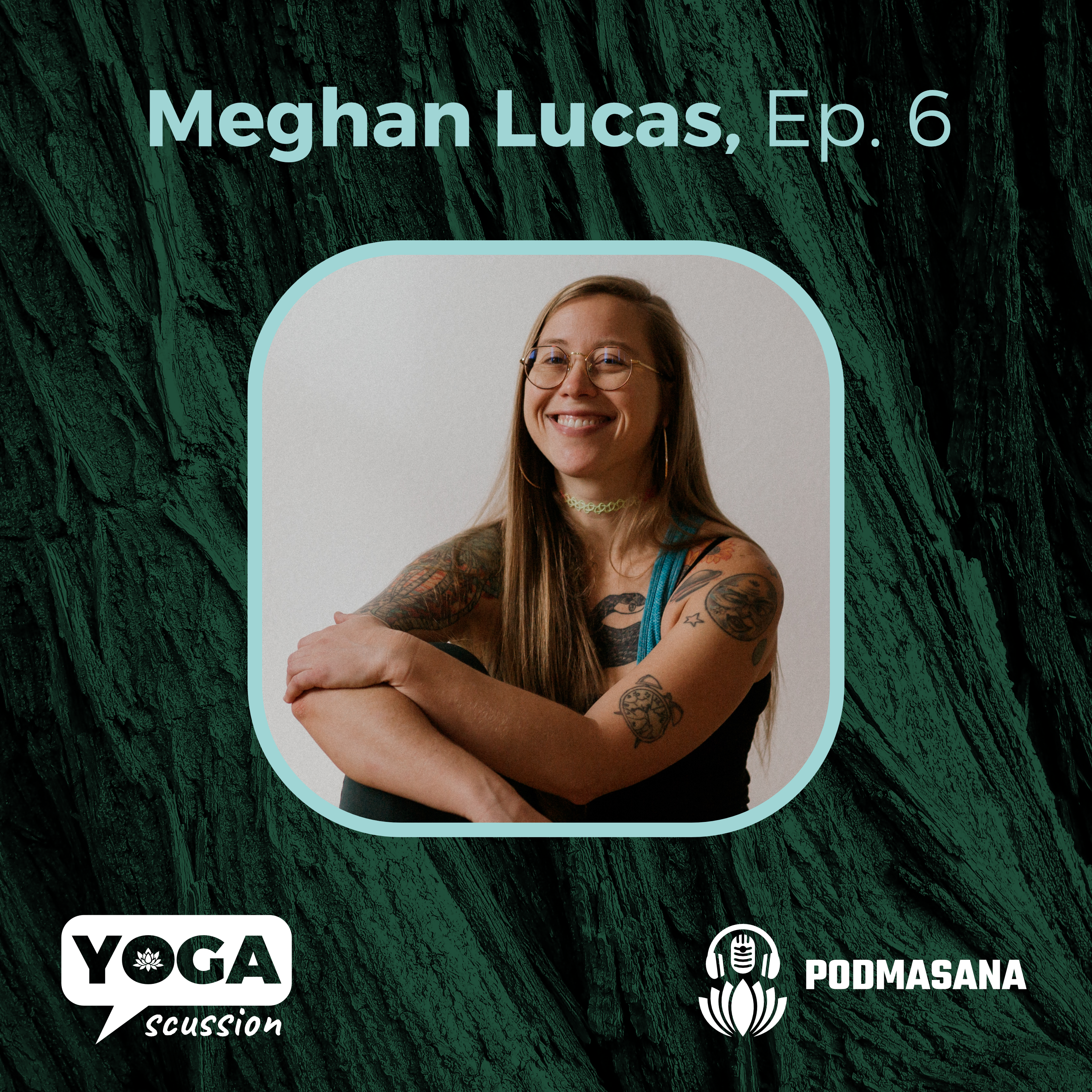
Well, we are talking to Megan Lucas today. She is a master Pilates instructor, an incredible yoga instructor and an intuitive guide. So she works in kind of like the spirit realm as well. Some things just to know about Megan is that she has over 4,000 hours of training in the fields of Reiki, yoga asana, pranayama, meditation, philosophy and mythology. So this could be a really deep conversation.
I fully expect it to be. ⁓ She's also trained, yeah, in Pilates and fitness. And she has over 5,000 hours of teaching experience in sessions. So she's got a wide repertoire of tools in her toolkit and a deep breadth of teaching experience, which is just super awesome. She's also a very dear friend of mine who I love so much and I've done a lot of work with her and
Brendon Orr (00:37)
Let's go deep.
Gina Clingerman (01:00)
The word that I use to describe Megan is she's a catalyst. She will start a fire for you and give it to you to run with. And it's, she's just impressive.
Brendon Orr (01:10)
Yeah, I love that. Megan and I went through a training, a decade ago or so. So it's just, it'll be wonderful to reconnect. shall we bring her on? All right.
Gina Clingerman (01:18)
Yeah.
Meghan (01:19)
Hello.
Brendon Orr (01:20)
Hello, Megan! Thanks for joining and being on YogaScussion. It's great to have you.
Meghan (01:22)
How's it going?
Yeah, thank you.
Gina Clingerman (01:28)
Hi,
sweet friend!
Meghan (01:30)
Hey!
You and your glasses.
Gina Clingerman (01:33)
Yeah, my cool circadian rhythm glasses.
Brendon Orr (01:33)
You
Yeah. Podcasting glasses, I guess. Yeah. Yeah. so there aren't any hard, fast rules, Megan, you know, for yoga discussions, we pretty much just dive right on in. So you can either throw a topic at us or we, we try to do our due diligence. We like to have some questions prepared. You know, we'd like to research our guests a little bit. but do you want us to throw a question at you or where do want us to go?
Meghan (01:36)
Yeah.
Yes, more studious.
Yeah, yeah, yeah, let's start with a prompt.
Gina Clingerman (02:03)
Okay,
so this will be kind of an easy first prompt, but I made up some other like more in-depth questions, because you know me. But I've seen an uptick lately in folks who are getting their yoga certifications and Pilates. And so I was wondering, how do you think that these two modalities like fit together, work together, kind of maybe cohabitate in the same?
areas or do the same maybe they do similar things for folks.
Meghan (02:35)
yeah, my gosh, okay. Just letting that ruminate for a minute.
So I can already feel this is going to go a lot of places. Bear with me. promise. like 90 % of the time, circle back. I'm pretty good at it. OK, perfect. Yeah. So what immediately comes to mind is asana, right? Like the physicality of the practice, which has kind of become.
Brendon Orr (02:46)
Great, great.
Gina Clingerman (02:51)
I'm always in for the long answer.
Brendon Orr (02:53)
We'll be there for the other 10%. It's all good.
Meghan (03:09)
like the fill-in of yoga. Like when we think about yoga, when you talk to anybody about yoga, what they're thinking of is like handstands, you know, most of the time, or vinyasa, which means breath to movement. No, it doesn't. It means to place in a special or specific way, right? Anyways, neither here nor there. But it's the gateway. It's the easiest way in.
to deeper states of being. I really do believe that and accept that. So I think that there's an appeal in that way. Because Pilates, and Pilates is struggling similarly to yoga in the sense that, of course, Pilates, know, Joe died in 1967, so there's not like...
this ancient, ⁓ and I say that in quotations not because yoga isn't ancient, but because we fetishize the ancientness of it. So even while it's not this ancient modality that makes it somehow unquestionable because we can hide behind the shroud of its ancientness, my god, it's changing a lot because there are people who call themselves Pilates teachers and there are even Pilates certifications.
where people are not learning about Joe, Joseph Pilates was a man. And he didn't call his work Pilates, he called it Contrology, it just kind of became Pilates over time. But neither here nor there. So it's kind of like suffering this watering down and like maybe a little bit of bastardization. But all of that is to say the physicality. I think people really like the...
Brendon Orr (04:40)
Mm.
Meghan (04:52)
Like it's like in yoga philosophy, like the stumble, you know, like the firmness, the directness of it. And I think like when people move from yoga to Pilates, there's also like this exhale. Because there's not, even though, you know, Joe does talk about mental, emotional, spiritual benefits, they're very peripheral. They're just in his books, which are like wild rants and raves of a German man in the forties who was a prisoner of war during World War I. You know, like.
Like those books are hard to get through and you're like, okay. But he does talk about a lot of those things, but that's not like what Pilates is. When people come to Pilates, they have lots of ideas, but it's all the body. So there's kind of like this relief of like, I don't have to do any mental or emotional work. I don't have to hold space in these bigger spiritual ways. I just can like focus on putting my shoulders here and engaging my core here and engaging like this muscle this much and like softening over here. You know, there's like all these rules.
And I think that that can be appealing to people who struggle to move beyond the physicalness of a yoga practice. And I was that way. Like, I'm so harsh on this fact, or on this notion, because I was that way. I just wanted someone to tell me the rules. Like, shoulders down, like, upper cross syndrome. Guess what? When we look at the evidence, like when we look at data, there's no such thing as upper cross syndrome. Like, it's not.
Brendon Orr (06:00)
you
Gina Clingerman (06:00)
Mm-hmm.
Meghan (06:13)
But we talk about it as if it is. And it's just because we want to organize the world in a way that is simple. So if we just do these right things, we get these right actions. while yoga philosophy does tell us right action gives us more predictable outcomes because we're acting in accordance with the reality of ourselves and the world, not just with our perceptions of it, at the same time, you're just doing the action for the action's sake. That's also Bhagavad Gita.
Gina Clingerman (06:23)
Hmm.
Brendon Orr (06:42)
Mmm.
Meghan (06:43)
But when those things are hard to move beyond, we just look for different modalities. So I think that's one piece of it. Two, like the physical, again, is that beautiful gateway. Like you find more of yourself inside of the work. It is very thoughtful movement, especially with people who are classically trained and focus on evidence-based fitness kinesthetic data.
Gina Clingerman (06:47)
Mm-hmm.
Meghan (07:05)
And when you are working inside of Pilates, there's so much focus on control and precision, like very intentional movement, very deep engagements. And I'm not talking about like deep core, because again, that's something that does not exist in scientific research. You have a core. You have muscles inside of the core. Some are on top of others, but really like the core works as one whole unit. Like you're not really ever isolating movements unless you start isolating muscles, excuse me, unless you start twisting.
Gina Clingerman (07:19)
Yeah.
Meghan (07:33)
But even then, there are very specific rules for isolation, which doesn't actually happen. It's more just a bias, not an isolation. So give me a second. My train of thought is going to catch up with me. Okay, yes, there it is. with Pilates, when you tap into these deeper rhythms and you do things that are ultimately very simple in the body but challenging for the brain, like in Pilates, there's a lot of one-foot pointed, one-foot flex.
Brendon Orr (07:40)
Hmm.
Yeah
Meghan (08:03)
you wouldn't think that that would have such a profound impact, but we are so habituated in our movements that it's like very challenging for people. Like they're like, wait, what? And that's like, but that's, puts your brain in your body. puts your focus on what you're doing and nowhere else. And so that's how you get some of the really like profound mental, emotional, and eventually spiritual, if you want them benefits. But again, they're much more peripheral to the physical work.
Gina Clingerman (08:11)
Mm-hmm.
Meghan (08:31)
So when you're doing those things and you're engaging the core simultaneously, I think there's this rewriting that happens in our physical natures. Like we stop getting, we stop moving through the world how we're used to it, just based on our patterns, which don't have to be bad things, but you know, a lot of us are in pain. And it's not about how people look at the grocery store, right? Like I have been that person in the past who sees the woman like leaning
Gina Clingerman (08:49)
Mm-hmm.
Meghan (08:57)
on her cart because she can't stand up on her own and I want so badly to like give her my card and be like come see me. But like what an asshole am I to like make an assumption that she needs me or that I can look at her and assess what her needs are and give them to her. You know that's because when we look at the data of alignment and posture there's no one ideal alignment. People are asymmetrical from the inside like our pelvis. ⁓
Gina Clingerman (09:12)
Yeah.
thank you for saying that. I just want to say thank
you for saying that. I see so many students in my classes struggle to like, you know, like be perfect and have these aligned, you know, symmetrical bodies. And I'm always saying like, we are not symmetrical. You will never be symmetrical.
Meghan (09:39)
No,
no, no, no. so just one, pelvis, right? Okay, so human to human, pelvis is very different. It's not even about the male-female divide, even though obviously yes. Our hip bones, which are those three bones on each side fused together, just commonly called the hip bones. Hip bones can have variation and deviation inside of each person, sometimes up to 20 or 30 degrees as a normal
Gina Clingerman (09:45)
Yes.
Brendon Orr (09:52)
Mmm.
Meghan (10:08)
quote-unquote deviation, which means there are people who exist even outside of those ranges. And so like that individual, you're not ever going to just like straighten up enough or work like your, you know, side body muscles enough to be symmetrical, especially from the way that it might look from the outside. Like it's just not gonna exist. Like I think about Freya, my daughter, and when she started crawling, you know, it's like so amazing to watch how movement.
Brendon Orr (10:13)
Hmm.
Meghan (10:36)
my gosh, on top of everything else. anyways, when she started crawling, you know, just putzing around, like hands and knees. But when she got super stoked, like she saw something that she wanted, she would stick out her right leg, put the foot down, and then use that as like a kickstand, but it was only ever the right leg. And that was like at six months, you know? And that is ⁓ an example I do give a lot. But it's like, aw man, she's asymmetrical from six months, you know? Yeah.
Brendon Orr (10:50)
Mmm. Mmm.
Gina Clingerman (10:52)
Hmm.
She's already got a preference for
her sightedness, you know? And that's just something that we carry through our lives that I don't feel like needs to be quote unquote fixed, right? It's like, I'm right handed. I use this arm all the time. Yeah.
Meghan (11:06)
Yeah.
Yeah
Yeah, and
Brendon Orr (11:18)
You
Meghan (11:19)
like
you're always, when you're driving, you're always going to be turning around to the right, or depending on where you live and what kind of car you have, but you're always going to be turning the same direction to like grab whatever's in the backseat. So we have all these habituated movement patterns and Pilates when you start to develop this internal intelligence system of not doing things the way that we're used to doing them, based on like an immense amount of history, your entire existence, even inside of the womb.
Brendon Orr (11:29)
Mmm.
Meghan (11:48)
things are happening that are gonna give you biases and there's different parts of your body, things like that. But Pilates takes us to this like holistic place where a lot of like magical things are happening. And it's not really magical, it's just like reorienting the nervous system ⁓ and putting heavy loads in that reorientation. And so I think there is something very appealing for people who do like deeper work in Pilates as much as there is inside of you.
Brendon Orr (12:10)
Mm.
Meghan (12:13)
⁓ But you know with Pilates the reality is it's physical like it is your body It's gonna be your breath and those things are gonna have like rippling effects into other realms of your existence and your daily life But it's it's the body and so I think those two things ⁓ First off like we can stay physical because god. We don't know what to do with all the non-physical Makes it appealing for people who you know come from yoga backgrounds you what My gosh
Brendon Orr (12:14)
Mm.
Especially in the West. Yeah. Especially in the West. Yeah.
Yeah.
Meghan (12:41)
Yeah,
so I should definitely put that caveat that yeah, I am explicitly referring to westernized yoga and American yoga because that's where I have the most end-owned experience. Yeah.
Brendon Orr (12:53)
Yeah. I mean, that's where we, that's where we all came from. Right. And I think I
really appreciated this conversation so far because, know, for me, Pilates has always been on the periphery. It's never really been something that drew me or I went towards, and that's no assigning of anything to it. Right. I just, it was just always there. And so when I came into yoga, I want to say as popular as in terms of popularity, it was on its way down or out.
And it seems like maybe it has come back a bit and maybe yoga is not as popular. It was a decade ago. You know, what are your thoughts on that, Megan, having been in the industry for a bit and seeing these, you know, kind of ebbs and flows.
Meghan (13:38)
Yeah, definitely. So I have a lot of people who come in. I'm in a college town. I'm in Laramie, both of y'all have been here. And yoga has kind of had like its stamp in this town for a while until I'd say maybe the last five or six years. And we could say like COVID shook it up, but honestly, I think what is going on with westernized yoga has been happening for at least the last decade.
Brendon Orr (14:02)
Hmm.
Meghan (14:03)
Because like I, it's a dramatic statement and I don't mean it like it's over, but I do believe that yoga in the West is dying. And I think it will die. As we are familiar with it. And I think a lot of different things can come from that. But yeah, I've definitely seen a surgence Maybe it's a resurgence, I don't know. But it feels like a surgence of Pilates. And then it's like I mentioned earlier, it's suffering.
Brendon Orr (14:16)
Mmm.
Meghan (14:29)
all the things that yoga has suffered, where it's just watered down, people are saying things are Pilates that aren't based in Joseph Pilates' work, which doesn't have to be a bad thing, but is it Pilates? I'd say no. I'm not the gatekeeper. I don't know where that threshold is. I don't have good answers for that, but when I am a student or a practitioner, I know who feels good to work with and who doesn't. And that's kind of really all I can.
Brendon Orr (14:54)
Mmm.
Meghan (14:57)
all I can offer in that regard. But yeah, I've seen it get really, really popular. And then of course it's being taken over by skinny white women who are conventionally attractive, wearing all the hottest gear, and they've got their special Pilates socks, which Joe, like, adamantly, he had his little slippers on, but he was a barefoot dude. Like if you see his old pictures, he's got his little ballet slippers.
But it's just, you know, it's like it's all about selling the gear and the in-range. Yeah, yeah, of course.
Gina Clingerman (15:23)
Yeah, capitalism. It's capitalism.
Brendon Orr (15:23)
Hmm
Gina Clingerman (15:27)
It's what can we make money off of? I want to ask you to go back to what you said yoga is dying. Can you expand on that? I would because I have similar thoughts. But of course, I always work better when I'm thinking with someone else. So yeah.
Meghan (15:41)
Yeah, when we're riffing, ⁓ saying,
right? And it's like, that's also like the importance of talk therapy or writing things down or dialoguing versus just doing it all in your head. ⁓ Yoga is really, like from what I see, like nothing more than fitness. Kind of like mainstream anymore.
Brendon Orr (15:45)
Hmm.
Yeah.
Hmm.
It's been absorbed into that commodified, you know, like arena, you think, and then like maybe the deeper stuff is, has become, I don't want to say less popular, but maybe that has become a niche, you know, and, then the fitness aspect of yoga is what has kind of risen to the consciousness of most people. What do you think? Hmm.
Meghan (16:08)
Yeah.
Yeah.
I Yeah, I think it's
like very much an expectation of gym atmosphere.
So when I was, I've owned a studio on and off for a number of years now. And I've pulsed in and out of working for other people at their studios or like collabing with people. And I've gotten a lot of criticism because I don't teach with music. It's just my choice. I used to, I used to be that playlist person like 10 years ago. I mean, you and I were in the same training. We learned the same things.
Brendon Orr (16:53)
Mmm.
Yeah. Yeah.
Meghan (17:05)
And the thing is music is just too influential in one way or another. Like even like the spa music. It can be grating after a while. Like it's just like we just need less. Yeah, not more. Like ⁓ so I've been criticized for not using music. I've been told that I use too many Sanskrit words in class. I've been told that I focus too much on breath work and meditation. ⁓ I've been told that like sharing mythology is too overwhelming for students.
Gina Clingerman (17:13)
It's like elevator music.
Brendon Orr (17:16)
Mm-hmm. Mm.
Hahaha.
Mmm.
Meghan (17:36)
And I get that when people own businesses, you gotta bring in the money. That was something I always struggled with when I was up in Lander. ⁓ And I know Gina knows that at an intimate level. Because you gotta do what pays the bills. And I totally get that. But at the same time, we're doing it at the cost of this technology. And that's what really believe yoga to be.
Brendon Orr (17:43)
Mmm. Mmm.
Mmm.
Meghan (18:03)
a technology to work through the machinations of the mind. So that way, when you understand those on an incredibly intricate level, you have that bird's eye view. And the thing about the bird's eye view is like, that is that, you are something else. And then, know, and like, it just progressively builds over time. But I think those things are being washed away in this idea of like alignment. Like I've seen like alignment based yoga.
Brendon Orr (18:06)
Hmm.
Meghan (18:29)
modalities where they lay out like grids and you like put your body on the lines and like I just don't really know how I feel about that. I don't I know how I feel about that. I don't like it. But like who am I to say like what is more yoga than something else? I just don't really know.
Brendon Orr (18:39)
Yeah.
Yeah.
Well, yeah, and you've
Gina Clingerman (18:49)
It
it seems to me, my thoughts on this whole yoga is dying thing is that there's two ways yoga is moving right now is like, one is like this deep inner world of meditation and pranayama and like deep spirit work, right? Like I'm thinking people like Sean Korn, I'm thinking like,
you know, sort of almost taking yoga to a place where it's like, we are the resistance and the rebellion, right? Of like, of like not only being embodied, but also like doing this deep spirit work. And then there's the like commodification, the capitalization of yoga of like, this is my workout. This is my, I'm not going deep, right? I'm just like, I'm in my body and I'm moving my body because it keeps me healthy and supple.
And there's like a, it feels like there's a dividing line where you're either or right in some ways.
Meghan (19:40)
Yeah, and then you
kind of like bastardize one or the other because I also I see it like on that other side like you mentioned like Sean corn and not saying her explicitly at all. But I see people
Gina Clingerman (19:50)
No, just like that,
not the mentality, like that's kind of the path. Yeah.
Meghan (19:54)
Yeah,
I see people who get so fixated on that depth or what they perceive or determine is that depth and then they like poo poo the physical, you know? And it's just like, and I mean I think that's like a very like classical yogic philosophy, like classical way philosophically through a yogic lens of viewing the work but I don't think that's why they're doing it. I think there's like a sense of superiority.
Gina Clingerman (20:05)
Yeah.
Meghan (20:21)
And I think kind of like this deeper embedded ego and that's why I talk about this all the time in yoga trainings We don't read the third and fourth book of the yoga sutras, right? We're like, oh there just talks about like the superpowers and all the things that'll happen like no it doesn't Like it talks about all the ways that you are going to be tricked into stopping your practice by your ego
Gina Clingerman (20:21)
Yes.
Mm-hmm.
Meghan (20:44)
That's what
Gina Clingerman (20:44)
Yeah.
Meghan (20:45)
it talks about. And then it talks about what is required to move beyond that next layer, which will feel like superpowers. And in some instances could be. Like, I'm not gonna, like, I talk to ghosts. I clear people's houses out. I like talk to celestial beings. I live in many different realms. I used to be super uncomfortable with that aspect of myself. I thought it would.
make people not take me as seriously if I were to bring up those elements of who I am, but now I just don't care. You know, like you don't have to like me. means I probably don't like you either, right? So, not y'all.
Brendon Orr (21:20)
Well, no, it's
Gina Clingerman (21:21)
Yeah.
Brendon Orr (21:23)
interesting, right, Megan, because I think, you know, autobiography of a yogi is very, well known book. And I don't know how commonly it's, ⁓ included in teacher trainings. Now it certainly didn't seem like it was back, 10 years ago or so, but I think that touches a lot on what you're talking about. And, know, you were talked about some of your writing and, I did read a little bit of your blog post and there was a really interesting one.
about what you mean when you say yoga that's kind of related to what we're talking about. And like you touch on the complexities and nuances and how it can be misunderstood or oversimplified. Would you mind elaborating on kind of what you mean or what you meant in that blog post and in terms of helping us trying to create a more nuanced and inclusive understanding of yoga? I know it's kind of a big question, but.
Meghan (22:14)
No,
no, I remember that piece and it's funny, I was actually thinking about it this morning and I was like, feel like I need to go back and reread that, which I didn't do. But I had it in my head, I should have listened. But I do remember that piece and I remember being angry when I wrote it. ⁓ So, you know, already it's gonna be stinted to a certain extent.
Gina Clingerman (22:23)
Whoa.
Brendon Orr (22:31)
Mmm.
Meghan (22:39)
Like it has a lot to do with the commodification, ⁓ I think. And I hate the way yoga is sold. Like when you just type in like yoga, like, because that's what I did. I just typed in yoga to YouTube and the things that I got were pornographic. ⁓
Brendon Orr (22:54)
Mmm.
Meghan (22:57)
And that's not to say those individuals can't do that. You can do whatever you want. Like that's the gift of human life. Like we can do those things. But it was just like, you know, scrolling down, was just video, video, video, video, video with the clip of always a woman, always a white woman, always a thin white woman, always right on her vagina. Or like her butt, which with her pants like pulled really tight just so you can see each cheek.
Brendon Orr (23:03)
Mm-hmm.
Meghan (23:21)
individually instead of one butt space. know, it's... And it's hard because I also have like a personal opinion and preference on what the practice is because of one, what it's done for me, and two, what I believe it can do for other people. And so a long time ago a teacher told me like yoga is not your workout.
Brendon Orr (23:24)
Mmm, mmm.
Mmm.
Meghan (23:46)
and that pissed me off. didn't like hearing that. It really, really upset me. I have, you know, I have a... Yeah, like how dare you tell me I can't work hard or to work hard is like invalidating this practice that has brought me so much, you know, but I was confused. Like that's that black and white thinking that I think, yeah, Gina, you had actually mentioned in the first podcast.
Brendon Orr (23:51)
That absolutely is my workout. What are you talking about?
Hmm.
Gina Clingerman (24:03)
Yeah.
Meghan (24:09)
And I've chewed on that for a long time. I think about it still a decade later. And it just is so hard for us in the West because of the schema of our education system and capitalism and this idea that our worth is tied to our productivity. All these things that we all know to some degree. But it makes this kind of work that is purely
Gina Clingerman (24:29)
Yes.
Meghan (24:36)
experiential very very hard because what we want is to read the book. We want to be given our list of rules one through ten and then we follow them and then we have yoga down. We achieve in life. Yeah, yeah and and the hardest part is like I don't know what do you think you know when people ask questions and it's like what how would you answer it because that's the only answer that's ever gonna matter but people don't like that.
Brendon Orr (24:47)
We get our results.
Gina Clingerman (24:49)
Yeah.
Meghan (25:03)
⁓ And I didn't either and I just didn't realize that it took me a long time to break out of that mold of like You got a play to find out yo like there's just and you're gonna mess up
Brendon Orr (25:05)
Mmm.
Gina Clingerman (25:13)
It's so hard.
Brendon Orr (25:13)
Well, and the rabbit, yeah.
No, I
Gina Clingerman (25:15)
It's just so hard as a human because like we live in such uncertainty where the rug could be pulled out at any minute. like, I fundamentally think that this is why we have religion, right? Like in any form, like any kind of formal religion is because of uncertainty. It's like, I just need one thing that I need to know is certain. And maybe that's the afterlife. I don't know. I don't know.
Brendon Orr (25:36)
Hold on to.
Gina Clingerman (25:40)
about, I mean, like, I don't want to go talking about religion too much. But I feel like that is the uncertainty of being embodied, the uncertainty of, like, knowing that we could die at any minute, but not really believing it until it happens. Like, it's, yeah, it's like, I want the rules. I want the rules and I want to know that I'm going to get there. And the real truth is that A, we're already there. We're already there. B, this is a playground. And C, we don't know.
Meghan (26:02)
Thank
Gina Clingerman (26:07)
Like we don't know the real truth and I don't think we ever will. Maybe until we are like on the threshold of death and then like it's like, whoa, ⁓ okay.
Meghan (26:16)
Yeah, because yoga, like, I think people can disagree, obviously, and I think people will disagree, but yoga is a religion. It's also a cosmology. It is also a methodology. It is also a goal. It is also a process. It is also a recognition, you know, and it's
Gina Clingerman (26:21)
Yeah.
Mm-hmm.
Meghan (26:35)
It's hard to encapsulate and distillate all of those things into like 60 minutes where movement actually needs to be the number one thing that people do so they don't complain about spending $20 for that hour. And it's just so hard to do that.
Gina Clingerman (26:45)
Yeah.
Brendon Orr (26:45)
Nice. Yeah. No, it's spot on.
Gina Clingerman (26:48)
It's like a yes and yes
and yes and yes and, but yeah, then we capitalize that we put a money value on it. And so then people are like, well, I need to get my dollars worth out of this. And it's like, yeah, how do you take all of this cosmology, mythology, meditation, this sacred, in-depth spiritual work and also like the work of moving your body and.
you know, have someone go out of it feeling like, yeah, I got my money's worth out of that. Or like, I wish we could shift the paradigm and like, you know, I mean, some people have done this with like donation based stuff where they're like, just make a donation. But also we're yoga teachers and we need to eat food and pay for the homes that we live in and pay for our yoga insurance and pay for our clothing and you know, our certifications, our continuing education, like we...
Meghan (27:30)
Mmm.
Yeah.
Well, back in the day, like...
Yeah.
Gina Clingerman (27:46)
Like it's like,
it's such a tricky, there's no answer, but it's a tricky question.
Brendon Orr (27:52)
Yeah.
Meghan (27:52)
Yeah,
Gina Clingerman (27:53)
You're getting me all riled up. ⁓
Meghan (27:53)
I have no shame. No, I feel bad. I have no shame around charging anymore. Like I used to feel really convoluted and weird about it and people will make you feel weird about it. People will come in here and assume that they don't need to pay me and that they can say that they're gonna pay me later and maybe they will, maybe they won't, but who cares because it's yoga and it's supposed to be a gift that's free for the betterment of humanity. No, like first off, yes, but no.
Gina Clingerman (28:04)
Mm-hmm.
Brendon Orr (28:16)
Yeah.
Meghan (28:17)
It's a transaction. even way back in the day when it was the esketic mindset, those people who went to the hilltop and they were in their undies meditating 365 days a year, if they had a student come and find them, that student paid them. Sure, not in dollar bills, ⁓ not in rupees, but in food, in chores. Yeah.
Brendon Orr (28:37)
Hmm it was gratitude, you know
Meghan (28:41)
there's an
exchange that must happen and I fully accept that we live in a world where that exchange is monetary. I'm okay with that because I need to receive as much as I need to give and when I don't, when it's one sided, I get really angry, I get resentful, the work suffers because I'm not doing it because I'm just trying to get through it. So it's like I do...
I believe that the exchange is necessary in some way, or form. And then like, you know, when you have kind of boundaries around that exchange, there's so much space to do things like donation-based to work. Cause I, there are a few people I work with at no cost and at 25 % and at 50 % cost. But I am really comfortable doing those things because one, those people show up.
And two, because I have harder boundaries with the people who don't ask for those things or who I know can afford it or who aren't suffering from systemic oppression. That I believe that I have enough space in my life to do that. Like I'm still earning enough to take care of my family and take care of me. So.
I like that's been an interesting and like new development in the last few years, but I really believe in the requirement of the transaction for student and teacher in any realm, not just here in yoga.
Brendon Orr (30:01)
Yeah.
Yeah. And, ⁓ I think we should all probably keep in our minds and listeners can be aware of it too, is, you know, Krishna Macharya is a very revered, you know, figure. he's referred to as the grandfather of yoga, the father of yoga, depending on where you're reading this reference. And it's also important to understand that this individual was also a bit of an entrepreneur and he had access to very wealthy people in Mysore, India.
And, you know, it was a way to make a living, right? And so I appreciate where this discussion has been going because it's certainly an aspect of the yoga profession, whether it's been in the East or we're talking about modern West.
Gina Clingerman (30:36)
Mm-hmm.
sure.
Meghan (30:48)
and then abuse it with meaning. If it didn't cost you anything, and that does not have to mean money, but if it didn't cost you anything, it would hold no value for you. ⁓ And I do see that. One of the reasons I don't do exchanges anymore, because I used to do trades and stuff like that. Like, people come clean the studio, they can take classes for free. But the problem is people don't honor that. It's just because it's not enough.
Gina Clingerman (30:58)
Right.
Meghan (31:16)
truly of a buy-in. Yeah. ⁓ And so I like don't do that anymore, even though it's really hard because some people approach me and like sometimes it's really ideal. Like a massage therapist in town was like, hey, let's exchange. And I was like, hey, I know this sounds so silly because we will just be exchanging the same money back and forth. I was like, but I think we should just pay each other. ⁓ Because then it like it's explicit and it's not nothing is suggested or up for interpretation.
Gina Clingerman (31:16)
It loses value. Yeah, it loses its value.
Brendon Orr (31:38)
Yeah.
Meghan (31:46)
And like that's what you need. You less complication because everything you're going to be dealing with, you know, specifically in the realm of yoga, which is...
Infinite as infinite as the cosmos themselves like ⁓ You've already got enough to deal with like just pay the money or pay whatever it is that you have explicitly agreed upon and like contracts are Everybody's best friend contracts protect every single person in the exchange Yeah
Brendon Orr (32:12)
Yeah. And
you know, money is just a form of energy, right? And it matters how it's earned, you know, a given, exchanged. And, you know, this is just an example of it, right? And I think, whether it's, dollars or currency, whether it's fruit, you know, vegetables, what matters is if there, is there a genuine appreciation here, right? I mean, yoga can be received, it can be given, it can be taken.
you know, and that energy comes with it. Yeah.
Gina Clingerman (32:42)
you
Meghan (32:43)
I do see that it can sometimes become the biggest part of it, which, and I think that's why we kind of like demonize it or like feel weird about it because there are a lot of individuals who focus primarily on the transaction because it's like a statement piece, you know? Like it determines how successful you are.
as an instructor, not just by like the amount in your account, but also I think by like the perception ⁓ of, yeah, no, go ahead, please.
Gina Clingerman (33:12)
Or as a student, oh, sorry. Well,
I was just gonna say like the whole retreat complex, you know, it's like, God, I would love to do a retreat, but I cannot pay $5,000 for five days of yoga. That's insane. And then there's these ideas that like, to be a good yogi, you should go on at least one retreat and feel what that's like. But it's like, you know, the person working at
Meghan (33:19)
Uh, I'm not.
Yeah.
Gina Clingerman (33:40)
7-eleven who's coming to donation classes at the library will never be able to experience a retreat. Like, you know, it's like this weird, these weird, what do I want to say? It's like a hierarchy in some ways, you know, like I'll meet very rich white women who are like, yeah, I go on a retreat every year. And it's like, wow, that's really amazing. But like for the regular person, that's an unachievable.
Brendon Orr (34:05)
Hmm. Well, and I think, you know, not trying to be overly critical. We don't know these people, but if I think there was an honest assessment of like how much of them going on this retreat was the vacation aspect versus they're there for the yoga. Like if they were to break that down into percentages, honestly, it'd be interesting to see what that percentage breakdown might be.
Gina Clingerman (34:11)
Right, I'm just saying enough.
Yeah, and yeah, please don't take my comments as like rich white people are the worst. I don't mean it in that way. I just mean it as like people who have access to a lot of resources that the majority of people do not have access to. And it's great if you have that, it. It's a lovely thing if you can do it, but.
Meghan (34:27)
Yeah.
Brendon Orr (34:31)
Yeah.
Meghan (34:32)
No, no, no, no, like, I mean...
Brendon Orr (34:45)
When it's not a new phenomenon,
it's just not a new phenomenon. Like even in the West, I mean, it has always been, it has always been varying levels of privilege to pay for yoga. You know, that that's always how it's been, you know, and this is just.
Gina Clingerman (34:50)
Yeah.
Meghan (34:57)
Mm-hmm. Yeah.
It's never been
a modality for everyone, absolutely.
Brendon Orr (35:04)
Yeah, I mean, there's people who can learn it for free if they're connected to the right people. And there's plenty of these examples over the course of human history. I'm sure we're very devoutly committed to it. And, but there's always been a, you know, again, back to energy, right? I mean, there's been so many people who have traveled to India and they have budgeted a certain amount of money, but they're also trying to connect with an ashram and they'll offer to clean, do whatever they can, you know, to...
Gina Clingerman (35:04)
Yeah.
Brendon Orr (35:32)
be able to practice there for a period of time, you know, and learn. Yeah.
So, ⁓ Megan, can you talk about your experiences with yoga as a, like a writer and artist? Like this is more of a side that I became aware of preparing for the interview and, you know, how your writing and how art kind of is influenced by yoga.
Meghan (35:54)
Yeah, ⁓
All of us are artists. Like, it's just... You're not human without being a creatrix. And I understand that's like a feminine ending, but I would really like to leave it there. Like, it's just not possible. You create your life every day. And you are truly, and I'm not talking about manifestation. Even though I do believe in the power of manifestation, I also just believe...
Brendon Orr (36:20)
I...
yeah, I...
Meghan (36:21)
Systemic
issues will play the biggest role in your capacity for manifestation more than anything else on planet Earth Which is why we need to care about our neighbors. It's not just like you're just not thinking the right thoughts Like that's so silly. But anyways, like we all are creating our lives every day through yes and no That very simple like attraction and aversion this not that that not this
Brendon Orr (36:26)
Mmm.
Mmm.
Meghan (36:45)
So I really believe that all of us are artists. I think a lot of the time what we're creating is unintentional, just byproducts of trying to survive moment to moment through the density of human existence. we can get in our echo chambers pretty easily, even if we're in a yoga community where it's very physical and just pink and flowers and incense. Even if we're there and we're like, these are not my yoga.
We're still with our yoga people, right? So it's like we're just like everyone's like this to some degree Everyone is like trying to work on themselves. Everyone is trying to be better Everyone is trying to connect to their body. Everyone is like trying to think about like why they think the thoughts that they think But that's just like simply not true when we look at the world as a grand stage or when we look at planet Earth as a grand stage Yo, things are in shambles like it like people are not doing the inner work and not saying
Like no one is not saying that we're destitute. But I think with yoga, that kind of work becomes the norm. And it's a progress, it's a cycle, it shoots and ladders. Like you're gonna take 100 steps forward, 10 steps back, one step forward, 1,000 steps back.
whatever it is, you're gonna make it to the top. Just kidding, it's a false summit because they're all false summits. Like, if you think you're done, you're an idiot. And I'm sorry. Like, it's just, you're, like, that's silly. You're not even done when you're dead, in my opinion. Like, this human form is dead. So I think yoga has really given me the space to continuously clear this vessel that I believe is a channel.
Brendon Orr (38:10)
Yeah.
Meghan (38:24)
for different energies to shine through, to create something bigger in time. And not because I am this channel, but because I am one of many channels. Like we are all, we all have this capacity and that's just like what I'm so enthralled by in this work and so frustrated by because like first off, we need each other.
Like it's a group project and group projects suck. Like there's always someone who's just going to be like riding the wave. There's going to be someone who's skating on everybody else's like progress. But this like Carolyn Mace, like when 2020 happened, she was like, yeah, this is the start of like a 12 year cycle was what she said. And she was like, a lot of people aren't going to make it. And a lot of people have not made it. ⁓
And she was like, you know, some people are going to die from the disease. She said some people are going to choose to die instead of stay here and do this work. And, you know, she's talking about very, very deep or elevated, depending on like your viewpoint, energetic levels. So, you know, I understand that's not language that's for everybody. But she said,
that it is going to require everyone. And she's like, the thing is, you think you can heal every part of your body, but say screw the kidneys. She's like, guess what? You don't heal those kidneys. It doesn't matter every other aspect of work that you did on every other centimeter of your body. You're gonna die. ⁓ And that is what I see really coming to a head right now in this world. The world as it has been is dying.
Brendon Orr (39:52)
Mmm.
Meghan (40:03)
And we're frantic, we're freaking out, we are trying to grasp, we're trying to hold on to anything that feels familiar, even if it's to our own detriment, because we have that, like, in our human mind, it is a mechanism meant for safety, but right now it is doing the exact opposite, but because it's like neurologically nervous system wired for this idea of safety, what's familiar is what's safe. Like, we just can't let it go, because what is on the other side of that is just so
open and you get to decide, you get to create and that's just too much I think for a lot of people straight off the bat. Like you need something that helps you understand what first off what self-awareness even is and how to do that in a way where it's not self-judgment. Like those two things alone, huge and that's like the biggest part.
Brendon Orr (40:50)
Hmm.
Gina Clingerman (40:54)
Yes.
Meghan (40:58)
of what I think the technology of yoga is, is the non-judgmental observer. But I don't think a lot of us have a relationship with what that truly could mean. Because then you're being asked to look at the parts of yourself that you do anything but that. Like it's right here, but you're like, I'll just look over here for the next 90 years. Because it's a lot easier than dealing with something that you don't like about yourself or that you think is bad.
or that you think other people would judge you for. it's like you just keep it embedded in your system with an immense aversion. And it's delusional because you think if you're averted to it and you don't give it any attention, it'll go away. And we know that it won't. It'll get louder. And hungry demons are way more problematic than fed ones. ⁓ And we just have demons. We're human. For as long as we're human, we're gonna have human
Brendon Orr (41:48)
Mmm.
Meghan (41:55)
things. But yeah, so I think the process of yoga works through those. And it gives you more capacity to endure the hardness of like working through those knots, the grumties, right? Like they're everywhere. They're everywhere inside of our systems. And we depending on how you feel about it, depending on your personal cosmology, like we carry those
Brendon Orr (42:01)
Mm.
Meghan (42:20)
those knots from other lifetimes as well. We carry those knots from our lineages, like what's passed in the bloodline. And so when we have the space to untangle little by little, there's no longer a knot taking up that space, but there's space in that space. And what gets filled in? What could be filled in? What moves through? All of those things are what
Brendon Orr (42:38)
Hmm.
Meghan (42:45)
we get to explore as intentional creatrixes, as intentional artists. And that is what I try. I try to do, I try to focus on, like that's a, you know, I can't like go through a process every time I sit down to write or like draw or whatever it is, cause I'll, there'll be no time for anything. But yeah, but like the more you do these like deeper meditation practices, the more you can click right in.
Brendon Orr (43:07)
Hahaha.
Yeah.
Meghan (43:14)
And I mean we see this through like what we're able to scientifically study like when we look at long-term meditators They can drop into those brainwave states Immediately some of them are even in them like all the time But it's not just because like they're not doing anything it's because they're maintaining their practice And I think that's like also something people forget like they get to a place for like
Things are groovy, things are feeling good. And then they're like, I don't need to practice anymore. And then you like, not only do you stop progressing, you lose everything that you've gained. And not that it can't come back, like everything ebbs and flows, pulses in and out, like, it's just the nature of it. ⁓ But we just need that consistency. Thanks.
Brendon Orr (43:52)
Yeah. yeah, no, I love all this. then like,
⁓ like you were talking about the summit earlier, and I wanted to kind of thoughtfully circle back to that because from some people's mind, summit is like the end destination, right? Or like the goal. And we understand why that maybe exists, but in my mind and maybe in the minds of others, that's never really how it's been really defined. It's essentially like you get there and that's when the real work begins because like you can actually see like.
everything. You don't have control over the weather, but you can take in the environment, you know, and it's, you're able to just kind of see and take it all in. Do you have any thoughts on that, Megan?
Meghan (44:34)
Yeah, it makes me think of the tattvas, like the steps. Because depending on which philosophical lens you're viewing things through, there's different numbers, right? There's the 25 steps, there's the 26 steps, there's the 36 steps, there's the 18 steps. But the steps that I like, based on Srividya, which is a tantric lineage of South India,
Brendon Orr (44:37)
Mm-mm.
Meghan (44:58)
I say that like, aw, because me not she. So yeah, anyways, you get to the summit and the whole point, like, so the tattvas, like you've hit it, wow, but you're not done with the tattvas, because the tattvas actually take you back down. Like you have elevated, you've ascended, you've gotten that bird's eye view, that 360 degrees. Now the whole point is to come back down into your dense human form and carry what you've learned inside of yourself.
Brendon Orr (45:01)
You
Meghan (45:27)
and to proselytize. That's okay. Being a teacher, especially in South Indian tantra, is a huge part of the mythology, huge part of the evolution of practice, is the teacher. And I think that those are your false summits. And I said false summit in the sense of people can get to a place where they think that they've peaked and that they're done.
But I think life is just a series of those summits. it's, and Gina's heard this so many times, but I always refer to the slinky. The slinky pulled apart. You're circling, but you're elevated. So you're in the same place, but not really. And I think that that's just kind of what those summits are. We're gonna go up, we're gonna have these huge moments of ascension. But I think ascension only really happens with grounding.
Like there's so many of us that just want to ascend. Like we just want to not be human. We want to be our star seed self. We want to say that we're ancient Lemurians or whatever they are. Like I don't know the different races of those things. So I don't mean to say that wrong or really offend anyone. But sometimes I think we get so fixated on that stuff that it's just a way to bypass in a way that we can delude ourselves into believing that it's not bypassing.
Gina Clingerman (46:40)
Totally. my gosh. And I say that because I've done it. you know, because it's so human. It's so human to not want to be human. It is so human to want to be out of this messy, icky place where you're judging yourself and you're trying your best and you're failing and you're like, you know, not pleasing anybody or maybe just...
Meghan (46:42)
And I do it all the time. Yeah, exactly, exactly. ⁓
Gina Clingerman (47:04)
pleasing everybody but not pleasing your own self and like, yeah, I wanna bypass too sometimes, but in the end it never, it never works.
Meghan (47:12)
And it's just like there's this idea I don't know why but it just like hit me while you're talking And it's something a teacher of mine said a lot and it's I've been I've been coming back to it a lot. It's This idea of purity which already that word has a lot of connotation and you know you can like feel people shrivel when you say it because it's like people are gonna think about like
Gina Clingerman (47:31)
Yeah.
Meghan (47:34)
virginity, like sexual virginity, they're gonna think about like the list of rules from their church, whatever it is. But purity in the sense of looking at something with absolutely no lens. you know, he, my teacher would always say like, this not that, now not then. And the example he always gave, which is trite, but it's funny and it makes...
point is like, you want to light a cigarette? Sure, light a cigarette, but use the lighter in your pocket. Don't go to the altar candle at the church and light it there. And it's like we get so caught up in the way that we expect to see things that they never can look any other way. And so then we're like continuously distraught with like being a good enough human or just being okay enough with our existence. Like I'll share a personal example.
Brendon Orr (48:21)
Hmm.
Meghan (48:22)
Cause
it's like one that has been circulating in my existence. Had a baby two years ago and I nursed, I'm still nursing. And I have a husband and I'm a sexually active individual. So Freya requires a lot of my breasts I'm not trying to make anyone uncomfortable, but she, it's a lot, it's a lot on my body.
Brendon Orr (48:35)
Yeah.
Yeah, that's human.
Meghan (48:43)
Yeah, and it's like, it's very specific. It's for this very specific thing of keeping this infant alive. And I was having a really hard time being intimate with my partner afterwards, because I just like, wasn't able to see my body beyond the scope of being mother to Freya. And that has changed. Like, I think that process is natural. I think it happens for everyone ⁓ who...
who goes through a birthing experience or like a child rearing experience. So I'm not trying to like shame or say it sort of should have been anything different. you know, was like, then there was something that clicked in my mind of like, these are two different situations. And I have the right to like view my body in the way that I would view it for myself inside of these natural intimate private moments inside of all the different relationships. It doesn't have to be sexual.
But it really took me a long time to see that. And so now it's kind of amazing. But it's not compartmentalizing, because I think sometimes we'll try to do that just to get through the days. It's a reckoning. It is an acknowledgment that this moment is naked. And we get to clothe it however we want. ⁓ And I think this is how we start to emotionally regulate better. I think this is how we start to really.
Brendon Orr (49:48)
Mmm.
Gina Clingerman (49:52)
Mm-hmm.
Meghan (49:58)
Trauma which those things are going to require a therapist like your yoga practice is probably not going to be the thing Standalone that resolves all of your issues It's going to open up a world of other avenues of like ⁓ I need someone to hold a different kind of space now and then you go to the appropriate spaceholder Like it doesn't have to be all in your yoga practice And if it's not then it's not a good enough yoga practice or a good enough teacher. You're not a good enough practitioner like that's insane
Gina Clingerman (50:08)
Yes.
Meghan (50:25)
⁓ But I think a lot of people do buy into that.
Gina Clingerman (50:26)
And we're also
Yeah, and we're also seeing these new modalities popping up in therapy where you have like a somatic therapist who is versed in yoga and movement, but is also versed in, you know, some of the Western techniques of dealing with psychological things that are going on. Something you said there was looking at something with absolutely no lens. And it made me remember when we were talking to Douglas Burks that one time and he was saying, he was talking about liberation and this
This knocked me off my seat. He was like liberation from the idea of liberation. And I always remember that because it's like all of these systems, whether you're working in a religious context or you're working in a, even in a therapeutic context or a yoga context or any kind of systemic context is like this idea of like getting past being human.
and getting past being embodied and like it's messy being a human, know, we have like all these bodily functions that are gross and messy and weird, using the bathroom or, you know, like intimate, like breastfeeding or intercourse, you know, and like, I think you in a very beautiful and touching way have, you know, like taking the lens off and being like, this is a body that works in all of these different contexts.
and I can close it in these contexts how I see fit and how it feels appropriate and safe, right? And where like our societies on a grand, like world societies have taken the body and tried to commodify it in a way. Whether that's like actual real commodifying it, like paying for labor or whether it's like spiritual commodification too, right? Like once your spirit is cleansed, then you're no longer have to worry about the body.
and
Meghan (52:19)
And who's saying that it's cleansed? How cleansed does it need to be? Like, yeah.
Gina Clingerman (52:21)
Yeah, who are these authorities? Like who makes the
cleansing and who does that? And like, I've always like, when Douglas said that liberation from the idea of liberation, it was like, my God, I didn't even see that the liberation is a form of estrangement from myself. It is a form of like a prison in a way, you know? I will, it's just, you're making my mind feel.
all over the place. Like it's just like, okay, wow. Looking at.
Brendon Orr (52:49)
Well, it's all just
like, it's all just energy, right? And I mean, sometimes I've thought that humans, myself included sometimes, we're too preoccupied with the human part of being a human being instead of the being part. Right? And I mean, on one hand, that's maybe a oversimplification, but I think it rings true, right? You know, I think
We're so focused on us being something else, something better than, something above everything else. And I'm not gonna sit here and say I'm gonna strongly argue against someone who feels differently, but you know, it's all just expressions and different manifestations of energy at the end of the day.
Gina Clingerman (53:22)
Yeah.
It takes me back to animals. I always want to come back to animals too, because I think like, and when we talked to Jill, I also went to animals as well. But it's like, I don't think that animals wrestle this much with being. Maybe they do. I don't know. But I also think they don't wrestle with being as much as we do. Like I think they are more
Brendon Orr (53:41)
You
Gina Clingerman (54:00)
fully embodied in a being way, like in their bodies, but also in a spirit way too. Like they're just like, I recognize I have a body, but I'm not just this and I'm okay with all of that. And I think that's maybe where we outside of somehow we have developed in a way evolutionarily that we are able to be in a body, but we're also able to be in spirit at the same time and recognize that there might be.
that there can be a disconnect there or maybe that I don't know. I have a lot of thoughts about this, but it just brings me back to animals. Like I don't feel like animals struggle this much with this, with what we struggle with.
Meghan (54:37)
I think they stick,
yeah, I think animals exactly like you said, stick to their energy.
I think animals kind of...
have, and I don't know how to say this in a way where it doesn't make them sound like I assume that they're subordinate to me, but I feel like they kind of are service-based in a certain way. Like they just, they serve their evolutionary purpose, which is really just like eating and pooping and recreating and like moving on. ⁓ Yeah, like, you know, it could be like these simple things, but I think that they're very, very, I always
Gina Clingerman (54:56)
Yeah.
Yeah.
Brendon Orr (55:09)
Sleeping.
Meghan (55:17)
So when I do energy work, I don't tend to do it on animals, but I do sometimes. Last Christmas, my cat, who was run over when she was a kitten, so it has kind of severe brain damage. She does, but getting better all the time. But she got outside, which was a terrifying notion for me, because I was like, I'm... And she also doesn't like to be held. She was abused as well as a young kitten. I got her when she was four.
So she's had a rough go of it in her early life. She got out, I was like, I'm never gonna be able to get her, because even if I see her, she's gonna run away, because she's gonna be so scared, she's not gonna let me pick her up. And so I remember doing some energy work, and I just put a beacon on the house, and I tried to make it match the frequency of her heart that I was feeling into. Homegirl came home in 30 minutes.
Brendon Orr (55:46)
Yeah.
Gina Clingerman (56:10)
No!
Meghan (56:10)
Like, it was, yeah,
Brendon Orr (56:10)
whoa.
Meghan (56:11)
after being gone for like two weeks, I thought she was dead. ⁓ But I knew that she wasn't, but I was scared that she was. So I don't, I feel comfortable tapping into animal energy, even though it's not like my prime, it's not the work I'm meant to be doing. And animals just feel like very straightforward. Like, they're like, this is the thing that I'm doing. Like, like my dog, Bear, she was 16 when she died.
Brendon Orr (56:14)
Mmm, that's very touching.
Gina Clingerman (56:25)
you
Meghan (56:38)
last May and she just had so much of that loyalty spirit like all dogs do that she wasn't going anywhere. The vets told me that they don't know how she's alive. Her spine was gone. It was totally fused together. Knees, where her knees were supposed to be on the x-ray, there was open space. She shouldn't have been walking, but she was going on hikes with me. She was going down the stairs and up the stairs again every day.
Gina Clingerman (56:58)
my God.
Meghan (57:05)
Her liver had swollen because she got a tumor and her liver had swollen to the size of her entire torso. So they were like, she shouldn't be able to eat or drink water. She shouldn't be able to breathe. And I was just like, well, you don't know bear. Gina met bear. ⁓ Yeah. But it was like because that energy was so strong in her. I really, I firmly believe that if I did not make the choice to help her move on.
Gina Clingerman (57:13)
my God.
They don't. I do know a bear. bear girl.
Brendon Orr (57:21)
Mmm.
Yeah.
Meghan (57:31)
I called someone to the house and they helped us transition her. Sorry. I really believed that she would still be here. ⁓ Because that energy was just so grounded and established in her. And I see that in like all animals. They just are so comfortable with their energy and like that just being the way that they live their life. And yeah, us like, we're so confused all the time. ⁓
Brendon Orr (57:36)
No, no.
Yeah, yeah.
Gina Clingerman (57:56)
We are.
Meghan (57:57)
And there's something beautiful in that because we get to, going back to what we were talking about earlier, we get to make things. And it's not just about us channeling spirit energy. It's like, what if all of us were doing that? Or most of us? What would we be creating as individuals? And what if all of us or most of us were doing that? What would we be creating together? Everything is exponential. It's the latte. Gina's heard this again.
But you know, there's the milk and then there's coffee and then there's this third thing, which is the latte. And again, very simple example, but it's like we're greater than the sum of our hearts. So if we were to do these types of practices, it doesn't have to be yoga explicitly as per the Yoga Sutra of Patanjali It doesn't have to be yoga in the West. It doesn't have to be yoga in India. It doesn't have to be therapy. It doesn't have to be like Zen or a different type of Chinese meditation. Like it just, it just needs to be something that like locks us in.
even if it's just for a moment. Because if we get a vision, we'll never unsee it. And there are some people who choose to look away. It's too overwhelming. But most of us, it'll be the seed that is planted. And the growth cycle is unknown. And we play a big role in choosing it. But I just imagine what we could do. Imagine what this world could be. And that's what I hold onto.
Brendon Orr (58:59)
Mm.
Yeah.
And I think that's why we continue to do it. Right. And that's maybe like a good segue. ⁓ Megan, like this is my last serious question for the yoga scussion but, like what advice would you give to someone who is just starting their yoga journey? Like we talk as if, you know, our beginnings like happened so long ago, but it's fun to think about how a lot of people are starting this recently now, or when they listened to this podcast episode. So.
How can these people cultivate a practice, Megan, that is meaningful and sustainable for them, in your opinion?
Meghan (59:59)
think I would give a different answer based on every individual who was asking me and what exactly they were asking. Because if someone who was just starting their 200 hour and they were stepped and they had gone through two of the eight weekends or whatever it is and they're just like, yeah, do you have any advice? End statement? I would literally be like, I don't.
I don't know. I don't know where to begin. Like it's such a big question. It can go in any way. I think I would be curious to know like why they joined up, like why they had that curiosity that they were willing to put like 2000, 3000, 5000, $10,000 into. Yeah, like, and I think the best thing that we can do is one moment at a time. And now this, and now this, and now this, and now this.
Because that's all it is, going back to the breastfeeding. The global age for weaning off of breastfeeding is five. In the US, the US is six months. And that's because I think we sexualize the human body. And women are for the male gaze and boobies are meant to be flaunted and...
Brendon Orr (1:00:53)
Now moments.
Gina Clingerman (1:01:02)
Wow, I didn't know that.
Meghan (1:01:18)
⁓ It's gross like you're like giving your child a complex like I have been told that Freya is too and some change and I do still nurse her and people even like my friends have felt comfortable enough telling me that I'm doing something wrong and it's like no you're sexualizing my body and then telling me that it's my problem ⁓ and they don't you know, that's not conscious but either way that's not neither here nor there but like Yeah
Gina Clingerman (1:01:32)
you
Brendon Orr (1:01:34)
Mmm.
Hmm.
Gina Clingerman (1:01:42)
It's a cultural thing.
Brendon Orr (1:01:44)
Yeah, was just going to say,
there's, mean, culture can do great things and problematic things, you know? Yeah.
Gina Clingerman (1:01:46)
It's systemic.
Meghan (1:01:50)
Yeah, yeah, and
this very much is culture. ⁓ But culture is a lens, so when we can remove the lenses, that's the whole point. So that would be my advice, is just try to take each moment inside of your practice, inside of your life, because your life is your practice. It's not your yoga mat, it's not your breath to movement, it's not how bendy is your spine when you do cow and cobra and all the things. Just taking each moment for what it is.
Brendon Orr (1:01:53)
Mm-hmm.
Yeah.
Meghan (1:02:16)
and not shying away from it to the best of your ability because you will because we do you'd go crazy otherwise
Brendon Orr (1:02:18)
Yeah, for sure.
Yeah, yeah, sure. Jinu,
have any serious questions before we wind down the yoga discussion with our fun questions?
Gina Clingerman (1:02:34)
⁓ I just have one last question. Okay. So, you know, I read, mean, I like went deep dived into your website. I mean, I've always, I've always been kind of in there, but I didn't, I wanted to like be familiar and, ⁓ I went and looked at all of your trainings and there's this part on your website where you're like, I have all these trainings, blah. which I love cause it's like, yeah, we, we do this work. We're, good, you know,
But I'm wondering if, do you think you would have gotten to the place that you're at now with like your reiki, your spirit work, your Akashic records work without having been in yoga? Or do you think that yoga was kind of like the doorway into this, this really big, awesome, energetic world that you are like navigating and working in?
Meghan (1:03:26)
Yoga was my medium. You know, I used to, when I was a kid, I would talk to ghosts. I would enter the void. I remember I would be very young and I would be in bed and the way that I would get there is I would imagine being nothing. And that's kind of a crazy concept for a five year old.
But you know, you think about, not a traumatized five-year-old, which I was. So like that makes perfect sense, like there's some escapism there. But the thing is like, I've always been doing this work. And when I was a lot younger, was very heavily addicted to drugs, I was homeless. And I ended up joining the military just to like get away from that. And I did that because I heard a voice. like when I do my internal work,
Like my clairvoyance is not clairaudio. Like I don't necessarily hear things. I have like a memory of having heard them, but I don't hear them. Like some people do. Some people do hear voices and I heard it. And so these realms, there's something that I've always dabbled in.
But there was like no consistency, there was no control, there was a lot of fear, there was a lot of like, ⁓ I might just be crazy. And I still think that, like it's just, you can't not, you can't not be like talking to a ghost and be like, am I schizophrenic? I don't know. But no, I don't really think that. There's just like always the skeptic, she's always gonna be there talking. But at the end of the day, yoga was the thing that reined it in, that disciplined it.
Brendon Orr (1:04:51)
Yep.
Meghan (1:04:58)
that made it something that could be a tool for more. ⁓ So I don't think I would be where I am without yoga, but I do think that I would have found something, because this has always been me. I just needed structure.
Brendon Orr (1:05:02)
Mm.
No, I like that. Yeah. Great answer. Yeah. So, if you could describe in three words or less, Megan, what is yoga to you?
Gina Clingerman (1:05:18)
Great. Wow. Thank you.
Meghan (1:05:36)
Wow, what a question.
awareness, action, responsibility.
Brendon Orr (1:05:46)
Awesome. Awesome. I like it. Yeah.
Meghan (1:05:47)
Yeah.
Gina Clingerman (1:05:47)
Nice.
And to round things out for the intro to your episode, would you say this is yoga discussion?
Meghan (1:05:59)
This is yoga discussions. yoga discussion. Let me do it clear on that when I was listening to the podcast. This is yoga discussion. Yeah.
Brendon Orr (1:06:09)
Awesome. Thank you, Megan. Yeah, like, yeah,
Gina Clingerman (1:06:09)
⁓ man, what a great conversation today.