Episode Transcript
Bhanu Vishwanath & Brendon Orr (00:00)
Hello!
Gina Clingerman (00:01)
Hello?
Bhanu Vishwanath & Brendon Orr (00:04)
Nice to see you. We're gonna just get... really combed my hair or anything.
Gina Clingerman (00:05)
Nice to see you too!
Bhanu Vishwanath & Brendon Orr (00:10)
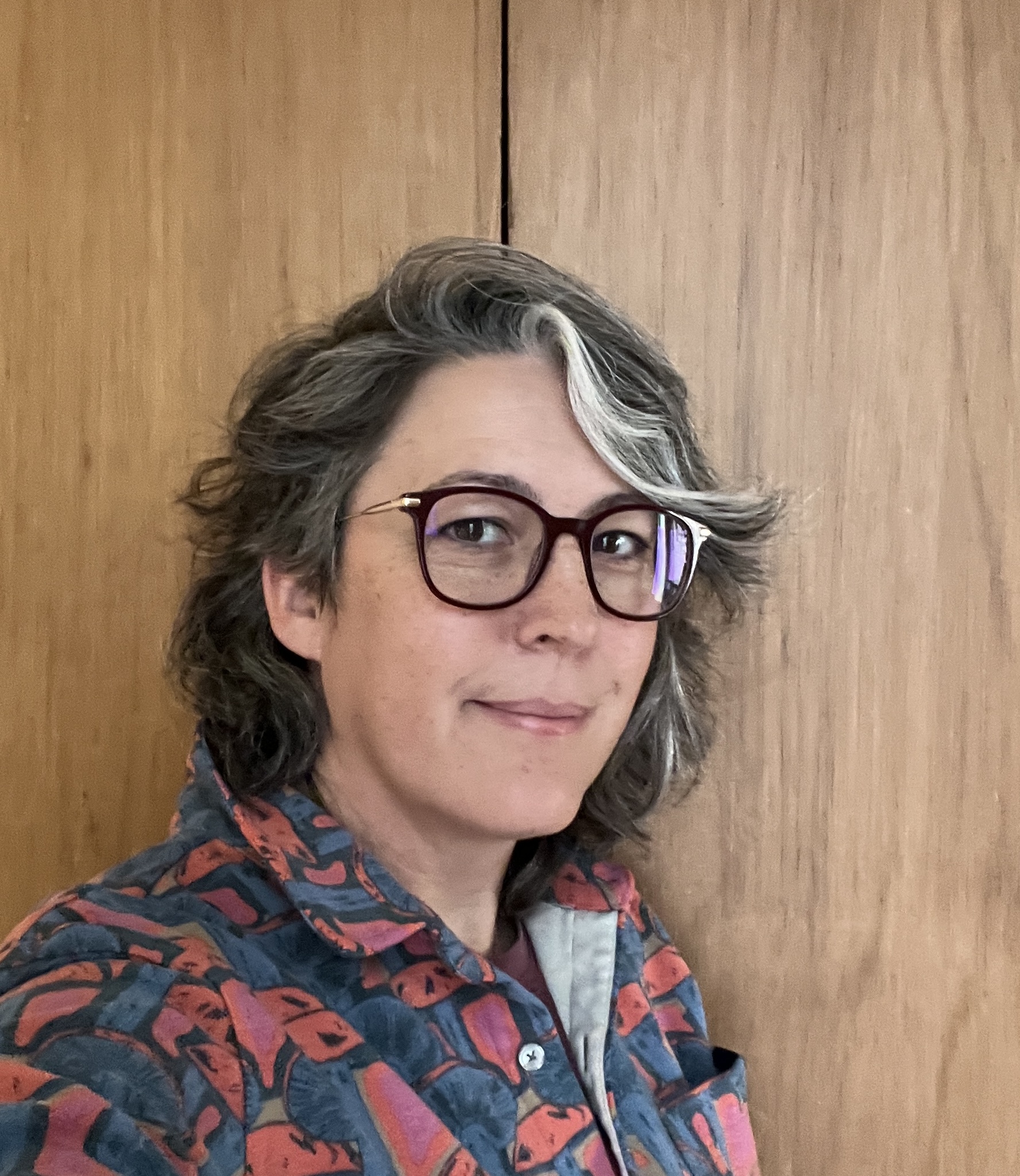
So yeah, Gina, we've got another cool guest here on Yoga Session today. We've got my wonderful dear mother-in-law, Bhanu and she's going to talk to us about her experiences with yoga throughout her life. And we've prepared some ⁓ questions, but maybe just to get started.
Amma would you be up for maybe sharing a little bit about who you are and what your life journey has been like?
begin with, I was born in a southern state, southernmost state of India, called Kerala, and my parents belonged to the Brahmin family.
certain amount of orthodoxy.
But then we moved. My father was in Nagpur, central part of India. And from there, we again moved to the northern part of India, the capital of India, New Delhi. That's where I spent most of my childhood and my youth. And I studied there.
Then after marriage, my husband also was in Delhi and we got married and then we moved to various parts of India. And longest probably we spent in my husband's career in a place called Pondicherry. And probably my yoga journey started watching my father.
He introduced us to this. But then, know, it was not in my consciousness because we had so many other things. Because I lost him also very early in life. I was just in my teens when I lost him. And I also lost my mother when I was still in my twenties. So then, of course, it was my husband, his family. That was my whole life, whole world, my children.
children after my children were born we were in for the length of time we were in Pondicherry and Pondicherry had wonderful yogic yoga what you call
teachers and Swami Gitananda, was partly Indian, partly Canadian, he started this wonderful... He became a... Later on, he became a sannyasi, know, he took to sannyasa and then he started this yoga classes there.
And that is how I got introduced. Then I was with two growing children and my very busy husband in his own career. And I also was teaching in a school. So all these, you know, they're stressful for me at some point in time and without a backup.
So then, you I started looking for ways to see what could de-stress me. Then I suddenly remembered my father's own yoga, what he used to do to de-stress himself. So then I started going to these classes and it was very convenient for me because these classes happened at...
During the daytime, when children were away from school and my husband had gone away to work, then I could go as a housewife. By then I had stopped teaching. I became a full-time housewife. So it was a very convenient time for me. I used to go. I used to really enjoy these sessions.
But then, know, I used to pride myself. So I know I used to pride myself saying I do all the household work, you know. I bend, I mop the floor, I do this, I I wash clothes, I do so many things. You must be very flexible, you know. And when I went to the class, was such a surprise.
Gina Clingerman (03:58)
Yeah.
Bhanu Vishwanath & Brendon Orr (04:06)
because I couldn't do even the simplest of asanas. I said, what's going on? Then my teacher explained. She said it's one thing that you do the other things at home. That's a good thing. It keeps you moving. But then these asanas are something which helps you to loosen your limbs. It is very, important. And with a purpose. You do it.
not as a hobby or something but you do it purposefully and that helps you to loosen yourself and when you loosen your body because we have five koshas in our body the most important is the annamaya kosha the annamaya kosha is the body which takes in Anna, Anna is the food
It's the food goes into that, the fuel. And this Annamaya Kosha determines the quality of the other Koshas in your body. So they concentrate, you have to put your first attention to the Annamaya Kosha. And this Annamaya Kosha is what, Patanjali also.
tells us about. And then we go on to the other kosha till we reach the final kosha. Pranamaya kosha, Anandamaya kosha. Anandamaya is blissful, where you have the bliss, know. That's a samadhi stage. So it's a step. It is not that you are only concentrating on your emotional health at one point.
It all follows, one follows the other. That is how the Eastern philosophy is.
When I came to the West, I found that there were some differences.
I appreciate what they are doing. But then, know, then I also understand that when a particular thing moves from one region to another, it has its own, what do you call it, adapts itself to the needs of that particular place. It doesn't remain the same. The classic Yuga that I learned,
Gina Clingerman (06:19)
Yeah.
Bhanu Vishwanath & Brendon Orr (06:26)
was not what it was in the West. They had adapted to their own needs, you know. And I appreciated it very much. I said, see, this is what their needs are. Because in India, you know, we take certain things for granted. For example, a marriage is taken for granted. You're married to a man, you're married to him for life. There's a stability. And this stability you don't find in the West.
There is a young amount of instability there. I would say a lot of instability. When I came to West for the first time, I was shocked. I was literally shocked. Though to some extent in Delhi, I was exposed to some kind of modernity, but this kind of sudden change in...
Gina Clingerman (06:54)
Yeah.
Bhanu Vishwanath & Brendon Orr (07:15)
was something which I couldn't take. The first time in 2006 I came to America to see my son there. I was, it really shocked me. And then I wasn't prepared for that kind of thing. But then I slowly, gradually, I came to appreciate what was going on there.
But still I couldn't bring myself to that kind of... Because in here, know, the stability is not a question at all, in the East, even now. I would say things are changing. It's not the same as my generation. And with each generation things are changing. And I do see some instability here too, within the family life, within the equations and all that.
But all the same, I would say, but that was never questioned. And that is why I think in the West they had to adapt to this kind of instability, you know, in many ways. And that is the reason why it changed. And it's maybe a good segue, Amma Bhanu You you shared with us about some of your observed...
Gina Clingerman (08:09)
Yeah, uncertainty. ⁓
Bhanu Vishwanath & Brendon Orr (08:22)
differences between the Eastern approach to yoga, Indian approach to teaching yoga and the Western approach. Kind of oriented around, you know, trying to perfect forms or asanas, you maybe the idea of prana flow. And then in the West, you observed with the studios that you went to that there was a lot of emphasis on relaxation, so could you maybe speak to that a little bit? Yes, absolutely. Because, know, here what we emphasize
is more on the perfection of the poses, the posture because they say that one day when your posture becomes to some extent perfect, the flow becomes easier and the spine is where all the chakras are, know, the seven chakras that we talk about.
And from the Muladhara, the Muladhara is the basic chakra. It is the seat. It is the earth. And it connects you to the earth. From there, the roots, it's the root chakra. And from here, then you have the Swadhisthana chakra, the Manipura chakra, the Anahata chakra, the Vishuddhi chakra.
Now these chakras are the most important energy points and these energy points if they are opened out one by one then all the necessary things that you need to have to know and to
finally reach the Samadhi stage. Now this is the Samadhi stage where you reach where when this opens up the Sahasrara. Sahasrara means thousand petals, you know. We have thousand petals here. When this opens out the energy does, you know, the divine energy just flows into it. And that is our final goal, you know, where we are constantly connected to the divine.
And once you constantly connected to the Divine, all the rest becomes easy. That's why they say, when you move into the spiritual kosha, they call it the kosha, kosha means they are just like you peel out an onion, know, peel it out.
Gina Clingerman (10:24)
Yeah.
Bhanu Vishwanath & Brendon Orr (10:41)
you get each and then you get the core of it. So that the koshas are all something which is around us, you know. And these when they are peeled, each one, when you go in, in, in, in, yourself, then you reach the core. And that core becomes the most important. You call it atma, you call it the soul, whatever you call it.
So you need to reach that inner self.
and that is possible only when you go from the outside to your inside. Now if you have to go in before cleansing the outer it may be a little challenging. This is the problem. You see
Gina Clingerman (11:32)
Yeah. I've even heard
some people say if you go in before you start on the outside, like it kind of can present itself like a mental illness, right? Because there's no stability. There's no connection to the earth. There's no grounding. So you're doing this spirit work without being grounded to the earth, without finding that sense of connection. And that's always kind of struck me as like very
Bhanu Vishwanath & Brendon Orr (11:58)
Mmm. Mmm.
Gina Clingerman (12:03)
kind of poignant or important or you know like I think a lot of times especially in the West we have a lot of living in our brains and not living in our bodies you know and so I just really appreciate your illumination on this because it's really beautiful and
Bhanu Vishwanath & Brendon Orr (12:12)
Yeah.
Gina Clingerman (12:23)
And as humans, like as beings on the planet, like we need the earth, we need to be grounded and rooted and connect so that we can expand and blossom out.
Bhanu Vishwanath & Brendon Orr (12:35)
And it's also, like you rightly said, there's a lot of emphasis on the heart chakra. The heart chakra, they say, is your mind. The mind is in your heart. That's what the Eastern philosophy says. So there's something called twin meditation, where the mind and the heart are connected together.
in the meditation so that you know you don't just don't follow what your mind tells you because the mind is very conditioned. You have a conditioned mind. It cannot always tell you what is right. It doesn't tell you also because it can't.
Gina Clingerman (13:15)
Or what is true.
Yeah.
Bhanu Vishwanath & Brendon Orr (13:19)
So then what you do is you have to ask the heart.
heart will tell you the truth, not the mind. So this is where you need to have the connection.
Gina Clingerman (13:31)
You know, this reminds me of something that my therapist has said when I first started therapy and things were really hard. She would say, what are you feeling right now? And I'm saying, I'm feeling a lot of pain and tenderness. ⁓
Bhanu Vishwanath & Brendon Orr (13:45)
Hmm.
Gina Clingerman (13:45)
And she would say, that's because maybe some of the things you're telling yourself aren't true. The body will never lie to you. And when the body feels a lie, it creates dissonance, right? Or pain or tenderness or grief, feelings of like a heart rending. And the more that I've worked in yoga and in, you know, Western.
therapy, it's like, yeah, the body can't, our bodies cannot lie to us, which is like just that another reason why we start in the outside, the Anumayakosha, and we work our way in because we got to understand these bodies. We got to know what the body feels like when it feels a lie or when it feels a truth even, right? Because truth can be so illuminating. Hmm, I'm loving this.
Bhanu Vishwanath & Brendon Orr (14:36)
It's beautiful. What you said is beautiful. That's why you know when you have a pain in the body, that means there's something the body is telling you that something is not right with yourself. And that pain and when you work on that pain and that pain will also work within you.
Gina Clingerman (14:47)
Yeah.
Bhanu Vishwanath & Brendon Orr (14:58)
that when you get rid of that pain, means something is happening within you. you understand the connection? is not that the pain is only a symptom. It is only telling you that something is not right within. know, either at the emotional level or at, you know, mental level, somewhere there is an imbalance. That is why there is a problem, you know. And this is...
Gina Clingerman (15:05)
Yeah.
Mm-hmm.
Yeah.
Yeah, or even,
excuse me, or even on the spiritual level too, right? Like if our spirit is feeling out of balance, it's like it, you know, sometimes we're feeling the pain or the weirdness in our bodies and it's like, yeah, I'm not where I need to be on a spirit level too, you know? Hmm.
Bhanu Vishwanath & Brendon Orr (15:23)
Please, please get it.
Exactly.
So, but then we cannot jump the gun, you know, we cannot just go into the spirit level unless we cleanse our koshas. You see, this is where the cleansing comes. And where do we begin? We begin with food. Food is so very important. Now, why do we insist on, you know, in Hindi we call it shuddha ahar. Why do we insist on pure food?
What is the connection between that to do with myself? Very often we ask this question. We can eat anything and still be good. Now it is not being something good, it doesn't come that way. Now when it comes with stages, and the very first stage is your food. What you eat, for example, a car cannot run unless you put in the proper fuel in it.
You know, you put contaminated petrol, it's not going to go far. It's going to stop someday. It's going to give you trouble. Similarly, if you put not so good food within you, it's not going to go far. Your body is not going to cooperate. It's not going to get up at the time you want it to get up, wake up. It's not going to do the things you want it to do.
Unless you put the right fuel. So this is what Eastern philosophy is all about. My teacher, my gurus have taught me this. Food comes first. That's why it's ana my acotia.
food you have to be careful. What you put into your body is very, important. Well, and to introduce a moment of levity here, I think my Anumayya Kosha was a little violated as of a couple days ago because I had a dose of food poisoning from eating some food from a local restaurant and learned firsthand that, yeah, maybe if the best, not the best fuel was brought into my body that there would be repercussions. And yeah, the whole entire Vishwanath family was
Gina Clingerman (17:22)
⁓
Bhanu Vishwanath & Brendon Orr (17:35)
taking care of me for the last 36 hours. So yes, food is important. And my gurus, I had wonderful gurus in my life and they always insisted on this and they said, cook your own food, eat it, you know, whatever you cook, it may be simple, nutritious food.
Gina Clingerman (17:37)
⁓
Bhanu Vishwanath & Brendon Orr (18:02)
You don't have to make all those fancy foods, you know, it's not necessary. You need lentils, you need rice, you probably need some vegetables and some fruits. That's enough. That's enough to go see you through. You don't need any fancy food. You don't have to cook it in a very fancy way.
Just keep it simple. Your food should be simple but nutritious. Easily digestible according to your body makeup. Because we have these three Satvik, Tamasik, Rajasik and Tamasik. Now all of us must work towards moving towards Satvik. Satvik means the pure. Rajasik means the passionate.
Gina Clingerman (18:31)
Yep.
Bhanu Vishwanath & Brendon Orr (18:46)
Tamasic means lazy, laissez-faire. They don't care and they tend to be cruel Tamasic people because they want to get their way done anyway they want. They don't follow any rules. now we might have been born in a certain guna. These are called gunas. All these come in Bhagavad Gita.
Good in Bhagavad Gita, you know. And what does Krishna say in Bhagavad Gita? He says food is very important. Moderation in food, moderation in sleep, moderation in your recreation, moderation in life is most important. And food comes first. He says sattvic food makes your mind sattvic.
Gina Clingerman (19:10)
Yep. Several times.
Bhanu Vishwanath & Brendon Orr (19:36)
your emotions are weak. Anger goes away if you have the right food. You know, all your other emotions get tempered when your food is good. So that becomes the basic.
Gina Clingerman (19:49)
I love this because
we're seeing, you know, through these texts and through the practice of yoga and the creation of yoga, thousands of years ago, Science, this beautiful science of how does the human body work when we eat certain types of food and how does the human body work when we are working on the postures or when we're listening to
the machine of the human body. And I think machine is the wrong word because we are not machines. We are definitely organisms. We are animals. As you're speaking, Bhanu, I'm just like, I'm just seeing the beauty in my head. I'm envisioning the beauty of, know, I'm seeing the ascetics who went to the forest and the caves and like they perfected this science of like embodiment and it's so beautiful. And you are doing such a beautiful job of
Bhanu Vishwanath & Brendon Orr (20:19)
I'm
Gina Clingerman (20:41)
illuminating that and yeah it really is this ancient science.
Bhanu Vishwanath & Brendon Orr (20:44)
So I'm just
sharing what I have learnt in all these years.
and it's very spontaneous, it's just coming out as I'm talking to you because it's so nice talking to you. you know, this... what I'm... what my Gurus have taught me is that these are the steps you have to follow in order to reach your goal and your goal is to remain in meditation of the Supreme, the...
your own self, atma and reach that atma through these means and if you think you can do it in a quick fix way it's not going to happen. There are steps to be followed. Follow that step patiently and with a guru. It's very very important to have a guru.
And a Guru who is selfless, who can just... He only has your interest in mind. Nothing else. He's not bothered about who you are, what money you have, how wealthy you are or what... He's only interested in you. Your welfare, that's all, is His interest.
And that kind of guru is very rare to find, but I have been fortunate in my life to find such gurus. And now I would still like to have some live guru who can guide me in my path because, you know, we believe in Hindus. I don't know whether it is true for others. I'm not so familiar with ⁓ other religions as I am with my mother.
Hinduism. In our religion they say you you have an incarnation. Your your atma keeps on moving. You it doesn't have just this life alone. You have had many lives and you're going to have many more lives. Now if you want to end this
the cycle of birth and death and birth and death, it goes on like a wheel. And every time you take birth, you are adding more karma to yourself through your action. Karma is nothing else but actions and you cannot remain without action. Whether through words or thoughts or body, you keep on acting. You keep on doing your actions.
Gina Clingerman (23:00)
you
Bhanu Vishwanath & Brendon Orr (23:09)
That accumulates your karma. Whether you like it or not. And knowingly, unknowingly we do things which add to our karma. So in order to finish that karma you have to take another birth. And that birth again you collect more karma. So this is an endless cycle. Then where do you break it? How do you break it?
This is the question that the Eastern philosophy has been asking for a long time. Where do you put an end to this? Where do you break the cycle? Where do you permanently end your cycle of birth and death and remain in the domain of your God Self? So this is the whole cycle. Now this is the answer that many gurus have been able to...
discuss with us how to put an end to this karma. Now many of them take to complete asceticism, you know, they become ascetics so that you know they don't have to really be in the midst of the whole,
when you take on to this, when you get married, you have a family, have all kinds of this thing, and accordingly you have to act. You have to earn money, you have to look after their welfare. In the process, you may make many wrong things in life, you know, and money may become the most important thing. So these things, but even when you are in a family,
how best you can do in order to keep your level of karmic collections to the minimum. That's also they teach you. Because most of all of them cannot become ascetics or monks, you know. Many of them are in the family life and they teach you how to minimize your karmic.
Gina Clingerman (25:08)
curious what do they say like if you if you're able to like complete your karmic cycle what happens next are you like a and you're in atman right you're like in soul form where where are you like a soul being who's like what is that world like
Bhanu Vishwanath & Brendon Orr (25:26)
That's world-like is when we, you see, they say that you merge with the Lord. Whole merge with the Lord. It will have no birth, no death. Unless the Lord commands, like we have some avatars, some sages come onto the earth. Now they have been commanded by the Lord to come to the earth to help the people, you know?
Gina Clingerman (25:33)
⁓ okay.
Bhanu Vishwanath & Brendon Orr (25:51)
And these sages, they try and help the people to reach that highest level. From where? Because we are made of these pancha tatvas. Now this is not the same as the koshas. The pancha tatva is the water, the earth, the water, the fire, the space, and the...
What did I miss out?
air, space, These pancha tattvas, we are made of all that. When these pancha tattvas come together in a certain proportion, the body is formed. And when this pancha tattva finally merges into the pancha tattvas, then there is no death, there is no birth. Do you understand?
Gina Clingerman (26:19)
I you got them all.
So you'd.
Bhanu Vishwanath & Brendon Orr (26:41)
Now we are the collection of these Panchatattvas. Now the earth in me goes back into the earth. The air in me goes back into the air. The fire in me merges with the fire. The space in me merges with the space. Then there's nothing left of me.
Do you understand the concept? This again is in the Bhagavad Gita where the tells Arjuna. So the Panchatartvas merge into the Panchatartva. They just disappear. Then you are not there anymore. Yeah, disappear or reconstitute, maybe. So that is what is the final stage.
Gina Clingerman (27:02)
think so. I think I do.
Bhanu Vishwanath & Brendon Orr (27:23)
That is what they say, you merge with the Lord. There's nothing left for you to come back. And I remember in Buddhism, when I read Thich Nhat Hahn a beautiful book, White Clouds. So in that, Thich Nhat Hahn says that Lord Buddha used to tell him, at his final state, when he was taking the Samadhi state, he told him, I have nothing left, I'm none of these...
Panchatattva has left. I'm free. I've found freedom. You know, I'm not bound to the earth anymore.
You are here because you have this karma that us to the earth. Once you get rid of these karmas, all the pancha tattvas are gone. Then there's nothing that can bind you. You are free. And that's freedom. That is the freedom. And you don't have to
Gina Clingerman (28:12)
love that there's nothing that can bind you.
Bhanu Vishwanath & Brendon Orr (28:19)
This is lovely and Bhanu, I wanted to circle back earlier you had talked about the importance of a guru figure and also the importance of a guru figure having good, bringing good energy to that role. And Gina, you and I, we've been teaching yoga for a bit over 12 years respectively and
Can you maybe speak or maybe we could talk about how, and this, I don't mean for this to come up as a judgmental statement, but not all teachers are created equally, right? Some people get into this line of work, whether it's a yoga teacher in the West or a guru figure in the East, and they get quite full of themselves. You know, it becomes more about.
Gina Clingerman (28:52)
Yeah.
Bhanu Vishwanath & Brendon Orr (29:04)
Themself than others and how you had even alluded to Bhanu about how the importance of being able to connect with an altruistic guru So maybe can we maybe talk about this for a little bit like how this phenomenon exists both in the West and the East? In the East I can say if you really look search you'll find gurus
who are selfless, who are only interested in the disciples.
Growth
They don't care for anything else. There are very, very many selfless gurus. But there are gurus in the past who can also guide you. If you really meditate on them, they can come to you in some form, in the form of a book, in the form of a voice, which my husband has experienced very often. ⁓
in the form of some other source. know, if I am talking to you, you can be my guru in some ways because I can learn something from you. You know.
Gina Clingerman (30:02)
Mm-hmm.
and
you can be my guru as well. I mean, I feel like I'm learning so much.
Bhanu Vishwanath & Brendon Orr (30:12)
Yeah, because we learn from each other.
Absolutely, we are learning from each other. So, and also we attract the Guru according to our state of mind, where we are at this point in time. According to your need, you attract your Guru. Now if you work on yourself, if your energies become subtler and subtler and subtler...
and you reach a stage where you are vibrating at the place of love and peace, you attract such a guru to yourself. Do understand my point? We've started from a very gross level, you know. Then, we slowly, gradually make our energy subtler and subtler and subtler. To such an extent that they say love and peace is the highest frequency.
Gina Clingerman (30:50)
Yeah.
Bhanu Vishwanath & Brendon Orr (31:08)
in which you can vibrate. If you reach that state of frequency of peace and love, your whole body turns into that, that frequency. Automatically you'll attract somebody like that to you. And the Guru will come searching for you, Himself. You don't have to go looking for the You'll find the Guru.
So we need to work on ourselves first. And these are the ways in which we can work on ourselves. Like it makes me think, Gina, I have found that if I was tuning to my own vibration, you're pretty mindful of that. Yeah. There's the sense that vibe attracts tribe, right? And how have we seen that play out in our own, you know, yoga communities, where we live? Yeah. What are your thoughts, Gina?
Gina Clingerman (31:33)
Yeah.
Yeah, I mean, as Bhanu was talking, I was thinking about our teacher training and, you know, Emily Brown was kind of that segue. I mean, she was really the lightning bolt, I guess, that pulled me into teacher training. And then meeting Jess Ryan and Steph Hansen, who were co-teachers in that teacher training, who just like really clearly
Bhanu Vishwanath & Brendon Orr (32:06)
Mm.
Gina Clingerman (32:24)
that teacher training wasn't really just a yoga teacher training. I'm gonna say that 100 % and I think they would agree with me. Those teacher trainings that those three women, wonderful women were running were really like evolutionary trainings, right? Like they were like, they were like, welcome to the spirit course on like being an embodied human on the planet and how do you do this? And...
Yoga just happened to be the vehicle through which we experienced that. But for me, it was very evolutionary. was like, yes, yoga through the Anumayikosha, right? Because that is where we all start in the body became the vehicle through which I became closer to myself. And I allowed myself to really enter into
Bhanu Vishwanath & Brendon Orr (32:55)
Yeah.
Gina Clingerman (33:16)
not only the sensation but the actual experience of like, oh, here's what my spirit is and here's the power in my spirit and here's the places where I'm afraid of my spirit. Here's the places where I'm like stoked about spirit work and also what I would say is that that foundation has stayed with me through all of my
classes, all of my teaching, all of the trainings that I go into, the teachers that I have experienced with, you know, I've gone to other teachers where I'm like, okay, you're not for me. And that's okay. You're for somebody else, but you're not for me. Because I also think being humans that, and we've talked about this before, Brendon where it's like,
Bhanu Vishwanath & Brendon Orr (33:48)
Hmm.
Gina Clingerman (34:05)
Being embodied and being embodied in a yoga way can give you, it can also like stroke your ego and kind of like stoke the ego body and get you kind of like worked up in your own self, you know, like there's a lot of, there's a lot of people's names we could drop who, where we've seen like these abuses happen in the yoga communities, right? And I think that that's, that's human because we are humans and
Bhanu Vishwanath & Brendon Orr (34:14)
Yeah.
Gina Clingerman (34:32)
So gosh, I got a little off topic there, but it was like.
I think that there's that we have to always keep coming back, right? Like you've talked about practice and purification. And I think that purification is like an always ongoing thing where it's like, as long as we're alive, it is not over. And, you know, even if we're getting like so subtle, so refined, so subtle, everything is lining up. It's still even more subtle. We can get more and more purified, more and more subtle.
Bhanu Vishwanath & Brendon Orr (34:48)
I do.
your team.
Gina Clingerman (35:05)
But sometimes we can also like forget that that's what we're doing, especially when you're in a power structure like the West where you can have like yoga, lebrity teachers that are kind of like celebrities and things, or you can get a really big following and you kind of start to believe that you deserve all of that. You know what I mean?
Bhanu Vishwanath & Brendon Orr (35:31)
Can I add something here? This is exactly what a Guru does for us. When our ego wakes up, shows up, gives us a good whack on that. Literal and metaphorical whack. Literally. He says, you better...
Gina Clingerman (35:33)
Yeah.
Bhanu Vishwanath & Brendon Orr (35:54)
Come back. You better come back to earth. He grounds us. And this is what Guru actually does. And there are course stories and stories I can go on to tell you. How Gurus do it.
Gina Clingerman (35:58)
Mm-hmm.
Bhanu Vishwanath & Brendon Orr (36:13)
in their own way, they will tell you, this is no good. And little bit of siddhis you get, siddhis means you get the power to do some miracles in life. Then your ego goes up. You think, no end of yourself. ⁓ I have reached the other level, And then the Guru comes, he gives you a good whack. He says, this is not...
This is not the right... like Arjuna himself had to be given a whack by Krishna, you know. And Arjuna speaks as if he is all-knowing and he says he is the wisest of men in the second chapter. He says, I not going to fight this war because I know this is going to happen. That's going to happen. I'm going to kill my own cousins. I'm going to kill my own people.
Krishna says, you speak like a wise man, but you are stupid. You are totally stupid. This is what Krishna says. But you speak like a wise man. This is the delusion we are in. We speak as if we are wise, but we are in delusion. We are absolute delusion. And that is where...
A real Guru, a profound Guru, who himself has reached that level of consciousness, can guide you. He'll tell you, better, I'm going to give you a whack, and you better earth yourself, ground yourself.
When, Bhanu you were talking about how the time in Pondicherry where you had a very tight knit community and the value of that, you know, they were supporting and inspiring. And then when your family moved to Bangalore, it seemed like it was harder to keep your practice going absent the Guru, absent the community. So maybe, you maybe speak a little bit to the value and importance of community?
and guru ⁓ in practice. And then we can also thread it to you, Gina, because, you know, they always say that it's important to have your own personal practice, ongoing along with, staying engaged with the community. And maybe we can just talk about the importance of both of these aspects for having a balanced yoga practice. That's what the in Buddhism, you know, they say sangha is so important. Sangha means the community. Yeah. The like minded people, they get together.
Gina Clingerman (38:40)
Mm.
Bhanu Vishwanath & Brendon Orr (38:43)
which exchange their own experiences, exchange their own practices, they exchange whatever they can give to the community. And this is where the bhajan sessions comes, you know, we get together, we sing the praises of Lord. We then we exchange certain things which we have learnt. And this kind of a thing keeps you engaged, you know, in the
right spirit, in the right energy, you are in the right energy because you are all gathered together to speak on certain thing which interests all of you. This is very very important. In Indian society it is very very important that's why they gather you know and this Sangam is very important. Sangam means to get together.
Then if you're on your own, you you may say, okay, I'll finish this work and then I'll do this. And you may never do it. You know, in a day, for example, we, you we, I have, am in a group where we chant certain mantras together, know, chants certain things. And we have a...
Gina Clingerman (39:54)
lovely.
Bhanu Vishwanath & Brendon Orr (39:58)
and we make it a point to be on time there, we finish our household work, then we have to be there, you know. But if you are at home trying to do it on your own, maybe you will never get to do it. You may keep on postponing it. That is why this kind of community is very, very important. Whether you... For the other day, you know, we had to go to the temple at very early in the morning.
because nowadays this whole month for us is getting up very early, having a bath, going to the temple and this is very very important. And in the previous years I used to do it very sincerely. I used to get up at four, have a cold bath and though it is cool season, the season is cool here, we still have a bath, then we rush to the temple, you know.
And there we are at the temple looking at the Mother Goddess. She is Annapurna. Annapurna again is Annameyakusha. So we look at her and we praise her. We sing her praises, hymns. And we are together. And then the Aarti happens and we come back home. But then if you want to it at home, you may not do it in time. You may postpone it.
Gina Clingerman (41:02)
Mm.
Bhanu Vishwanath & Brendon Orr (41:18)
So this is where the community comes. Whether it is in organization, whether it is...
Gina Clingerman (41:21)
Totally. I...
Yeah, and I agree. think what we lack right now in the modern world is ties to community, right? We need that. We need that so much. And I've been thinking about this a lot just personally, like how am I in my community? And it's like I'm in my community, but I'm also...
Yeah, I think I hold back from my community sometimes because I'm like, what does that really mean to be in community? So I'm exploring this idea. And I think too, when you're on a path or you're in a group with people who are all working towards something similar, there's so much power in that. To share in an experience with the same...
you know, people who are like you or maybe even not like you, but who are having an experience with you and I think yoga is really powerful like that. Like during the pandemic when we were all doing yoga at home by ourselves or online, so many, so many students would say, I just don't like online classes. And I agree. I mean, I'm an introvert at heart. So there's parts of me that are just like, I could be alone forever and it would be okay. ⁓
Bhanu Vishwanath & Brendon Orr (42:24)
.
Gina Clingerman (42:31)
But and but But when you're when you're teaching to a group and you're watching everyone or you're leading people through and you're like sensing what they are What they are experiencing it's very very powerful. I also want to come back to something you just said about going to the temple and You know we're in in like having prayers to the mother goddess and that she's on a myocotia and I just thought how fitting how fitting that
that she's in our bodies, that she is our bodies, that she is embodied in our bodies, that creation is in the body, that how we build community with each other is through our bodies doing things together. Like that's just such a sweet, it's almost too simple, but too like easy, but also so beautiful. Like community is.
Bhanu Vishwanath & Brendon Orr (43:02)
out.
Gina Clingerman (43:22)
is mothering, right? It's mothering each other. It's showing up in a way that's like powerfully feminine, loving and kind and caring and real, embedded in the body. Like in the body. ⁓ this is, I feel like I'm eating cake right now.
Bhanu Vishwanath & Brendon Orr (43:42)
And she nurtures you know, the mother goddess nurtures you in every way. So it's so beautiful. But having said that, community is very important. We must have community, know, activities with like-minded people, people who are interested in the same thing. There's no use being in a community where, you know, people are having other interests rather than...
Gina Clingerman (43:46)
Yeah!
Bhanu Vishwanath & Brendon Orr (44:08)
not good enough for your own growth in some ways. Having said that, community is important. Sometimes solitude is important too. When you go into that meditative state, when you need to have some time for yourself, reflection and then seeing what you need to work on within yourself.
how to make your own energy subtler. There you need your own solitude. There you don't want people around you. You need your space.
Gina Clingerman (44:41)
yeah, it's both. I'm having this loop back to something we talked about earlier. In one of my sessions with my therapist, she was asking me how I was doing. This was years ago, I'm doing a lot better, but it was a hard time. She was asking me how I was doing and I just said to her, you know.
When I'm around people, everything is worse. When it's just me, I'm okay. I'm okay when it's just me. And this made me think about what we were talking about earlier about karma and the accumulation of karma. And it's like, it is, you need both. Like we can't, we can't like.
Bhanu Vishwanath & Brendon Orr (45:04)
Yeah.
Gina Clingerman (45:21)
Like being in the world, we're going to need community and we are going to have these experiences with our families and our friends of karmic residue, I guess. But also we do need that alone time to kind of get right with ourselves again, to kind of bleed off some of that experience and kind of let it kind of, I don't know the words for it, but it's like pull it out and shake it off, right?
Bhanu Vishwanath & Brendon Orr (45:42)
Thank
Gina Clingerman (45:48)
And so it is kind of like this interesting balance or maybe a circle where, or an oval where like sometimes you're going to be heavy in community and then all of a sudden you're on the edge of the oval or the top or the bottom of the oval where you're like, I need some time alone to let this sift and filter. yeah, I struggle between that balance of like wanting to isolate and draw inside and just be in that experience. And then
also be a part of a community as well.
Bhanu Vishwanath & Brendon Orr (46:21)
Now more and more, you I like solitude. was very active in certain communities and ⁓ sometimes, you know, this community, if you have a mixed kind of people, their own ego shows up sometimes.
So that could be a kind of a distraction for you and if you really cannot. But it also kind of ⁓ gives you what we call titiksha in Sanskrit. Titiksha means a kind of patience, kind of... ⁓
condo.
appreciation for what others are coming out with and it also keeps your ego in check to some extent and these become important you know in a community because if you are isolated all the time and not interacting with people it cannot give you a realistic picture of yourself.
Because you become, you get into a world of your own. You're not interacting, only when you interact with different kinds of people, you you know where you stand. You know? Are you still able to keep your calm when you're around people who are not exactly matching with your kind of mental state?
Are you still able to keep your calm? Are you still able to be patient? That is your real test. Not always easy. Isn't it? Only when you surround people. Now when you are all by yourself, you can say, ⁓ I am very patient, I am very calm. But then what is the test? You have to be in the real field to be tested, is it not? So, for that, it is very important.
Gina Clingerman (47:57)
Yeah, it is.
Bhanu Vishwanath & Brendon Orr (48:18)
to have people around you of different types. you know, and because the things will not go your way all the time. It's not going to go all the time your way, you know? And so what you need to really concentrate on yourself. Am I in this situation keeping myself calm? Am I still able to keep my peace?
Am I able to keep still loving people as they are? That is my test. Am I becoming judgmental? Am I becoming impatient? Am I getting angry, irritated? Then I am not there. I have not done my homework. And to do your homework you need your space.
Gina Clingerman (49:10)
Mm-hmm.
Bhanu Vishwanath & Brendon Orr (49:13)
I think that's a really good analogy, Bhanu. So looking back, Bhanu, on your own life journey and how you have the early memories of yoga at home, you have your experiences in Pondicherry moving to Bangalore, you have your experiences as a homemaker and a devoted wife and mother.
raising two kids who have done very well in their lives. Thinking where you are now, what elements of your own yoga practice or spiritual practice do you think are working well and which ones maybe still need a little work? Because if we're all being honest, there's all opportunities because it's not an end, it's a journey, right? So how is the journey going now, Bhanu? Well, I'm still struggling.
still struggling with myself because I still feel you I
I really, very sincerely, feel I need a guru who can guide me through this process. And it's struggle within me because I have to balance between what is happening on the outside with what is happening within me. Where I want to be and where I am, I have to make a compromise.
If given a chance, I would just get into some kind of an ashram, some kind of a place where I can be with the Guru and me, you know, one-to-one, feel absolutely and do my own practice within me. ⁓
because I know I have a lot of practice to do, a lot of things to do before I let go of this body of mine. Because I don't know, this is a gift given to me by God to work out my karma. Am I doing that? That's a question I often ask myself. I think I'm not doing enough.
Because very often I am drawn to the problems of the world, problems of the family, problems everywhere. That complete detachment is not there, you know. And that is what I struggling with. Now, detachment doesn't mean indifference, you know. Detachment, very often we feel detachment is indifference. No, they are very different. Indifference is where there is an apathy, you You don't care.
That is not detachment. Detachment is you care, but then you are within yourself. It doesn't bother you. You are still in your own space of calmness, peace, understanding and at the highest level.
from where you can help others. That is true detachment. That I have not. You know, that's what I'm struggling with. And for that I feel, know, I need someone who can really help me through this journey. Because I realize that this is a great gift given to me by God. I should not waste it away. I should not waste this life. And this often comes to me, you know. But then...
duties towards my family. I cannot just let go of that.
And as my gurus, very often my gurus have told me, staying within the family, doing your duty, like Krishna says, surrender unto Me, give everything to Me and do your duty to the best of your ability. Don't look for the results. The results will come according to the amount of effort you have put in.
and the way you have done it, the attitude in which you have done it. It's all about the attitude, you see? What your attitude is determines your action. So do it to the best of your ability. Let go of the rest. Even this I'm trying to, I'm struggling. I'm struggling. That's the truth.
Gina Clingerman (53:17)
would
say that you have not wasted your life at all. You've, you're, the struggle is the duty, right? That is the duty. And I love that you, that you reference that part of the Bhagavad Gita because that is something I tell myself all the time, like, I am not entitled to the fruit of my work. I am entitled to the work, but I am not entitled to the fruit of my labors, right? Like,
Bhanu Vishwanath & Brendon Orr (53:41)
Thank so much.
Gina Clingerman (53:43)
The outcome isn't for me, the work is for me. And sometimes my ego is like, I want the outcome, I want the stuff, I want the recognition or whatever. And I have to remind myself that the work is all I am entitled to. You're doing the work, Bhanu, you are doing the work.
Bhanu Vishwanath & Brendon Orr (53:50)
Yeah.
I used to hear that. But then, know, the struggle is there. struggle is point, right? The struggle is the point. Probably that's the journey, know. Struggle is the journey. the result is up to the Lord. It may be this life, it may be another life. I don't know.
Gina Clingerman (54:07)
It's there, yeah.
And who knows what our
karmic ties are for, right? Like I do believe that the relationships that we have in our lives, all right, our children, our families, our spouses, the friends that are lifelong friends, like I really do believe that those are the strings that we are holding, right? And like that we're meant to, right? Like, you know, so, I mean, I also, I also,
Bhanu Vishwanath & Brendon Orr (54:43)
Absolutely.
Gina Clingerman (54:47)
feel your yearning for like a monastery or an ashram, you know, there's been several times in my life where I've just thought, wow, I wish I could just go be a monk somewhere, you know, just boom, take myself out, drop myself in this quiet contemplative place where I can just do the work. And I really do believe this, that maybe Bhanu, our jobs are to do the work in the context of all of the strings that we hold connected to our people.
Bhanu Vishwanath & Brendon Orr (54:58)
Mmm.
Gina Clingerman (55:17)
right? Or people? Yeah. And there's beauty in that.
Bhanu Vishwanath & Brendon Orr (55:18)
So you know,
there is beauty in that. Absolutely. And you know the very fact that I talking to you today is some karmic connection between us, you know.
Gina Clingerman (55:32)
⁓
I feel it. You like are a luminous being like.
Bhanu Vishwanath & Brendon Orr (55:34)
Absolutely.
So you know, that is what the Hindu philosophy says. It says that you don't meet people at random, you know. It's not a random meeting. Everything is just time. I am supposed to meet you today at this point in time. For us to grow, maybe. For you to learn something from me, I to learn something from you. You know, from each other.
And this was this side. then so this is what. Yeah, Gina, you had referred to Bhanu as a luminous being and boy is that an apt description. And I'll just share this antidote as we wind down this yoga discussion.
I met Bhanu before I met Meenakshi, my wife. I was subbing another yoga class and Bhanu happened to be in that class. And, you know, it was also during this period of transition where I didn't know if I was going to be moving back, you know, to a place or moving to a different state. And so I teach this class and then people are coming up to me after class and asking me questions about, what are your, what are your plans? What are your plans? And then I'm sensing
Bhanu like on the outskirts of this group that's kind of coming up and like talking to me. And it's just, and I kid you not, it's just this radiant light that just gets gradually closer to me, you know, and then once she approaches me, you know, I'm just looking right at her and she's just radiating light. I mean, almost to the point where I was speechless. then I'm trying to remember what you asked, but you seemed quite curious about this.
this white guy who is dropping Sanskrit left and right. No, you know. Brendon was narrating his past story to a whole lot of group. And you know, I was wondering why is this gentleman telling his story to a whole lot of people, you know, because in India we don't normally do that.
So I was thinking, why is he saying all this? You know, it was curiosity, more of a curiosity because I was not exposed to this kind of thing before. And then, you know, something told me, know, and he also said that he had applied for a job in Nebraska. So I thought I must wish him well.
You know, something told me that I must wish him well. So I just went up to him and I told him, wish you the very best. Because the next day he was having the interview. So I said, I wish you the very best. I hope you get this job.
And something told me to tell him, so I went and told him that. Yeah, and I ended up getting the job. the time, you I was thinking, I told my daughter also, I told Meenakshi also. I don't know why he's going and narrating his story to everybody, because in India we don't do it, you know. So unless it's absolutely necessary, we don't, you know, go and tell our story to people, you know, we more or less.
Gina Clingerman (58:21)
Yeah.
Bhanu Vishwanath & Brendon Orr (58:30)
So then Mini also told me, Amma, it is common here, you you don't know about all this. She me. I don't know about all this. I belong to a different world. So I said, okay. So that was it. Now it was a funny moment.
Gina Clingerman (58:46)
I guess the one question I would ask you, Bhanu, is if someone from the West is doing their journey in yoga, and say they've never been to India before, do you think that we should come to India and learn from the source? Do you think we should, do you think, like if someone's doing yoga and they're like, I'm very into this, I wanna know more.
But they've only done it in a Western setting where it's kind of, mean, yoga in the West is a beautiful thing. It's a different thing. Like you said, it's evolved. Do you think that for their enlightenment that they need to come to India and experience yoga with a guru?
Bhanu Vishwanath & Brendon Orr (59:28)
Yes, I think it's necessary, but you should go to the right place. It's either Rishikesh, Sivananda Ashram, which is a wonderful ashram, and there you will get the real feel of the yoga. Sivananda was a great guru, he was a doctor by profession, and he turned into a yogi. ⁓
At point in time, he worked in Burma during World War II and he served wounded soldiers. He was so compassionate. He had so much love in him. He was from South India, in Tamil Nadu, where we belonged to. He was one Kuppuswami before he became Swami Sivananda. He had that in him, that compassion.
service mentality, as you call it. And he served these soldiers, the wounded soldiers. Then once we got the independence, came. Burma was no more within Indian subcontinent. It became a different country, so he came back to India. He went to Rishikesh. He took to Sanyasa, and there he saw
that people were in immense need of guidance, know, in yoga and also he treated them because they were malnourished, were not eating proper food, they were not looking after their health.
and so he became this yogicam doctor and he started with Sri Varananda ashram and he made several disciples including Swami Chinmayananda who is a great guru who passed away recently and if you go to that ashram you may find real
worth, you know, and real yoga you can learn. My sister was there, my sister is again a very, she's into all this, so she was in Swami Sivananda's ashram for a length of period and she told me that it was immensely helpful.
I have not been there myself. I only been there to the ashram, but I have not lived there over a period of time to learn, you know. And that has been my dream all the time. I don't know whether in this lifetime it's going to happen or whenever the Lord God wants it to happen. It's in His hands. But it is worth it. It's worth it. Do come.
Gina Clingerman (1:01:51)
Mm-hmm.
Bhanu Vishwanath & Brendon Orr (1:01:57)
to stay there, but you have to be safe because is not, Rishikesh is not it was before, you you can be easily...
exploited there. So you have to be very careful. You have to go with some guide, or as a group. And before you go, fix up everything with the ashram, Shivarananda ashram, and there you'll be very safe. Within the ashram you'll be very, very safe. But you know, the moment they see there's a foreigner in Rishikesh, they will exploit you.
Gina Clingerman (1:02:17)
Mm-hmm.
Bhanu Vishwanath & Brendon Orr (1:02:34)
That is why Meenakshi doesn't want Brendon to go there alone. She wants him to go with somebody who can guide him there. Because that is how the...
Ashrams are different, There you'll be very, very safe. And you learn a lot. Haridwar, Ruchikesh. Or if you can go up in the mountains, that will be even better, but not alone. As a woman, you have to be very
No, was just going to say, other than those options, if any listeners want, maybe they can travel to Bangalore and stay with Bhanu and learn from Bhanu Vishwanath as a guru. no. The other option is Anandashram in Pali. Well, you're being very modest. I appreciate that. Anandashrama is very good. But there, they have their own, you have to...
First, register with them, they'll send you lot of things to read. It's an expensive course. But it is really good course. And you may have to stay here for six months to do a course. But it's a very comprehensive, beautifully done course by Swami Gitananda. He was also a doctor by profession.
Later on he became a His son is also a doctor. He has taken over the ashram. He is doing it very well. There is no doubt about it. mother was an American. She came to India stayed in India all her life. She came as a journalist here at the age of 28.
She's also by the way called Meenakshi. She took the name Meenakshi. She wanted a Hindu name. I don't know what's her previous name. Probably Maria, Mary, I don't know. She was American. She came here, she stayed on here, she didn't want to go back. from the age of 28, at the age of 28, she learned Sanskrit, she learned Tamil.
Gina Clingerman (1:04:17)
you
Bhanu Vishwanath & Brendon Orr (1:04:40)
She learned dance, Bharatanatyam dancing. She wore a one-needle saree. She is a unique lady. she is old, she is bedridden now. her son is... And that Meenakshi Devi Bhavanani was my Guru at one point in time. She taught me pranayama.
She taught me some asanas. She took special interest in me at some point in time. And she used to call me early morning and teach me certain things, you know. So it was very useful to me. And then we had a rapport, know, in Akshadevi and I. And we did a lot of things together, like running a magazine. I used to write for the magazine and all that. So we had a good rapport. Now she is in...
not doing too well. is quite old now, I she must be in her 80s. But her son is running it very well now. And they have a whole team of these, know, Yogacharyas who teach. So that is one place worth going.
In Bangalore I'm not very sure whether there is any place where you can really learn a good yoga. Or it is the North, Rishikesh, Hanidwar, these are the places. But there you have to be a little careful. Go in a group or go with an escort. Somebody will get Ganesha.
Well, this has been a great yoga scussion Bhanu. We like to throw a question at guests ⁓ at the end of an episode. So here it goes. If you could describe yoga in three words, what would they be?
Yoga discipline, way of life.
Gina Clingerman (1:06:37)
it. So last one, if you if you could say for the titles, so we're gonna we're gonna add this into the opening credits, if you could say this is yoga scussion
Bhanu Vishwanath & Brendon Orr (1:06:51)
Yeah. What should I add to it? No, so you'll just say, this is yoga discussion. I should say that? You say that. This is yoga discussion. Let's do one more take. Do one more take. This is yoga scussion Am I right? Yes.
Gina Clingerman (1:07:08)
I love that one the best. think you should, Brendon you should keep it. Am I right at the
end? I love it. It's so wonderful. Yes. Yes. ⁓ what a wonderful conversation.
Bhanu Vishwanath & Brendon Orr (1:07:13)
Keep the am I right in there? Yeah, yeah. Yeah, we'll see how it goes. That
was a wonderful conversation. Yeah, yeah. No, thank you very much.