[00:00:05] Speaker A: Yoga is stillness.
[00:00:09] Speaker B: Yoga is self awareness.
[00:00:13] Speaker A: Yoga is time tested.
[00:00:18] Speaker B: Yoga is unity.
[00:00:22] Speaker A: Yoga is secular.
[00:00:26] Speaker B: Yoga is evolution.
[00:00:30] Speaker A: Yoga is spiritual.
[00:00:34] Speaker B: Yoga is freedom to choose.
[00:00:40] Speaker C: This is yoga scution.
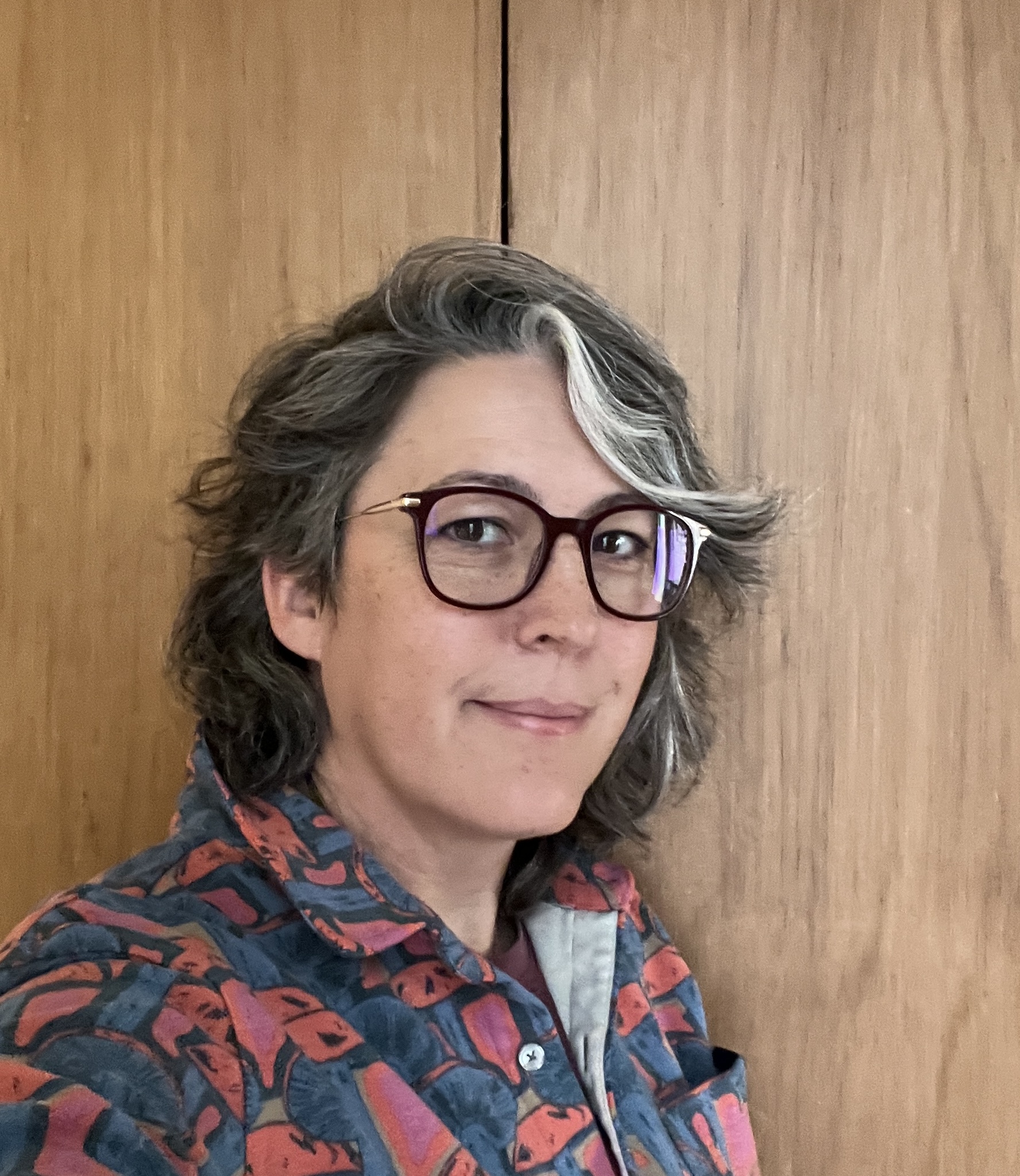
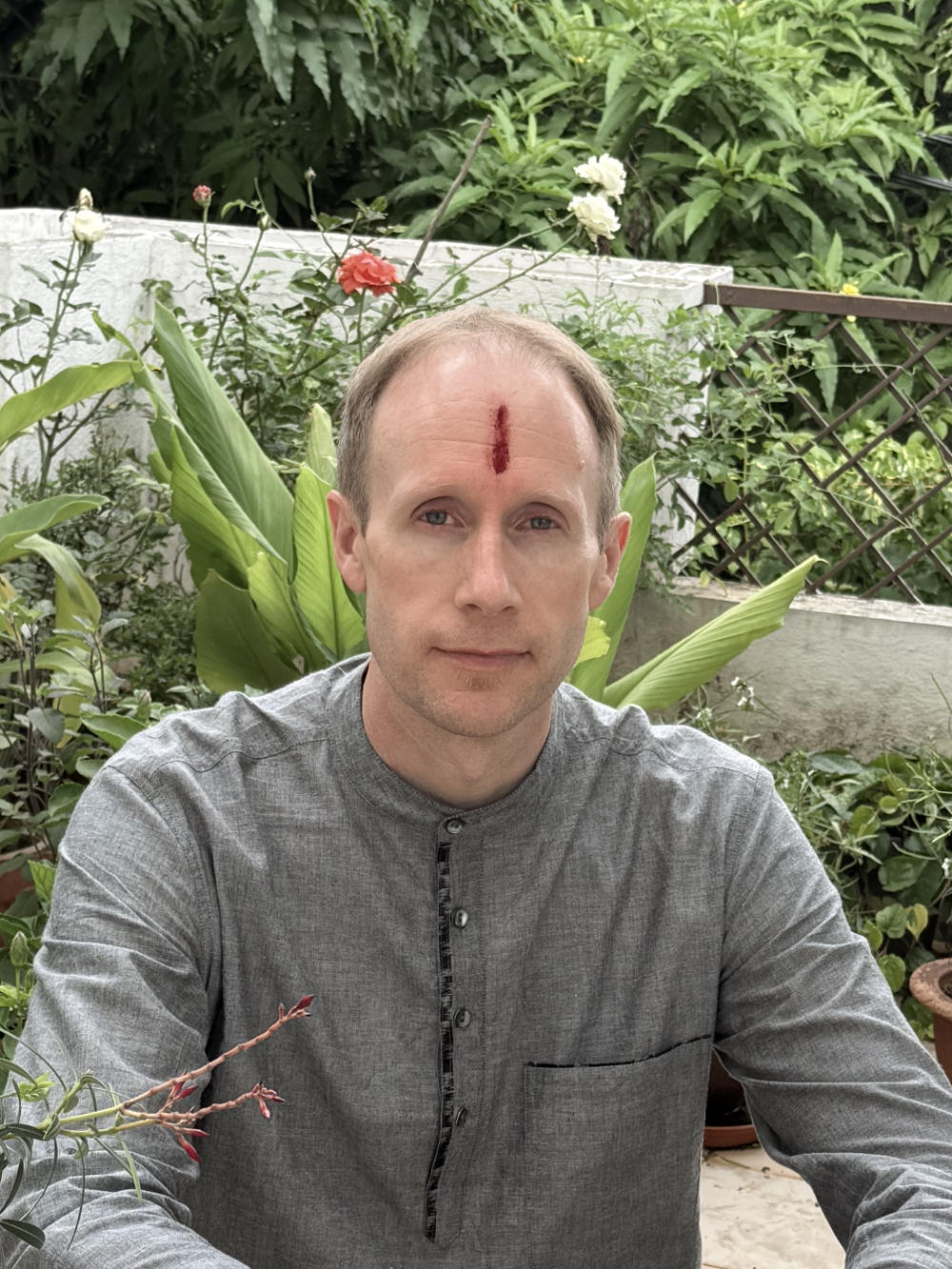
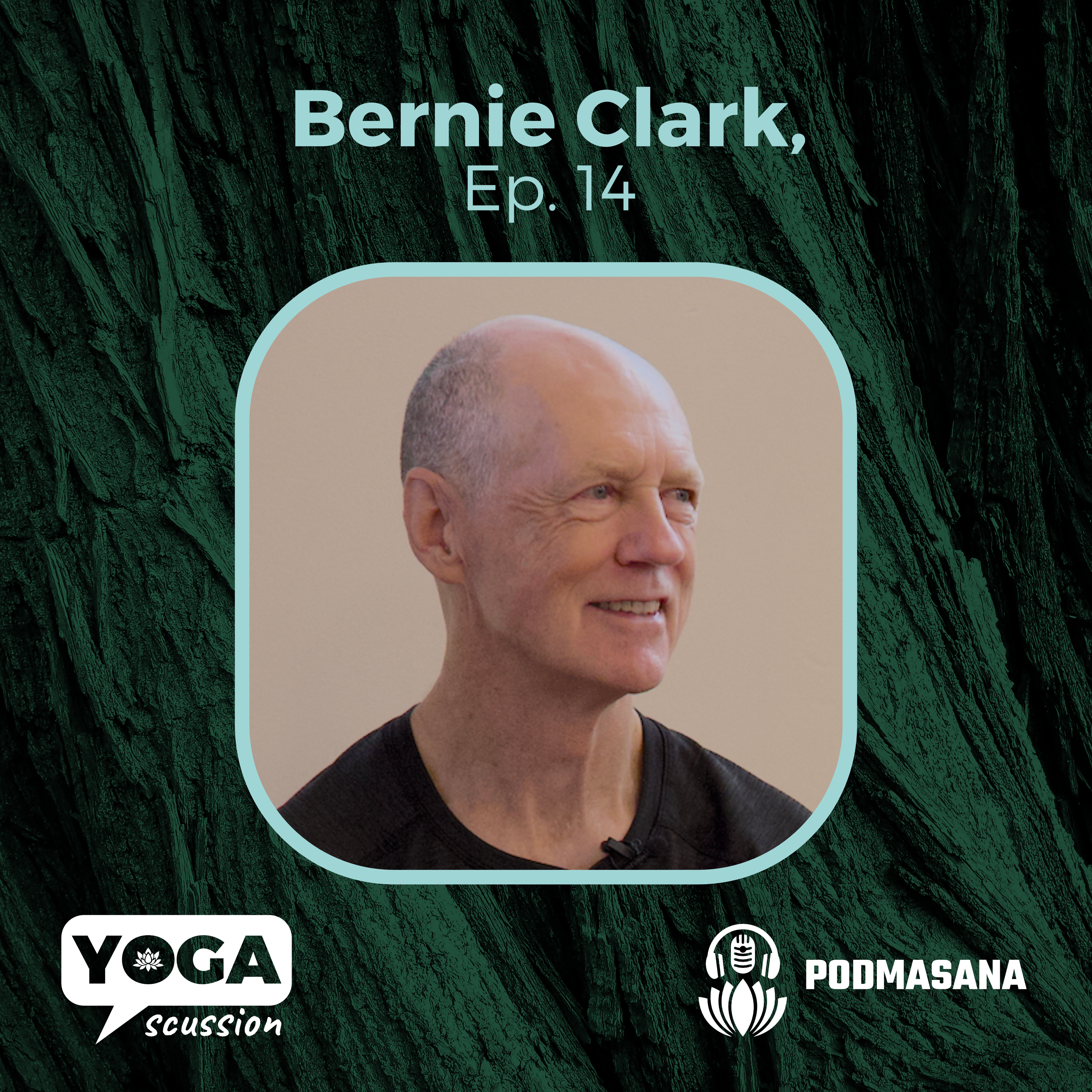
[00:00:45] Speaker A: Brendon Today we are going to be interviewing Bernie Clark, one of my favorite teachers.
I did a teacher training with him in Vancouver in 2019, right before the pandemic. And it was awesome. It was 50 hour yin yoga teacher training. Probably one of the best trainings and experiences I've had, which is also where I met Kimberly McIlhatton, who we interviewed. So made a lot of good friends and had a good time. So he's been a dedicated student of science and mythology in the contemplative traditions for over four decades. He's best known for his pioneering work in yin yoga and his widely respected books on anatomy and practice. And, and he just has such a unique blend of intellectual rigor, deep inquiry and storytelling to his writings. He's written several books about the body, like your body, your practice, your body, your yoga, your body. Excuse me. He's written a couple of manuals on yin yoga, which are for any yoga teacher. Awesome.
And he's also had a successful career in science and technology. He worked on the Canada Arm project, which I learned in my teacher training. And then I freaked out because that's a really cool thing. It's nerdy space stuff. So if you're interested listeners, go Google it. But his science, his science background really has laid the foundation for his explorations in yoga. In the body, in the breath, in the mind. And he's been studying and practicing for a long time and teaching. And he just has a lifelong curiosity about the human experience. And I think we are going to have an awesome chat with him today.
[00:02:21] Speaker B: This is going to be a good yoga discussion, Gina. I can't wait.
[00:02:24] Speaker C: No.
[00:02:26] Speaker B: Hello, Bernie.
[00:02:28] Speaker C: How are you?
[00:02:29] Speaker B: We are good.
[00:02:30] Speaker C: Good.
[00:02:31] Speaker A: Hi, Bernie.
[00:02:32] Speaker B: Thank you very much for joining us for yoga session.
[00:02:35] Speaker C: My pleasure.
Gina. Good to see you again.
[00:02:39] Speaker A: Yeah. Do you remember me?
[00:02:41] Speaker C: Yeah. The Gina from Wyoming, wasn't it?
[00:02:43] Speaker A: Yes. Wow.
I feel really.
That's so tender that you remember me.
[00:02:49] Speaker C: You had. You had a broken ankle or something like that.
[00:02:51] Speaker A: I did, yeah. It still feels broken. It's fixed, but it's stiff. Man.
They say surgery, but I think surgery never puts you back to where you used to be.
[00:03:02] Speaker C: No. You never. The warranty's kind of expired.
[00:03:05] Speaker A: Yeah, totally.
Oh, I'm so glad you could join us today. We're just really honored to have you here and I thought you could. We usually kind of have our guests do a Little rundown of like how they came to yoga, kind of where yoga has taken them. And some of our listeners may not be familiar with you. So I was wondering if you could start by talking about that.
[00:03:27] Speaker C: Yeah. In fact, that's actually in the book, my latest book, Prana.
I guess I came to yoga without realizing I was doing yoga in the 1970s. I was in a very high pressure job and I was having trouble dealing with the stress. So I asked my boss's boss what he did about stress and. And he told me he meditated. So I took up Zen meditation in the late 70s, but it wasn't until the 90s when I decided I needed a sangha, a group to meditate with. And in Vancouver there used to be these things called classified ads. I don't think they exist anymore. But in the local newspaper there was a classified ad for a place called the Prana Yoga and Zen Center. So I thought, well, there's a Zen. So I joined them and I used to sit there three nights a week with them. But the owner, her name was Shakti Mai, she kept telling me I should try the yoga stuff. And I looked at all the flexible young women walking through there and I said, I'm not into the yogurt. I'm just here for the meditation. And then she said, well, yoga will really help your meditation. So I tried it and I just fell in love with it. So this was in the 90s. So I started, I realized I was always doing yoga. I was just now adding asana to the yoga practice. I was always doing the Dhyana part in terms of Patanjali's eight limbs. So that just grabbed my whole attention. And I've always been a type A personality, which turned out to be A for Ashtanga. So I really got into the Ashtanga practice, but it was wearing me out. I was burning out. I was burning up and I needed to find some balance. And fortunately I fell into something called yin yoga. I met Sarah Powers and Paul Grilley and it really was something I needed at that time to balance my Yang drive with more of a chill yin energy.
So that's kind of the short story of how we got into where I am today.
[00:05:19] Speaker A: Yeah, great.
We are going to talk about the book, but we just wanted to do a little introduction. And so the book. Oh, it was good. It was full.
There was so much in there. What I kind of came away with is there's like these narrative threads. So there's your story, which I was just enthralled by because you came up in a time when there was more access to the direct teachers.
[00:05:45] Speaker C: Right.
[00:05:46] Speaker A: And so all of the trainings that you were talking about in there, I felt a little inner envy, like, oh, those. You know, there's a lot of trainings now, but it's hard to discern where to go. And then there's sort of a second narrative thread which is like, the Science of Prana. Like, how do we understand this through a scientific lens, through something that we can measure and feel and know? And then the third Len, or the third narrative that was strung through the book is it's a history, it's a culture.
It's a broad look at, like, how we culturally understand Prana. And also archeology, which I'm an archeologist in my other life, so I was really nerding out. I have some. Later we'll go into some nerdy archeology parts.
[00:06:29] Speaker C: Cool.
[00:06:30] Speaker A: And it was just such an interesting way to tell the story of Prana. I didn't really know what to expect when.
When I started the book. So my question for you, my first question was, what was the impetus for you to write this book? What drew you into the decision to write it? And then how did you decide you were going to weave these narratives through?
[00:06:52] Speaker C: Okay. Two very separable points. Well, Gina, you might remember back when you took the Yin yoga teacher training, there was kind of three parts. There was the physical part, physiology and the bones and all that. And then there was the mind body stuff, the meditative aspect.
But there was also the energetic part. And I often wanted to write books about each one of those three segments. And my first book on this was called from the Gita to the Grail. And the publisher, when they made it a soft copy, they changed the title to Shiva Dancing at King Arthur's Court. And this is a whole history of meditation, history of yoga, the philosophies. And what do the symbols in the east mean to us in the West?
Like, there's a famous statue of Shiva dancing with the Tandava, the fire all around him, and he's dancing on a dwarf named Adviye. Well, what does that mean to an accountant in Wall Street? He's had no idea what these symbols represent. So my intention with that book was to kind of build a bridge between east and west from a mythological point of view. And one of my main influences there was Joseph Campbell and a bit of Carl Jung and a lot of the other yoga teachers of the day or yoga researchers of the day, like Mirchai Aladdis.
So that was covering the mind body. And then I spent about eight years writing a trilogy called you'd Body youy Yoga, dealing with the physical body and the uniqueness of our bones and how that shows up in our yoga practice. But I'd never done a book on the energy body.
So that was why I wanted to write about Prana.
And just like in the course, we talk about kind of the historical view in South Asia of the Nadis and Prana and the Vayus, but also a little bit further north, traditional Chinese medicine and Taoist philosophies of Qi and Jing Lu, or the Pranas, sorry, the meridians.
So I wanted to put that out there as well.
But the studio that I joined first, when I first started doing yoga, was called the Prana Yoga and Zen Center. So there's Prana again. So part of it is my own history of learning yoga through prana and Shakti Mai.
Part of it is just the historical evolution of what did prana mean to people? Because today we have a kind of a quick definition of prana as life force or life energy.
But the term energy didn't really exist 2000 years ago. Yeah, what we think of prana today is not what they thought prana meant back then. The word prana comes from kind of two words, pra, meaning to bring forth and on, which can be the breath or movement or volition. So prana back then was the volition.
It was a God. Indra says in one of the Upanishads, I am Prana. Prana is me. So anything that moves you is prana. So it's not just the breath that's part of it, but it's a much bigger thing. So I wanted to go through culturally how the use of the term prana, life force, vitality, kind of evolved over the centuries.
But I also wanted to end with the modern scientific view of life. What is life? What is life force? What makes us alive? How do our cells communicate? So I wanted to weave these three threads together, like gunas, the three gunas that make up all of existence, all of Prakriti. So that was kind of my reasoning for doing it that way.
[00:10:08] Speaker A: How long did it take you to kind of pull all this together? Because I imagine from an archeological perspective, a person who does research and has to write reports and do all of these things, it's like that can take a lot of time and effort and energy to just be reading things and pulling your mind together on these, on all that.
[00:10:30] Speaker C: Well, I started it back in the 1990s fortunately, I was a bit OCD. I always took lots of notes whenever I went to visit Eric Schiffman or go to the conferences with David Leif or Richard Freeman and Tim Miller would come to town and David Swenson, all these people would come, and I'd just be sitting there writing notes after notes. So I got all these notebooks I've got from 20, 25 years ago. So that was my archaeological digging into those notes to what did they say then?
And I was realizing, just as an aside, that, you know, What I taught 20 years ago is not what I teach today. Science have progressed and there's different understandings of how the body works, how bones work.
So the same thing probably happened with these teachers, I'm quoting them, back in the late 1990s or early 2000s. And I'm sure today they would say things differently or they may not even agree with what they said then. So I was very cautious that I don't want to put too much on what they were saying then, because time moves on.
But in history and archeology, you're looking at a snapshot of this is what we thought at this strata of time in this particular culture. So I kind of had to leave it there and just give a warning to the readers that things do change and evolve.
From the science side, I like to think, well, if prana is some sort of life force, what does that mean? It's no longer thought of something mysterious and subtle. It's more physical. These days, on the physical side, we do have lots of ways cells talk to each other. So today I kind of evolved to. The prana is communication, energy. It's the way the cells communicate to each other through physical stresses, through electromagnetic fields, through chemical signals, through light. There's lots of ways that our cells are in communication because they're in community, they're all working together.
So I wanted to kind of end with kind of the modern view of what prana might be if we had to define something like a life force today.
[00:12:30] Speaker B: Yeah. And it's interesting, right, because in this pursuit of trying to come up with a definition that may last time, you know, for. For all humanity, we're ultimately kind of trying to define the undefinable to a certain extent. Right. And in the book you were, and as you've been discussing, you describe prana not as a single definition, but this idea of a living question. You know, it's simultaneously breath, bioelectrical force, and the idea of a spiritual current, which I personally appreciated.
[00:13:03] Speaker C: Right.
[00:13:03] Speaker B: But for listeners who be new to this concept. Bernie, how do you invite someone to experience prana before they try to understand it intellectually?
[00:13:16] Speaker C: Yeah, well, the. The easiest road in is through the breath.
It goes right back to ancient shamanic traditions prehistory. There always was. As Manvir Singh, who studied shamans around the world, he said shamanism was the first profession. And by that he meant doctoring was kind of one of the first professions. When somebody was not well or there was some problem with the community or the tribe, he would go to the shaman. And the shaman was the kind of the vehicle through which the human culture would relate to the unknown world around us. Like, there's all these forces around us that we couldn't control.
We couldn't control the rains, the droughts. We couldn't control the tribe in the neighboring valley that might come and attack us. The. There's so many things that are outside of our control. But the shaman was the interface to that. So whether it was the physical dangers of the animals and the natural world, or sickness and illness that comes from somewhere, he was the one that would bring that and protect us.
And the vehicle they often used was the breath. Their chanting, their trances.
A shaman, in order to be validated, had to be different from everybody else.
And that strangeness in the shaman would relate us to the strangeness all around us. So they were the interface. They were never really part of the community itself. They were always somewhat outside the community and they'd be called upon to help us. And their work with the breath was really the key technology of the time. Breath and fire. Of course, now we noticed, all our ancient ancestors noticed that when a body is dead, it's not breathing, and any animal that's breathing is alive. So there's something about the breath that gives us life or is life. When breath leaves, life leaves.
So it's a natural association that the breath is the link between life and just an inmate clump of clay.
We even find that in the Bible, in Genesis. There's two creation stories in Genesis, and the second one, it talks about how God formed Adam from the dust of the clay of the ground. But Adam, even though he's completely physically formed, he wasn't alive until God breathed into his nostrils. And with that first breath, Adam got his soul and life.
There's a talk about soul as well. So I do in the book, talk about this distinction between soul and breath, or soul and prana, pneuma in the Greek and psyche, the two different words for soul and energy, if you will.
So I think the way in is through the breath.
[00:15:53] Speaker B: I don't suppose you've ever had in your years of teaching someone say, well, I don't feel anything as they're working on a breathing practice. Have you ever had an experience like that? And if so, like how? What would you say to a person who's maybe working on trying to be aware of the breath and maybe there's still something just that's not quite clicking?
[00:16:11] Speaker C: That's a common comment that we get in yoga and in meditation, people just. They have very little interoception. Everyone knows about proprioception, knowing where you are in space and time. Can you touch the tip of your nose with your eyes closed? So proprioception is very important. But interoception is also valuable, and we all have it. We all know that when we're hungry, it's time to eat. When we're thirsty, it's time to drink. When you need to evacuate the bladder, it's time to go to the bathroom. All those are interoceptive signals, so we can't not feel them. We live with them all the time. But can you feel your heart beating right now? That's a much higher degree of interoception. So part of our job as teachers is to build this inner awareness.
And it can be as simple as just put your hand on your belly and as you inhale, what happens? As you exhale, what happens? Or bring your awareness to the upper lip. As you breathe in and out, do you feel something there? Can you feel the air going through the nostrils? So you're basically building awareness for the students. You're developing their interoception.
So a lot of people, as you say, they just don't feel anything, but they haven't been trained to pay attention. Our culture puts our awareness out there. We're always looking out here, we're not really looking within.
What are you feeling right now? Fine. Well, I'm glad you're fine, but what are you feeling? I don't know. We're not trained to look within.
That's the beauty of yoga. We get these times on the mat where we can actually pay attention. And that's why I really love yin yoga, because you got five minutes. Three, four, five minutes to really pay attention. What are you feeling?
Fine. Okay, I'm glad you're fine, but what are you feeling? What do you mean? Well, we have a targeted area. We're in a backbend sphinx. Do you feel anything in the lower back? Yeah.
Well, what is it?
Is it superficial? Is it deep? Is it shallow? Does it throb? Does it come and go? Does it pulsate? Is it constant? Is there a temperature to it? Is it cool? Is it warm? Is it hot? Is it burning? So you start to build this inner awareness so that people can actually pay attention to the effects the practice has on them.
[00:18:13] Speaker B: Yeah, it's quite the rabbit hole. And earlier you had mentioned pneuma, which I really liked. And so we're kind of talking about in the book soul as essence or atman psyche. Spirit as, you know, prana or pneuma as the sense of vitality.
You know, Bernie, in a wellness culture that often blends these two terms, it seems, how does or why does this distinction matter?
And how does it change the way we practice yoga or perhaps spirituality? And when I was reading the book, as I was telling Gina, you know, I kept thinking about this idea of dualism and non dualism. And I'm wondering if you could maybe speak to all of this for a little bit.
[00:18:55] Speaker C: Okay, well, there's a lot in there to unpack, so I gotta try. Brendon first of all, I got introduced to the difference between spirit and soul way back in, I think, the 1980s with the book Care of the Soul by Thomas More.
There's a very famous monk under King Henry viii, Thomas More, the man for all Season. It's not him. It's a more modern writer.
And he explained, although a lot of people use spirit and soul as synonyms, they actually are two different qualities, if you will. Like a lot of people say they're looking for their soulmate, but what they're really looking for is a spirit mate.
Now, think of the word spirit. It comes from the Latin for breath, Spiritus. Inspiration is an inhale. Expiration is an exhale.
So this is what gives us energy, life. Spirit is what energizes us.
A spirit friend, a spirit mate, will climb a mountain with you. We'll go off to Greece at the drop of a hat and leave a note on the fridge. Gone to Greece, back in three weeks. Surely it's an old movie. You probably have not heard of it.
But a soulmate is very different. A soulmate is somebody you could walk through the woods for three hours and not say a word.
That's a deeper type of thing. Like spirit is what inspires you, takes you to climb a mountain. But you can't say at the top of a mountain. Eventually you have to come back into life, back into the valley. So soul is getting up in three in the morning to change the diapers of the baby. Or getting up at six to stir the oatmeal and wash the laundry. So soul is connectedness. It's community. It's a deeper aspect. Spirit is the energy. So the analogy I used is an electric car.
The car is kind of metaphor for the physical body. The driver of the car is kind of like the soul, the Atman, the one who's making decisions.
But prana is electricity in the battery. And if there's no electricity in the battery, the car can't do anything. And the soul eventually leaves and goes, finds another car.
Kind of symbolic of reincarnation. So without prana, the car doesn't go anywhere, but without the soul, the car doesn't know where to go. You can't even put it in gear. So you kind of need these two aspects, spirit and soul. The Greek call it psyche for the soul and pneuma, which is where we get the word nomadic air.
So there you're seeing this linkage across almost all the cultures. Air is related to the energy of life.
So as I said in Genesis, when God breathed into Adam's nose, he got life and his soul, the difference. So even in the ancient Hebrew Bible, there's a difference between the soul and that which gives us life.
And in South Asia, we have the concepts of atman and the values. These are not synonymous. They're very different things.
[00:21:45] Speaker B: Yeah, there's definitely a synergy across cultures. I appreciated you mentioned that.
[00:21:48] Speaker A: Yeah, yeah.
[00:21:50] Speaker C: And that does lead to this dualism.
[00:21:53] Speaker B: Right.
[00:21:56] Speaker C: These are not the same qualities, although we do often say soul and spirit are the same thing, but they actually are quite different.
[00:22:04] Speaker B: Do you fall, where do you fall on the dualism versus non dualism spectrum? If you think you fall anywhere? I mean, I even think that my thoughts or approaches to this have maybe shifted over time. And there's days, as I was telling Gina, sometimes I don't really care to answer or distinguish between the two because it is ultimately an act of the intellect rather than the experiential wisdom approach.
[00:22:28] Speaker C: Well, Gina may remember during the course, I talk about maps a lot and I show a map of Vancouver and I explain that this map of Vancouver is not Vancouver. Like, if I put a thumb down on my address here, it's not going to be a big thumb coming out of the sky to squish my house.
A map is a representation of reality, and the map is never right. It's never real, it's not truth.
The point of a map is to be useful.
If I have a street map that shows me where all the golf Courses are. I personally I'm going to love that map.
But there's another map that shows where all the coffee shops are. Now I don't drink coffee, so to me that map's useless.
And wars have been fought over whose map is right, the map with the golf courses or the map with the Starbucks. And along comes a genius named Einstein. He creates a new map that has both Starbucks and golf courses. So that's a more useful map.
But no matter how much you use this map, it's not going to tell you if it's going to rain tomorrow.
For that you need a weather map. So now we have a different representation of reality with a different intention.
So the point of any philosophy, any theory, hypothesis, is not to be truth, but to be useful to help to explain the universe in a particular way so that we can navigate.
Now I don't have any problem using a street map one day and a weather map the other day because they're different uses. I have no problem being a dualist one day and a non dualist the next day.
There's nobody says I have to only have one map.
If you have a map, and we can't have maps, you've had maps that have been created in you since you were 2, 3, 4 years old, by your parents and then by school, then by society and media. So you cannot have a map, not have a map. But you might need a better map because if you find you're always getting lost, maybe this map is no longer serving you, maybe it's obsolete or out of date and you need a Google map instead of an old hand drawn map. So we can always update our maps. But no matter how good this street map is, it's never going to tell me about the weather. I need a completely different map for that.
And in science, you probably have heard of this wave particle duality thing.
A photon can be considered a particle like a bullet just shooting through space.
And that explains a lot of different observations and data and science, but it doesn't explain all the data. So we have another map that light is a wave, like on the ocean, and it's spread out over time.
And that explains a lot of different observations. Now these two maps don't easily lie on top of each other. How can something be in one spot and also be spread out? It makes no logical sense.
But nobody says the universe has to be logically sensible. It's both.
So why can't I be a dualist one day and a non dualist the next day, depending on what I want to do.
[00:25:18] Speaker A: Yep.
[00:25:18] Speaker B: I personally completely agree.
[00:25:21] Speaker A: I was thinking, as you were saying, all that coming back to like the eight limbs of yoga, it's like, that's just a map.
That is a map for existing and experiencing this, you know, the physical realm and our interplay in the physical realm.
[00:25:38] Speaker C: And if that map works for you, great. Don't let anyone tell you it doesn't work.
But there's not the only map, right? So don't tell me I have to follow your map.
[00:25:48] Speaker A: We can follow all the maps if we wanted to.
[00:25:51] Speaker C: Sure have lots of maps. I love maps. Every scientific theory is a map that explains the observations.
And usually newer maps just add on top of that. Very rarely is the whole map thrown out and you got a brand new map, but still the map that. The analogy I use is, I'm here in Canada. Vancouver. And in the early 1500s, an explorer named Jacques Cartier came from France to the New World, and he created a map of the St. Lawrence Seaway and an island in the middle that he called Mount Royal. Montreal.
[00:26:24] Speaker B: 30.
[00:26:24] Speaker C: Sorry. 50 years later, another guy came, Samuel de Champlain, and he created a better map. He discovered the Great Lakes to which all the Native Americans were saying, wait a minute, he discovered us? We've been here 10,000 years. How did he discover us? But anyway, his map was better than Koshay's map. Now today, nobody had used that map to navigate Montreal. We have Google Maps. We have better maps.
So we can keep improving the maps to make them more useful.
But again, we can use different maps. We can use weather maps and contour maps and geomagnetic maps. There's all sorts of maps we can use in life and in science. You don't have to just have one.
[00:27:01] Speaker A: Yeah.
Speaking of maps, some of my thoughts, I had so many thoughts as I was reading this.
I think I have too much in my brain already. But so I was thinking about all of the different. I guess we could call them maps, for lack of a better word. But we have traditional Chinese medicine. We have Reiki, Ayurveda, acupuncture, Tai chi, qigong, magnetic fields, earthing. I started getting really into this light therapy, circadian rhythms, and I started thinking about prana.
And to me, it started to feel like, in some ways, yes, prana is started as the breath. That was the old map. That was the original map.
And now with science, we're just getting so much deeper into what we can explore and know about the human body. And I was curious if you'd Radiolab put out this really Good episode called the Spark of Life. Have you heard that one?
[00:28:02] Speaker C: I've heard that term, but I haven't heard of that particular episode.
[00:28:05] Speaker A: That episode features a scientist.
I hope I get her name right. Nirosha Murugan. And she's looking at light as a power source in cells.
And she kept asking her teachers, like, how. How do cells do stuff? What's. What's the thing that's making them do stuff? And they were able to drill down and see that there's these little tiny bursts of light. They call it electromagnet. What did they call it? Ultra, ultra weak.
Biophotons. Yeah.
So it's so, so weak that the eye cannot see it. So they have to use all this special equipment to see it.
And then other scientists were able to see a sperm penetrating into an egg. And at that moment, there's a biophoton, a flash of light. And so now they're exploring, you know, like the cells are moving with light. Our cells are doing things with light.
And reading your book and having listened to that episode of Radiolab, I just started to think, it's so connected. It's like earthing or being outside, getting circadian rhythm, getting sunlight in your eyes. Our bodies are so much more nuanced than we ever thought maybe. And I don't know if you have thoughts about that or anything that you would want to contribute to that, but it just was striking me as being a little overwhelming, but also being pretty amazing that our environment plays such a big role in who we are and what we're doing.
[00:29:38] Speaker C: Yeah, I've got a degree in science and physics, so all this stuff has always fascinated me throughout my life, from childhood on up. And you're right, biophotonics is a very real thing. You can have cells in one petri dish, and a few feet away there's another petri dish. And somehow they're communicating to each other with these very weak photon energies. So the whole science is called cellular signaling. In the last 30 years, we've really been unpacking, how do cells communicate both to other cells, but also within the cell itself.
There's so much we're uncovering which explains the effectiveness of even simple yoga practices. In yoga, when we're holding a pose for five minutes, our body is feeling a stretch. Well, our body isn't just our body. It's made of 50 trillion cells. So inside our skin and our fascia, there are cells called fibroblasts. And they start to get elongated. As you hold a stretch, they change the shape and that causes them to change things inside. There's even little proteins that they will create after a certain time, and that goes into the nucleus and starts activating certain genes. So all these things are being studied of how do the cells know what to do?
It's like a whole little human being all on its own.
And we're just a community of 50 trillion of these little things all talking to each other. So the whole advance of cellular signaling is just amazing. Things that we never would have suspected 30, 40 years ago are going on beneath any conscious awareness.
[00:31:06] Speaker A: Yeah. And for me, as I see it, it's like a gradation of prana.
Like, we have the bigger prana, which feels like breath. Right. Like I cannot live if I cannot breathe.
But then it's smaller and smaller as it goes down to where it's like biophotons, you know, these little tiny lights on the cellular level. And that just. I don't know why that felt so good to my brain to know. I don't know. Sometimes I think we as humans operate on a really big scale, and we think really big, but the smaller that I can think, the more internal it feels like connection, I guess.
[00:31:46] Speaker C: Well, think back. We evolved in this environment over billions of years from a very basic cell. It's been bathed by all these different types of fields and energies. Magnetic field, gravitational fields, electrical fields. So why wouldn't it have taken advantage of those things to evolve and develop? It's like, if you got some food there, why wouldn't you eat that food? And so then go look for some more similar food. So over billions of years, our cells have evolved to use all these different modalities.
And then we started to become communal cells where cells got together and cooperated. And one cell would be the outside, and it would feed things in the inside, and the inside would then feed things to the outside cells, and so there'd be a cooperation going on.
And billions of years is a long time. The things kept changing, evolving, using what was out there in nature. And so it's natural. Now we're looking back and saying, wow, look at. We use light and we use magnetism. We use electricity. When you use pressure, all that stuff was always around us.
It's not surprising that we're doing it. Just we're surprised by how efficient our cells are.
[00:32:48] Speaker A: Yeah.
[00:32:50] Speaker B: And speaking of around us, I mean, when you were describing that, Bernie, I started thinking about fascia.
[00:32:55] Speaker C: Right.
[00:32:55] Speaker B: And you touch on fascia a little bit. Right. As it relates to prana. You know, it's this I mean, in my mind, I think of it as the body's communicative tissue. I think we're. You're using the language in the book communicative network, this correlation between the nadis and meridians.
You know, we do have some skeptics or maybe science. Curious listeners. What's one research finding about breath fascia or the concept of bioelectricity that maybe excited you the most? Or how can we apply that maybe without over intellectualizing a prana practice?
[00:33:33] Speaker C: Well, let me just give one example. I'm sure everyone's seen kids that wear shoes that light up when they walk.
Yeah, they've got LEDs in the soles. And if you've ever bought those for your kids, you know you didn't buy batteries. There's no battery in there. So where's the electricity coming to light up the LEDs? Well, in the sole there's a little strip of metal. And when you bend a piece of metal or any crystalline material, you will create an electric current.
This is called piezoelectricity, and it's ubiquitous through modern technology.
A lot of people never heard of it, but when you talk into a cell phone, your voice vibrates. A little piece of metal which sends electric currents through. Sonars are like that. A lot of people, when they light their gas stoves, they turn something that bends. A crystal that sends a spark lights the gas.
Our bodies are also liquid crystals, our fascia. See, a crystal is simply something that has a repeated pattern.
So you can think of a glass crystal or a diamond crystal. Salt is a crystal of sodium and chloride. Anything that repeats the pattern is a crystal. And liquid crystals are soft, like the front of your cell phone. You press it. It's a liquid crystal.
Whenever we move, whenever we stretch, like in yoga, we're creating little electric currents that flow through the fascia because the fascia itself is a crystalline material.
So when you stress the fascia, you're creating these little currents. And we have cells that are listening for these currents. Again, part of cellular signaling. There's a whole bunch of work that's been done since the 1950s. And modern researchers like Michael Levin at Tuft University, he's doing fantastic work on how electricity determines what a cell does, how it grows from an embryo into a full being. There's a lot of electrical communication happening there. So part of this is navigated through the fascia. The fascia creates these currents and helps to transmit the current. Fascia is a fascinating topic, and we could spend hours just on that, but our muscles are Wrapped in fascia, it's called the epimysium. And then you got another muscle group over here with its epimysium. And between the two, there's a very thin film of water so that the muscles can glide along each other.
Think like in your leg, you've got the quadriceps, four muscle groups, and on the top you've got the rectus femoris, which helps to flex the hip a bit. Well, it's got its little bag around it to separate it from the vastus lateralis and the other quadricep muscle groups. Well, that little film of water is a great conductor of electricity, so the body creates electricity. But we also have these lines of interfaces, which a scientist named Helene Langevan, in the early 2000s, she started to map where these lines of fascial interfaces were compared to the meridians of classical Chinese medicine. About 80% of the time, she found all the acupuncture points were right on these fascial boundaries.
Just below the surface, there's these fascial continuities.
We know that moving creates electric currents. We know electric currents can flow through water. We know that the water follows these interfaces between fascial boundaries, and they seem to line up with the classical meridians.
Now, that doesn't prove acupuncture works in that way, but it's just very suggestive. More work needs to be done.
[00:36:55] Speaker B: Yeah, for sure, Bernie. And you were talking about maps earlier, and as you were describing, all of that, I was thinking of, if you want to call them traditional maps of chakras or nadis. Do you think there's a balancing act between staying grounded in measurable physiology while also honoring these quote unquote, traditional maps?
[00:37:18] Speaker C: Yeah. One of the things I love doing is building bridges between the Eastern experiences and the Western scientific understanding. As a scientist, data is primary, or if we put this in more of a yogic thing, your experience is primary. You cannot deny that you had that experience.
So let's start with that and see if we can use any of the maps in science to explain the experience.
And if we can't, it doesn't mean the experience didn't happen. Again, data is primary. You have to build your maps to explain the data.
There's an old famous saying in science that there's nothing so sad as a beautiful theory undone by one inconvenient fact.
You can have this wonderful theory, and then you just get one counterfactual and says, well, then obviously your theory doesn't work, so you have to throw the theory out now in science, sometimes we'll take a whole bunch of measurements and we'll draw a line through it, a best fit and try to say, well, here's the relationship. And these little guys out here and here, we'll call those outliers and we'll ignore them for now.
Well, you can do that. But that's where the interesting science is. Why are these outliers out there? Why are they like that when everything else is like this?
So let's start from the experience.
The experiences in the east are very mystical, hard to explain woo woo type things. But if we could explain them using western science, how would we do that? Or do we need to have newer science that we haven't invented yet?
And what I like to see is maybe we can just use the science we already have to explain those experiences.
And most of the time I think you can if you just kind of look with a more open mind. Well, the science actually could be like with piezoelectricity maybe what's happening when you put a needle in somebody. You're creating a piezoelectric current or some other stress on the tissue that is being transmitted through these water rich fascial interfaces.
[00:39:07] Speaker A: Gonna switch here. Just topics for a little minute. So your book is great at everything is going through and I'm following the narrative where you're having all of these dizzy spells and you're kind of like my energy is weird, I don't know what's going on. And then we get to the end of the book and spoiler alert, I don't want to spoil it. But also you can go read it. But I also have to ask this question.
So I remember. So at the end you kind of never really figure out what was going on with you, with your health. You just kind of figure out that you have a lot of pitta and maybe kind of need to just be more in a yin state.
And also at the end of the book it's kind of like, well, here's what we know or what we think we know about Prana, but.
But also we kind of don't know.
And that's kind of where you leave us. And I remember in your trainings we would ask you questions and you would go, well, it depends. And there was always kind of this non answer answer.
And so what I was wondering is you seem relatively okay with just being like, I don't have an answer. And I was wondering, is this something that is just like innately born into you? Like I always want an answer. I always want someone to tell me. Tell me what the answer is. Tell me what to do. And in going through training with you, it was like, oh, yeah, maybe there's not an answer. And it seems like you possess this really great quality of just being able to kind of go with the flow and be okay with not an answer. Is this something that's developed over your life, or is this just how you are as a person?
[00:40:39] Speaker C: No, I think that's how science is as a field.
There's a famous quote by Richard Feynman, one of the most amazing physicists of all time, American, in the last century, and he once said, I'd rather have questions that can't be answered than answers that can't be questioned.
[00:40:55] Speaker A: That's good.
That's the bumper sticker moment.
[00:40:59] Speaker C: The dogma we have in many religions. There's answers, and you can't question those. You have to take them on faith. Well, that's not the scientific approach. That may be fine. That's one map of dealing with life in the world. But I'd rather have questions that can't be answered. That's where the advances in science happen. So it's okay to not be able to answer things or to change your answer if new data comes in. That's just the way science works. Let's look. All new scientists going into universities, they love to find the questions that haven't got answers yet, like, what is dark matter? What is dark energy? We don't know.
We see certain things happening in the universe. We need to come up with new explanations for that. That's the fun part.
I don't shy away from things that can't be answered. That's fun.
[00:41:42] Speaker B: Yeah, yeah. The act of questioning is a pretty interesting exercise to undertake. And I guess one question that just came to mind, Bernie, is how did you, or your own health challenges maybe shift your understanding of Prana as something that was more than a theoretical concept?
[00:42:00] Speaker C: Yeah, yeah. As Gina, now you mentioned, Brendon throughout this time of the book, I was having increasingly more episodes of extreme fatigue, dizziness, tiredness, where I had to take a leave from work. My company was so worried, they sent me down to the Mayo Clinic in Arizona. They couldn't find anything physically wrong with me. I went through a whole bunch of different other modalities, whether it was Western medicine, Ayurveda, traditional Chinese medicine. Nobody could really figure it out. But also, at the same time, I was kind of burning out. I had a very stressful job. I was doing a lot of, as I said, type A yoga, Ashtanga, Power yoga. And I was on my own, working with some very heavy pranayama practices.
All those things were just crashing me. So through the years of trying to deal with this, I had to subtract. I had to stop doing certain things. So I had to. Although I still love Ashtanga, it's an unrequited love, it doesn't love me anymore. I had to stop the Ashtanga. And that's fortunately when I met Paul Grillian and Sarah Powers and got into Yin yoga. So I was first of all forced to crash, forced to stop because of my crashes. And then I had to kind of rebuild. And I noticed every time I started to feel good and I would start to go and do type A stuff again, I would crash again and I would just repeat that. I'd be down for a couple of weeks or a month and then I'd feel better and it started to come up. Well, today we have a term for it. We didn't back in the early 2000s, chronic fatigue.
And I don't think what I had was actually chronic fatigue, but there's very similar things to it, like post exertional malaise or post viral symptoms, like long Covid. These are all things. Now we're starting to really get into Dysautonomia, where the autonomic nervous system just gets thrown out of whack.
25 years ago, we had no clues about that. So none of the people I went to would ever even know what Dysautonomia was. I suspect that's what I had.
And I just had to learn to stop pushing my edge. Just because I could do something doesn't mean I should do something.
And so over the years, I just did less and less. I dropped all the extreme pranayama, which I think was affecting my blood chemistry, because as I talk about in the book, when you do a lot of breath work, you are making your breath more alkaline.
We need some carbon dioxide in the blood. More carbon dioxide, the more acidic the blood becomes.
We try to keep the blood PH level in a very narrow band, about 7.4, 7.2, which makes it slightly alkaline.
That's the same as the ocean. The ocean is slightly alkaline and that's where we evolved. If we have too much carbon dioxide, it becomes more acidic, and that's what's happening in the ocean today. With too much carbon in the atmosphere, the oceans are becoming a bit of a carbonic acid and it's melting away the calcium shells of the phytoplankton and the base of the food pyramid. So that's not going to be good in a few decades. But you can do that to your blood as well. If you blow off, if you hyperventilate, you're reducing the amount of calcium you have. Carbon you have. Now carbon dioxide is needed. If we have too little, our hemoglobin doesn't release the oxygen from its iron molecules, so you have to have some carbon dioxide in your tissues in order to let the oxygen release, and then the hemoglobin grabs the carbon dioxide. So if you have too little carbon dioxide, you start to have your muscles paralyzed and your brain chemistry all gets thrown out as well. Which is why I think a lot of people, when they're doing vicious pranayama, strong pranayama, they have these weird experiences.
It's because you're changing the blood chemistry of the brain like you would with alcohol or drugs. You're going on a trip. But it's not necessarily a healthy thing to do. And I think through months and years of doing all that, I was starting to affect my whole body systemically. So I just had to stop, slow down, do less, do less. And over time, I eventually got back to a kind of a normal state of homeostasis.
[00:46:04] Speaker B: Yeah, I appreciated some of the stuff from there, how your practice evolved. I, too, have an unrequited love with Ashtanga. You know, it's still. It's still dear to my heart, but I don't think it's looking out for me as much as it did in my younger days. So I really appreciated that. Bernie.
[00:46:20] Speaker C: Yeah. Yeah. There's stages for ages of life. Yes.
[00:46:26] Speaker A: Yeah.
I'm wondering if we can just nerd out on some archeology for a second.
[00:46:32] Speaker C: Yeah. Yeah. Fun.
[00:46:34] Speaker A: So when I was reading your book. So when I was in college, I. This was before all the tattoo specialists really came up in the world. But I wrote a paper on tattoos and one of the. One of the bodies that I looked at was Otzi the Iceman.
[00:46:50] Speaker C: Right?
[00:46:51] Speaker A: He has.
Yeah, he's from the Utzel Alps, and he has 61 or 62 tattoos on his body.
And I read this really interesting paper and I went. And this morning I went and looked up some more papers about it because I just wanted to double check since it's been a while since I'd been in college. But the original paper that was written, these students were scientists. I think they were grad students, maybe, or maybe they were just scientists. Anyways, they looked at his tattoos and all of his Tattoos are cruciforms, so they're just simple Xs.
And they thought, that's really weird. And when we look at tattoos later in the archeological record, they get very elaborate, but these are just little X's. And they were. What they noticed was they were all at these joints and confluences. And so they mapped them out to the meridians.
Really what they found was that they were within 2 to 3 millimeters away from these known traditional acupuncture meridians.
And so they went ahead and said, yeah, we think that. We think this was the first in OTSI, let's say this is 5,000 years old. So the oldest known evidence for tattoos, also the oldest known evidence for acupuncture.
I just found that to be super exciting. And I didn't know if you'd read that paper or not or came across that relationship.
[00:48:12] Speaker C: No. That is fascinating.
[00:48:15] Speaker A: Yeah. I was like, that would actually be
[00:48:17] Speaker C: long before even the Chinese or what was then.
They didn't have that concept that early 5,000 years ago.
Dr. Moriyama, who's a key teacher of Paul Grilley, who is my yin yoga teacher, he believed that the whole idea of meridians came into China around the Warring states period, like 4 or 500 BCE, not before then. And he think it actually came from South Asia. The idea of the nadis somehow percolated up into China.
[00:48:47] Speaker A: And.
[00:48:47] Speaker C: And it's only after that period that the Chinese started to have this concept of meridians.
[00:48:52] Speaker A: So it would be so interesting to see. I mean, we don't have the evidence clearly, because we have one.
Our size. Our size. Our sample size is 1. You know, but it just. What they saw. So they did X rays on. On Utsi, and they found that he had a bunch of osteo skeletal conditions, like arthritis in his low back, which is where a lot of these tattoos are. In his low lumbar region, he had arthritis in his knees and in his ankles, and these tattoos are around those parts of his body as well. And I just. It's just so interesting to me, and I know there's nothing really.
There's no way we can connect it, but it makes me think that these concepts have been around for a really long time.
[00:49:36] Speaker C: Yeah. And in those days, it was a lot of trial and error and passed down from generation to generation. So it kind of makes sense that somebody would be trying these things, like the shaman, that the tribal doctor would be trying these things. And of course, with tattoos, there's a needle that's going underneath the skin of exactly what acupuncture is the fact this needle also had some ink in there which stayed there. Maybe that helped to show where to put the needle next time. But a lot of these people, they're probably just through decades of experience and passed down through thousands of years, they kind of knew that certain things had certain effects.
[00:50:12] Speaker A: Yeah, if you push on this spot, you get some relief. And that's kind of what they were. Not kind of. They did say this in the paper, like. Yeah, we think that these spots, especially on his low back, were places he couldn't access by himself.
So if he was traveling and when they analyzed the stomach contents, what was in his stomach, and when they analyzed some of this stuff, his clothing fibers and things like that, what they found was that he wasn't from that area he was traveling through. And so they thought or hypothesized that having these tattoos would be beneficial because if he's traveling with people, he can say, hey, can you poke me right here in my back? Help me get some relief from my pain. Just looking at what his skeleton looked like, he would have been in immense amounts of pain.
[00:50:53] Speaker C: And he wasn't that old when he died, right?
[00:50:55] Speaker A: He wasn't that old. I can't remember how old he was, but he wasn't that old.
[00:50:59] Speaker C: Yeah, I thought he was like 30s or 40s. So had that much arthritis at that age would be quite unusual.
[00:51:04] Speaker A: Yeah. What was the other thing that I. Yeah, there was a couple of books I was curious if you'd read. I think you might like them. One is called How One Ancient Language Went Global by Laura Spinney. Have you heard of this book?
[00:51:16] Speaker C: I haven't heard of that book, but I've been fascinated by the linguistic history of the proto Indo European languages and how they came in ways throughout Europe and the Corded Ware people and then down into the Iranian Plateau and into India. Which is why ancient Iranian and Sanskrit are so similar. Yeah. It's fascinating to see how that transpired over the centuries and millennia.
[00:51:38] Speaker A: Yeah. As I was reading your book and you were talking about things, this book, Proto, kept coming up for me because she has one portion in there where she talks about these Vedic rituals, these Vedic burial rituals where they would take these horses and cut their legs off and bury them in these really weird ways. And then archeologists were digging around and they started to find these burials with these horses, with the people where the horses legs were all cut off and buried in these specific things.
And then linguists are reading the Vedas, they're reading the Rig Veda, and they're like.
And then the, you know, and archeologists and linguists weren't always talking to each other about what they were finding. And so they were able to track through the archeological record, folks who were Vedic in origin, you know, or, I mean, I don't know which we would call that in terms of. But these rituals that we see in the Vedas, we can see them in the archaeological record. And now we have a map back to maps. Now we have a map of where people were.
So I thought that was really interesting. That kept coming up over and over. As I was reading your book, I was like, I wonder if Bernie read this book. It's so good.
[00:52:51] Speaker C: Of course, all that's informed now with the DNA analysis.
[00:52:55] Speaker A: Yeah, she does a whole thing on DNA in that book. It's so interesting.
So if you have some time, highly recommend it. And there was another book that I kept thinking about too, the Horse, the Wheel and Language by David Anthony.
[00:53:10] Speaker C: Yeah, I have heard of that one.
[00:53:12] Speaker A: Yeah, same.
I think he's really kind of the first person who takes this idea of, like, can we look at the archaeological record? Can we look at linguistic materials and see any correlation between the two of them?
Yeah, and, yeah, I felt like your book had some of that in it as well, because you're looking through time and you're looking through cultures, and you're seeing how these cultures are kind of rubbing up against each other and sometimes borrowing ideas from each other, but then also refining those ideas at the same time.
[00:53:47] Speaker C: Yeah, it's fascinating to look back over time and see how this whole idea of the Vedic knowledge coming into South Asia around 3,3500 years ago and overlaid on top of the Dravidian culture there. And with the Vedic culture came their pantheon of gods, which looked very similar to the Greeks. There was always the big God, Indra, Zeus, and then the communicator God, where there was Agni or Hermes, and then all these other different communalities. But then there was no Shiva, no Vishnu. That was a Dravidinian concept which eventually came up through the tarmac over hundreds of years. What the Vedic culture, Represse, eventually started to come up and you started to have these other gods coming up and the feminine gods like Shakti and Parvati and all that. So it's amazing how these cultures kind of influenced each other over time and then started to be different than the European cultures because they didn't have that same Dravidinian background when they came into Europe.
Yeah, it's fascinating to look at how all that evolved and changed and then it butted up against the Sumerian culture, which was very different, and how the Sumerian culture started to diffuse out into Greek and Indian. Thoughts.
[00:55:00] Speaker A: Yeah, it's so cool. It's just so, so interesting. There was one more book. You can tell I like to read. I do love to read. In the beginning of your book, when you're talking about proto yogis. I loved that term, by the way.
It felt like such an apt term to describe practitioners who were shamanic in nature or maybe even animistic. But the evolution of God, I kept thinking, I kept coming back to that book by Robert Wright, because he starts in the beginning with animism. He's like, how did we get the idea of God that we have today?
And there were just these little echoes of that in your work. And I just was curious if you'd read that book or not.
[00:55:40] Speaker C: I've heard of Robert, but I haven't read that particular book. I've read so many other books on the similar topics, like the History of God by Karen Armstrong, who used to be a Catholic nun, and again, Richai Aladdes and. Well, there's so many people that have gone through all this. Thomas McElvey did a beautiful book called the Shape of Ancient Thought.
He left us about a decade ago, but he compared how the thought in South Asia with Atman and Prana, and in Macedonia, Greek area, with their thoughts of Prana and Pneuma, how they influenced each other through the Persian Empire. Because in between there was Persia, the great empire of the day, and there were a lot of South Asians in the Persian Empire, a lot of Greeks in there. And these things started to share things. So the whole thing about Plato's view of incarnation reincarnation is very similar to the South Asian view. And the Upanishads were happening the same time that the philosophers were happening, the philosophers of Miletus with Thales and Aximander, who I talk about in the book. All these things were kind of happening around the same time. And the whole diffusion of snakes and how the snake shows in Ningazida in the Sumerian story and then reappears in the Garden of Eden in a certain view, but has also now become the Kundalini in South Asia.
And you find it in Aeschylus staff of medicine. There's the snake going up here.
So, yeah, all these things, the interrelationship is just fascinating.
[00:57:06] Speaker A: It really goes to show that culture is not static, that even we get these ideas of like, oh, this is our culture. And somebody's changing our culture. And it's like culture has never been static, ever. Even in the book Proto she talks about, because there has been these ideas that, like, when proto Indo European, which is the mother language of English, Sanskrit, you know, all the Nordic languages, except for Finnish. Finnish is kind of weird.
[00:57:34] Speaker C: Iranian.
[00:57:35] Speaker A: Yeah, Iranian. Yeah. All of these languages share proto Indo European as their mother language. And so she's really asking these questions like, how does this language come to dominate the world? And for a long time, people thought it was like wars, you know, come in and take over a territory. But what we see in the archaeological record is there's not a lot of evidence for that. There's more evidence for, like, intermarriage groups coming into proximity with each other and then marrying into each other and like, having children into those cultures like we see now. And I just. I don't know. I thought it was a really beautiful.
[00:58:10] Speaker C: Yeah. Ideas flow far faster than people.
If you show me a better way to make a basket, I'm going to start to do that. I don't have to be you to do it. Just teach me how to do that, and I'll just keep doing that.
[00:58:21] Speaker A: As we see with the yoga narrative, right. Like out of India into America, look at how it. Look at what it has become through all of the innovation and experience people have had with it.
So, wow. Thank you.
Thanks for letting me be a nerd.
[00:58:38] Speaker C: Yeah, yeah.
[00:58:39] Speaker B: Bernie, I've got maybe one last pranayama question, if you don't mind. In the book you write, the pranayama is less about control than about relationship. Right. With breath, sensation and presence.
And when I was reading that, I was thinking of the world we live in today.
Seems to. There seems to be an emphasis on breath hacking or optimization. And all you need to do is hop on an app store right now, search for breathing app.
And there are a plethora of options to try and choose from.
[00:59:14] Speaker C: Right.
[00:59:14] Speaker B: How do we guide each other toward curiosity over performance as it relates to breath work?
[00:59:25] Speaker C: Well, I think if you take it back to basics, what's the intention?
And as Gina knows, this is a big part of my own teaching. When you do a pose, why do you put somebody in down dog? What do you intend by that?
Now, it doesn't mean you always have to have intention. Sometimes I just want to get in the mat and flow, and I don't care what I do. I'm just going to do stuff. But often as a teacher, I'll have an intention for the class. I'll have an intention for the pose. There may be a targeted area, something I want to get at. The same thing with breathwork.
What are you trying to achieve?
Like in my early days, I'd heard that if you do a thousand kapalabhatis, you'll become enlightened. So my intention was to become enlightened. I just got sick.
What I didn't have was a teacher to warn me about the contraindications.
Now today in asana practice, before you put somebody up in a shoulder stand, you'll probably say, you know, if you've got a bad neck, high blood pressure on your menstrual cycle, if you have glaucoma diabetes, you're not going to do this one. But I don't find that in pranayama. I've seen very few people really giving the contraindications of how this practice could be maybe not a good idea for you. The iceman, Wim Hof, he uses pranayama before he goes into the cold water. He doesn't call it pranayama, but he teaches his followers how to do basically a very fast, hyperventilating type of pranayama, which is great. A lot of people love that and they found it very therapeutic. But there's some small sector of the population that have very serious problems from that. People have even died from doing that.
So what's your intention? What are you trying to do by doing the pranayama?
And based on that, you're going to choose which style of pranayama do I want to use? And also what should I be careful of? What are the contraindications? How will I know?
And sometimes you don't know while you're doing the practice, you know, after the practice or over the next day or two. So you have to really be mindful. And this comes back to what we talked about earlier, interoception to really notice what's happening within, not just while you're doing it. Oh, I feel spacey, cool. I like this. It's free drugs. But how do you feel when you come out in the next day or two? Are you starting to feel a little bit out of whack?
So I think you really have to start with why are you doing this performance? Okay, if you're a gymnast, an athlete, performance can be very valuable. But for most of us we're not that.
If you're Wim Hof and you're gonna go into some ice cold bath for five hours, that's performative. So if you wanna be able to do that, that's Great. Just recognize there may be a cost to that.
But most people come to yoga for other reasons than performance. They don't really want to put their foot behind their head. There's no health benefit to that.
So why are you doing the yoga? Well, maybe to be calmer, to be less stressed, which is why I started through meditation. Or maybe it's to deal with some illness. Or maybe you've got a frozen shoulder and you need to work through that. So start with what your intention is and then start to pick the practice that may help you get that goal and then pay attention to as you go through it. Are you on track? Is this map helping you? Are there some things in there that maybe aren't so good? Maybe you need to change.
And my problem was I didn't have a guide. I just went off on my own into this wilderness doing a lot of heavy pranayama and lots of very fast asana practice. And as I said at the beginning, I was burning out and I was burning up. My body finally stopped me. My body was as I said, no more stop.
I'm going to force you to stop because you're not stopping on your own. You're ignoring my signals.
[01:02:57] Speaker A: I guess my last question would be, what do you hope that readers will take away from your latest book, Prana?
[01:03:06] Speaker C: Well, what I'd like to have people realize when you look back in time and as an archeologist you notice this, it's hard to see that period through the eyes of those people. Then we always have our cultural nieuw and we start to project onto those people what we think today, not realizing they didn't know what was coming.
I often think about this when I read about the Buddha, the historical Buddha. He didn't know what was going to happen after he died. He didn't know that his teachings would become an ism, a religion all of its own. And he didn't even know when he would die or what's going to happen with the various wars that he was trying to stop. So I also like to go back to the period of that time and think of what were these people experiencing at that point of time. What did life mean to them?
So part of the intention of this book is to try to put people back thousands of years ago and try to see the world as they would have saw it and then how it changed as we come up. And now today we've got. I mean, this is the best time ever to be alive.
People may romanticize the past, but I'd far rather be Alive now than 2000 years ago for lots of reasons. So just appreciate what we have today.
And our maps are so beautiful and explanatory. Now we can go so much further. Like the iceman who died in the Alps, you know, he only lived about 30 or 40 and he was racked with arthritis. Well, today people are far better off.
So that's part of the intention there.
Another part of the intention is to realize that these experiences that we have through practices like yoga or acupuncture or meditation, we may not be able to answer exactly how that happens today, but let's not say that they're not real. Again, the experience of the data, it's primary. These things work and we're trying to figure out how they work. And we may not always answer that yet. Maybe another hundred years we'll have better understandings. But start with your experience that's valid. And then it's fun to figure out what does the science do to explain it. And the science is always changing. So what I said 20 years ago may not apply today, and what I wrote today may not apply in 20 years. But it's fun to be able to validate the experience to some degree. But just because we don't have a good explanation for it doesn't mean the experience isn't true.
When I was really sick 20 years ago, nobody could figure out why, but it didn't mean I wasn't sick. I still had to find my own way through that. So sometimes you're not going to find a map today that's going to help you, but hopefully in the future we'll get better maps. So stick with it and pay attention to yourself. What you're doing, what works, what doesn't work. In the end, you're the best teacher you'll ever have.
[01:05:45] Speaker A: That was great. That was just perfect.
[01:05:49] Speaker B: Well, Bernie, where can people find out more information about you or the new book?
[01:05:54] Speaker C: Probably the best place is my website, yinyoga.com and was in a Yin yoga class with Paul Greely in about 2004. And while I was holding a pose for a long time, I had the thought, I wonder who's got the URL yinyoga.com?
when I came home, I looked it up and nobody had it. So I thought, oh, I might as well buy it. Maybe I'll give it to Paul. But he didn't want it. He had his own PaulGrilly.com, so I just kept it. So all my stuff
[email protected] yeah, the universe.
[01:06:21] Speaker B: Did you a solid there with the domain still being available? Yeah, it worked out pretty well.
[01:06:26] Speaker C: Yeah.
[01:06:27] Speaker B: Yeah.
[01:06:28] Speaker A: And then if you could say what yoga means to you in three words, what would those three words be?
[01:06:38] Speaker C: Three words?
I just spent a hundred thousand words.
[01:06:41] Speaker A: I know it's a hard question.
[01:06:48] Speaker C: Well, what yoga is, is different than what it means to me.
For me, yoga is a forest.
And I can explain what that forest is. The dark parts of the forest and beautiful meadows. But what yoga means to me is freedom.
[01:07:02] Speaker B: Freedom. You think you can just distill it
[01:07:04] Speaker A: into the one word?
[01:07:05] Speaker B: One word. Or are we going with forest and freedom and then leaving us searching for one more?
[01:07:11] Speaker C: Okay, well, the freedom is the freedom to choose, to try, to test, to and adjust.
It's not dogmatic, it's not rigid.
[01:07:24] Speaker B: Yeah, that's great.
[01:07:27] Speaker A: Awesome.
[01:07:30] Speaker B: Want to get early access to ad free episodes of the entire growing yoga discussion archive as well as live recordings. Want to submit comments and questions to the guests and the hosts?
You can join the Yoga Discussion circle and receive a link to join each YogaScussion episode as it's recorded. During the recording you will have the chance to ask questions and participate in the yoga discussion yourself.
Feel good about being a sustaining member of the show while also joining the yoga discussion with us.
Thanks for listening and we look forward to you joining the Yoga scution soon.
[01:08:10] Speaker C: Sam.