Episode Transcript
[00:00:05] Speaker A: Yoga is stillness.
[00:00:09] Speaker B: Yoga is self awareness.
[00:00:13] Speaker A: Yoga is time tested.
[00:00:18] Speaker B: Yoga is unity.
[00:00:22] Speaker A: Yoga is secular.
[00:00:26] Speaker B: Yoga is evolution.
[00:00:30] Speaker A: Yoga is spiritual.
[00:00:34] Speaker B: Yoga is
[00:00:37] Speaker C: monster of love.
This is yoga scuttion.
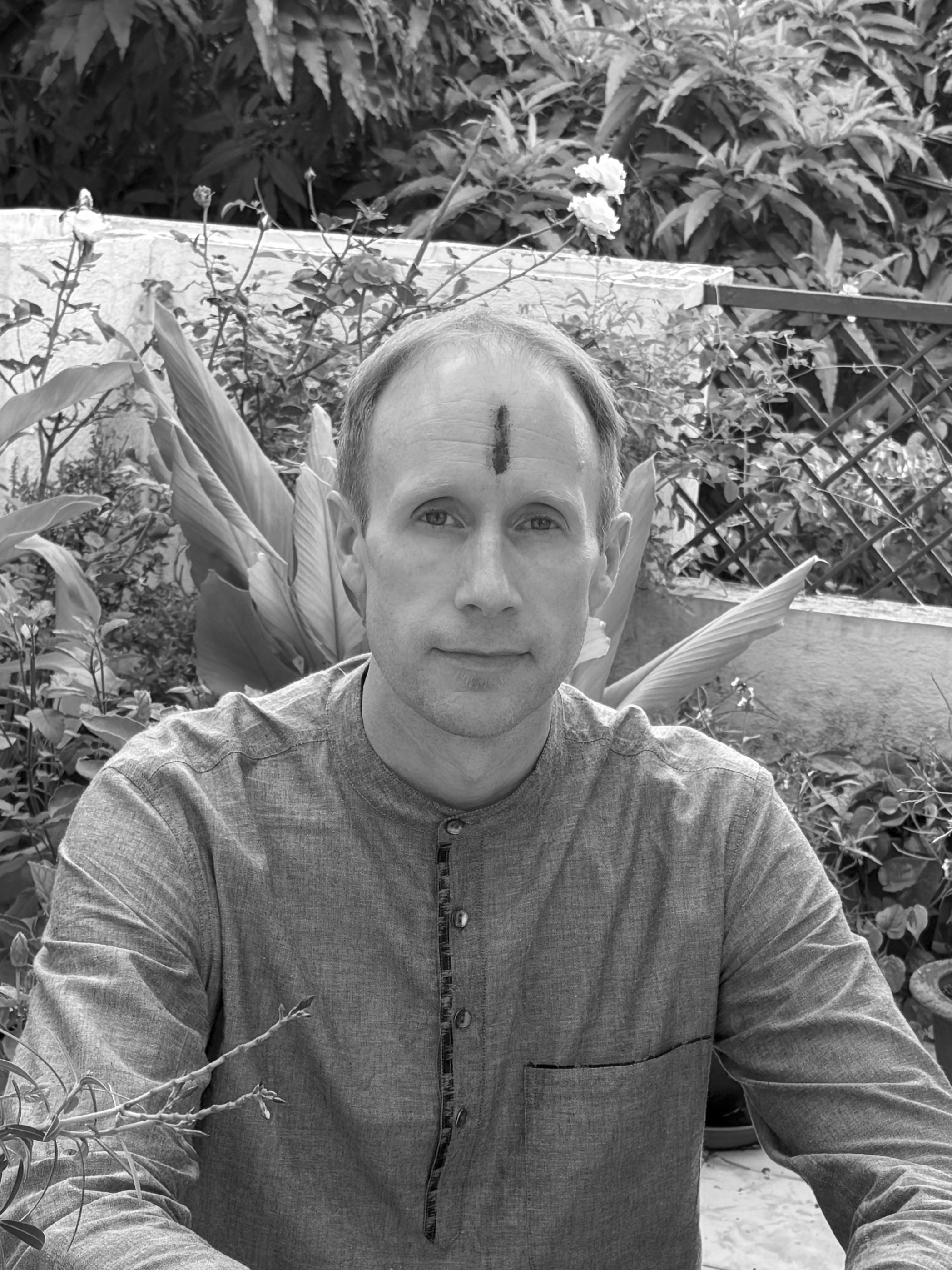
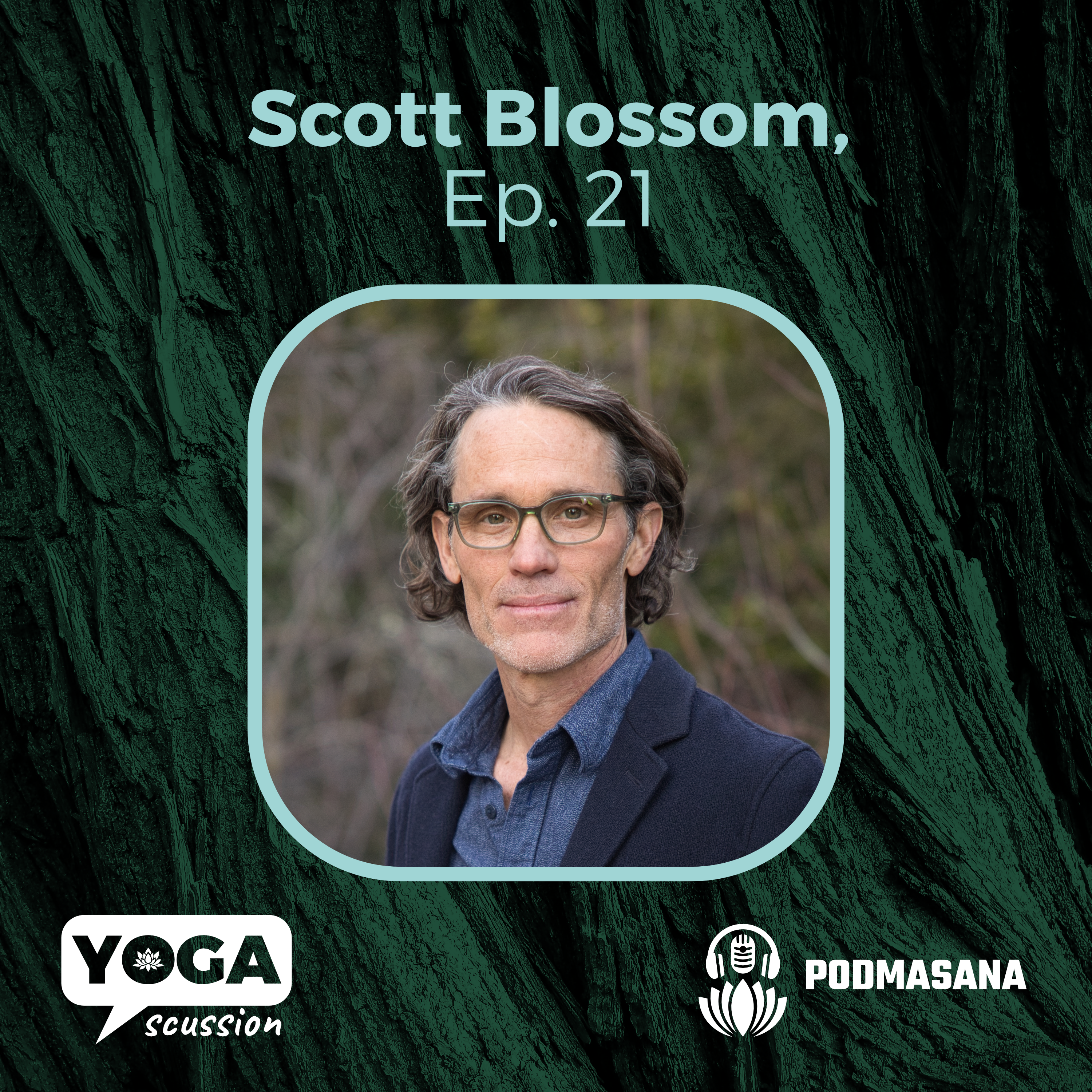
[00:00:45] Speaker B: Well, Gina, we've got Scott Blossom joining us for a yoga scuttion today. Scott is an integrative health practitioner, educator and pioneer. And he's blending traditional Chinese medicine, Ayurveda and yoga somatics and evidence based nutrition.
Scott has over 25 years of clinical experience, including work alongside globally respected Ayurveda physician, author and scholar, Dr. Robert Svoboda.
Scott also has studied Hatha yoga and he pioneered yoga based wellness programs at the Cancer center and Hospice of Santa Barbara. And interestingly, he's also a faculty member and at the Kripalu School of Ayurveda.
And he teaches that true wellness isn't about finding the perfect practice. It's about learning to adapt and remain potent and stay agile through every season of life. So I think we're going to touch on a variety of interesting topics today with Scott.
[00:01:46] Speaker A: Great. I'm so excited about this talk.
[00:01:49] Speaker C: Hey, everybody.
[00:01:50] Speaker B: Hi, Scott.
[00:01:52] Speaker A: Hi, Scott.
[00:01:53] Speaker C: Hi.
[00:01:54] Speaker B: Well, there's a nice little energetic connection here because Gina and I met at a yoga studio many years ago called Blossom Yoga.
And so when we heard from you, we were just like, oh, this is worth exploring.
[00:02:07] Speaker C: Nice. Yeah, sweet.
[00:02:10] Speaker A: Yeah, Felt very fortuitous.
[00:02:12] Speaker C: Yeah, good.
[00:02:13] Speaker B: So, yeah, welcome Scott, we appreciate you joining a yoga discussion with us today.
We did have some questions, but what we'd like to do is invite guests to just talk a little bit about themselves, like what yoga is for them in life. We shared a little bit of a synopsis with listeners before bringing you on. But yeah, I mean, you have covered a broad spectrum of health and wellness practices that go back to ancient cultures and times. And so very curious about what that journey looked like, but also like, why are you here doing what you're doing? Scott, thanks.
[00:02:49] Speaker C: Yeah, great to be here.
The, you know, the beginning of my yoga practice was in college and I was getting a biology degree and biology is a dense subject in college. I was pre med at the time. I mean, I did go into medicine, but not the kind of medicine my parents thought I would go into.
And it really helped me with homework. And so for the first seven years of my yoga practice, which started back in, I think went to my first class when I was 20 and I'm 56, so it's been 36 years.
And it really just, I noticed how much it helped me to be able to do homework, sleep and more or Less feel like I was getting balanced out. You know, I didn't have words for it at the time. And so that. And there was a wonderful instructor at the University of California, Santa Cruz.
And so that's where it really started. And it also was in that same time that it was right after Deepak Chopra had started to publish some of his first books about integrative medicine. And I was in a medical anthropology class and got a chance to study with Vasant Ladd, who was the founder of the Ayurvedic Institute in the US Where I was talking about cross cultural approaches to healing.
And because of my interest in integrative medicine, it was very clear to me that what he was doing was really cool and I wanted to do more of it. I had a twin brother that was going to UC Berkeley at the time, which is only 70 miles away. And so he was studying religious studies at UC Berkeley with the great scholar Houston Smith. So when we would hang out, we weren't talking about biology, we were talking about all the stuff he was studying. And so I figured anything that was based on Eastern philosophy and was a medical practice would keep me more interested because I was always already meditating and getting interested in yoga.
And there was already starting to be this groundbreaking integrative work happening in certain aspects of conventional medicine, like cardiology and in cancer. And so as I came out of college, I went into, I continued to study Iyengar yoga, but I went into studying some therapeutic applications, et cetera, and ended up developing a program which actually still exists in Santa Barbara with the Santa Barbara Cancer. It was called the Santa Barbara Cancer center at that time, but now it's got a different name where started working with the employee health department. Then they asked us to start working with the patients. And so getting into, you could say yoga therapy based integrative medicine, which then led me into working with Hospice and Visiting Nurse association and the Alzheimer's association in Santa Barbara, where I started to bring in interns from the Chinese medical school that I had gone to after college to work with professional and family caregivers as well as the patients.
And that. So I've always had this sense of, you know, back then I would say it was more revolutionary and activist to be integrative, but it's always been something that turned me on. And so even up to present day, where my current focus is on cognitive health and really integrating ayurvedic medicine, yoga and functional medicine around prevention and reversal of Alzheimer's dementia is, you know, really the legacy has a Threat. There is a sutra that goes through this whole thing that leads to the present day. And so that's a little bit about, you know, my background. I should also, you know, give a lot of praise and thanks to the teachers that I've had, especially Dr. Robert Sraboda, who's a great Ayurvedic doctor and author. And then my main yoga teachers have been people like Eric Schiffman, Shander Remitte, Peter Sterios was one of my first Iyengar teachers who introduced me to Shandor. And so yeah, there's just so much
[00:07:02] Speaker A: on your website and I was, I just spent hours last night just going through and reading everything and read some of your blog posts and it's, it's a lot, it's a lot to take in, I guess maybe for some listeners. Is there some studies that you could like, maybe give us a quick rundown on like what is there, are there studies that are showing like how these practices that you are, that you've been working in and that you work in, like how these help with cognitive health and, and maybe give us some direction there. And then maybe a second part would be a theme that I kind of picked up is especially living in a Western society, is that we're sort of invested in these quick fixes instead of more of like a lifestyle practice. Right. It's like, oh, I have this disease now. We kind of think of the disease as like separate from ourselves, but maybe that disease has been with us for a long time and we may not know it because we're an organism. And so maybe if you could speak a little bit to like lifestyle practice versus like invasive kind of Western medicine.
[00:08:13] Speaker C: Sure, yeah. I think, you know, in all the ways those simple things you just said, you actually groked a lot of what my work is pointing towards. And so to go with the first question about where you can see some of the science, the doctor that I trained with around cognitive health is named Dale Bredesen and that last name is B R E D E s E N.
Dr. Bredesen and his organization, Apollo Health, have really done the most significant research to date about prevention and reversal of cognitive decline, utilizing exactly what you're speaking about, which is a lifestyle dietary based approach.
That is, if you want to use a kind of very specific jargonistic term, is a multifactorial. It's a multiple level approach to brain health. Whereas what you've seen for really since there's been research about Alzheimer's, dementia in particular, there has been a series of inflations that have overemphasized the importance of certain biochemical markers of that disease. And all of the research, all of the drug therapies have become focused on that. So you end up with what's called a mono therapeutic approach instead of a multi therapeutic approach.
And what Dale is really showing that is similar to what we've seen with both cardiovascular health and what Dean Ornish pioneered back in the 1980s and the people that came before him. In that same vein, also around cancer treatment and therapy, is that this multi therapeutic approach, which you can then translate as having respect for and inclusion of dietary and lifestyle, even possibly precision supplemental type of influences, meditative, mindfulness, spiritual type of practices that would be considered legitimate in that scope of therapy. That, that is something that on the one hand is proving to be more effective. And this is absolutely true in the, in the context of brain health, because somebody who does get an Alzheimer's diagnosis has been, has been in the process of that disease formation for 10 to 20 years.
And so these things that are truly preventative, it's like the sooner the better, you get them on, you know, in place. But there's a very big difference between what I call the bumper sticker version, which is like, you know, diet, sleep, exercise, meditate, you know, have good social connections, have purpose, you know, all those things. Absolutely true, you can fit them in a small box. But we all know that to live it is a lot different than talking about it. And when you actually dig in, that's what separates, for example, ayurvedic medicine that a doctor will do with you to just reading some articles and then, you know, putting your best effort forward to live a healthy life, which when you're young, often will be enough. You know, if you're young and healthy, then you, you may not need any kind of specialized guidance or intervention to feel pretty healthy. But as we age, that kind of more deep dive into what those things are is what makes the difference. And this is what actually can produce miracles, to tell you the truth, especially around brain health.
[00:11:51] Speaker B: Yeah. And as you've said, believes God. And as I was thinking to your answer, you've said that like the secret to health isn't as much about what product or practice you're really doing, but this idea of learning how to adapt as one ages through life's seasons and kind of connecting this to yoga in the sense that, you know, you have yoga practitioners who stick with the practice for a long period of time sometimes, and they may be attached to a particular routine or style.
How should we help them embrace flexibility without losing the essence of their practice and really embrace this idea of adaptability.
[00:12:32] Speaker C: Yeah, that is such a great question. And it does to me, it speaks to the heart of what I'm most grateful to my main teacher, Shanda Remitte about which was he, you know, this idea of being. He would. He. He was actually Hungarian by birth and so English was a second language. But he was so incredibly skilled with the way he put his English together was so poetic and potent that it would often be clearer than, you know, a native speaker because he was very intentional. And one of the things he said that the idea of adeptness and the idea of adapting those words are similar for a reason. You know, they're cognate for a reason.
And that even in the, you know, my teacher, Dr. Subodha, when you look at the Bhagavad Gita or one of the great texts on yoga, the definition that defines yoga as skillful action, it's the sutras or the Shlokas Yogaha Kaushalam.
Let me think about it. Actually it's like Yogahar Karmasu Kaushalam. And so the Kaushalam there refers to a type of grass which is called Kusha grass, which is used in rituals in India because it's a double bladed grass. So any of these practices are like a double bladed instrument and if you get too stuck on one side of it, it's not going to serve you, but at the same time, and one of the beauties of that whole image is if you're holding a double bladed something, you're going to be real careful, you're going to keep yourself awake. And so in that same way, even though Sander was teaching a very systematic method, he had a tremendous capacity with therapeutic application. And he would make sure to track all of us students in a way where he would make sure that we understood that there were times to change things up and that you needed to let go of what was going to maybe be the main thing that would carry you. And you needed to be able to verify that what you were doing was still really supporting you. And so that's how I kind of think about it. And again, just great gratitude because I actually had recently moved back very close to the ocean and I'm a surfer. And so I've been surfing a lot more than I had been when I was farther from the water.
And as happens, surfing can be a very rough sport, especially when the waves get big. And I got an injury where I got slammed on the Bottom. So I had some. Had some bone bruising, some serious stuff. And it was only because of the spirit of adaptation that he taught us that I was able to literally start for a few days I was in bed and I could realize that when I take this complete breath, this is the main healing action for me right now. And I would just, you know, through the day, go in and do five or 10 breaths at a time where I could feel, okay, that's opening up this little bit of circulation that will help me to heal. And bit by it was exactly the same principle that I applied in all of the healing, even as I got into back to doing full range of motion and all of the things.
And so it is. Yeah, that's how I look at it.
[00:15:41] Speaker B: Yeah, that's a cool story, Scott. Thanks.
[00:15:44] Speaker A: Yeah, as you were speaking, I was thinking, I just finished Bernie Clark's book Prana today. And at the end, there's a part in there where he's talking about he's dealing with some health stuff.
And at the end he's like, so did I resolve my health stuff?
And he's like, no, there was no one who could. I did all of this medical stuff. I did all of these tests, I did all of this stuff. And there was really no one who could tell me what was going on with me. And what I learned was to.
He said, santosha, right? Come back to the yamas and the niyamas. Santosha, contentment.
And to be willing to just experience what I can do in this moment while I'm healing. And you talking about the breath. He talked about breathing. And so I'm connecting two thoughts here. So one was that, like, having contentment in, like, what we can do, even if it's something really small and simple, just like breathing, but then also, like a practical thing, like if you. For like all the yoga teachers who might be listening, are there things that we could introduce in our classes? For example, like maybe we know that we have a student who has dementia. Maybe they've shared that with us. Or maybe we see some cognitive decline in our students. I know for myself, I have a few folks who have talked to me about their mental health and their mental cognitive health and have let me in on some things. And then also, like, sometimes you're with students for years, you're teaching these people for years and years, and you start to notice something.
Are there real tangible things that yoga teachers could introduce into class? That's maybe not outwardly saying we're going to do a class on cognitive health today. But things you can introduce where you're like, this is gonna help my students, you know?
[00:17:31] Speaker C: Yeah, yeah. You know, the simple answer is that yoga is one of the most perfect systems for the brain, provided that you're actually working a full spectrum of activities with it.
And so the. You know, the process, the name it's given is interoception, right, of something where you're actually paying attention to what's happening in your body.
Just that in and of itself has a profound way that it enriches what's called the network communication of the brain. It's the way the two halves of the brain relate. So, you know, kind of rewarding students for saying, like, notice something new. You know, notice now that you're. You know, this may be a familiar posture, but is there something new that you can catch that lights up something also is, you know, can you adapt? That's also something like one of the pieces that's come out recently in research is about how partner dancing is one of the most powerful things you can do for your brain because you had multiple levels of relationship going on. And that's what I would say my definition of yoga is, too. Yoga is relationship. So when you. When you ask a person to respond to themselves, and then they. They listen, and then they modify in a way that they didn't expect to or they don't change, they settle into the sweetness of their. You know, of their posture, because it's really dialed in. That. That also is a very, very powerful thing for the brain because you're working from a place of spontaneity rather than rote mechanical activity or externalized activity.
Another one that I've been doing lately is I've been having people include eye movements in motions where there'll be certain things you're doing and the eyes will naturally track one way. If a person's not told to do something else, the eyes will follow, usually the head and the shoulders, et cetera. And so what I'll have them do is do a movement repeatedly. And then I'll have them change the eyes in the middle of it, because that changes the whole spatial recognition that they're working with in exactly the same motion. And it's a little bit of the same influence for why walking backwards is so powerful for the brain, because it's just that fundamental shift out of the familiar and whatever the.
The neuromuscular conditioning might be.
So those are a couple of examples. And then, of course, there's the breath, where one thing that I really emphasize with folks is that the breath, from breath to breath needs to be spontaneous. So yes, challenge the breath to be longer than its normal length, make it long and subtle and at the same time don't push and pull on it. Like, I'll give people the cue to like exhale and then wait and just stay in that still point until the body actually calls for it and to heed the first call because you have the folks that are going to be a little bit afraid and they might want to pull it in too soon. And then you have the people that want to be macho and like really hold the breath out and use their force. So the cueing is around. Now wait till you get that first tiny voice from your body where you haven't gone into any stress, there's no anxiety, there's no fear, you're not trying to control something. And that, that is another one where when you start to breathe that way, the shifts in the CO2 to oxygen ratio in the blood will entirely change the way that blood pressure, brain circulation, even glucose regulation is happening in the brain. And it's actually anti inflammatory for the brain because folks that have Alzheimer's dementia often have a breathing pattern that's in excess of 20 breaths a minute. Oh my gosh, they're practically panting.
And that's a feature of Alzheimer's dementia is the dysregulation of that breathing. And then I have a friend who's a yoga teacher and absolute nerd and specialist in breath physiology who has told me that this is probably the first thing that starts to change. That's his opinion. There's no data to say, yes, that's true. But it's his very strong opinion that that breath is probably the first thing that starts to change when people start having brain inflammation and cognitive decline.
Wow.
[00:21:56] Speaker B: Yeah. And kind of continuing to pull on that cognitive health thread, Scott, taking your background in like Chinese medicine, Ayurveda, yoga, and also the Bredson's recode protocol, how, out of curiosity, how do you decide which tradition or tool to emphasize when you're working with a patient? And how do you help them trust that an integrative approach is maybe a good option to consider when, as we touched on earlier, Western medicine tends to favor these singular solutions.
[00:22:28] Speaker C: Right.
You know, with my background and my career, most of the people that are paying attention to me in media spaces are interested in Ayurveda and yoga. And so what I tend to have is people that already have a very strong grounded interest practice in one or the other or both of those. And then what The Bredesen protocol adds is. And because I do have the biology background, I have always loved neuroscience and my mother had Alzheimer's, and when she was in her Alzheimer's process and she passed away in 2021, that was when I really got ignited around neuroscience because we were helpless and the doctors are saying there's nothing we can do. And they were giving her medications that were actually poisonous for her. So we were. It was such a terrible feeling that it got me really curious. And so now with the training that I've had is I'm able to bring in blood tests and different things that are going to show markers that have, you know, at this point, more than 40 years of research momentum behind saying, okay, this marker has some important indications that we can consider. But then simultaneously we're using things like the Ayurveda and yoga practices, type of, to do the foundational work.
Then the blood test will also reveal things that require maybe some more in depth, even sometimes referral to specialists. But I can give patients the option where I can say, would you like to start working with this with say, traditional Chinese medicinal herbs? Or we took a group to India last fall and did a brain health oriented Panchakarma program in India at an Ayurvedic center. And so giving people those options. What I'm finding is most of my people would love to do that first, but I still have those conventional things if necessary. And as I learn more, I'm getting, you know, it's fun to be in a career that I've been in for almost 30 years and actually be kind of like feeling like I'm at the beginning of another huge potential of learning. And so there's a lot, there's a lot of discoveries and ahas that are coming for me personally around how you can skillfully put Western treatments and conventional approaches, you know, into a kind of a functional medicine frame that includes yoga and Ayurveda. And so I give my patients the choice essentially where they want to start, where they're most comfortable.
[00:25:05] Speaker B: Yeah, thanks, Scott. And so we're touching on Alzheimer's a little bit. And it seems like it's one of those 600 or 800 pound gorillas in the society room in terms of like a health issue. And you shared a little bit about this impacting your family with your mother. And there may be listeners who are also being impacted by this or have it coming or they've gone through their own experience.
For those listeners who may be caring for a loved one with cognitive decline on some Level, what's one embodied yoga informed practice? They can begin today to support both either their loved ones well being or their own resilience as a caregiver. Because as you know, it's not just about the person going through Alzheimer's, it really is about what that the ripple effect that's having in the care system around that individual.
[00:25:58] Speaker C: Yeah, thank you for asking that.
You have touched right on the central point of it all, which is that caregivers of people who. It's like this too with anybody, with people that are dying or people that have any kind of disease, but people who have Alzheimer's, which is a particularly long caregiving lift. And out of all of the types of chronic diseases that family caregivers can really be a large part of supporting their loved one for is by far the most impactful because they don't even have a way to measure the financial, emotional, physical impacts yet.
But we also know that it's in and of itself, Alzheimer's dementia is about twice as expensive as any other chronic disease. And that doesn't even include the lost work, the emotional stress, the physical stress. And so as a result, caregivers of people with Alzheimer's are six times more likely to get Alzheimer's themselves.
And so if there was one practice, the single thing that I would say to them is that they need to take one day off at least a week where they get caregiver support for their caregiving role. And that could include sleeping outside of the house.
Because when you're used to sleeping every night, it's like when you have a newborn baby, you're used to having one ear open that is really hard on you. And with a newborn it lasts a year or two, maybe three.
But this situation is much more long term. It could be a decade of that. And so if you get wired up to be hyper vigilant as a kind of patterning and then if we were going to think about a specific yoga practice, I would say yoga nidra, where they're actually going into a practice where they're going to pull themselves all the way back in. Because I had a friend just recently call me whose mother was diagnosed last fall and she had abandoned all of her self care for eight months and then she got some blood tests and she said, oh my gosh, these are some worrisome things here, but you help me understand this and give me some support. And it was basically that, that it was like, you know, out of her love and devotion to her family, she had put everything else on hold and you can't do that for very long before it really starts to take a toll. So those would be my two things is number one is actually taking a day off and making sure you actually are getting support. And number two would be some of these deep relaxation and sort of pratyahara type practices that really draw you and you have to train your mind to do that. And there can be a lot of guilt and a lot of anxiety about all of those choices. But without doing that, you could actually be setting yourself up to be where you may have your own health crisis that happens in the middle of your caregiving process. As well as when with Alzheimer's, if the person dies or you're caring for a person with a life threatening illness after they die, that period of time is extremely vulnerable for the person's health. And if you're burned out, that's when the cards sort of fall. Often.
[00:29:21] Speaker A: I'm wondering if you, I mean, we all know what yoga nidra is, but could you describe what a yoga nidra looks like just for some listeners who maybe haven't encountered that before?
[00:29:31] Speaker C: Sure.
One of the definitions from the Bihar School where you get some of the most developed expressions of yoga nidra is the, they call it the rotation of consciousness. So what you're doing is putting the body in a passive position, but then you're keeping the mind conscious as it moves around. And you know, if somebody happens to be exhausted and they fall asleep, no harm, no foul, because it is called yoga nidra, which means sleep. So it's this yogic sleep where you're going to get yourself, if you want to use some brain language, you're going to get yourself into an alpha wave state. You're going to get yourself into these deep states where you're no longer running your to do list in your mind and you're no longer kind of gauging the environment for things that you have to immediately react to. You're able to pull back into a place where you may not be sleeping, but you've actually, you have let go of a certain kind of stress while you're, while you're actually honing that meditative quality of clarity with relaxation being present simultaneously. So that's one way I would describe it.
[00:30:38] Speaker A: Thanks. Thanks.
[00:30:39] Speaker B: Yeah, yeah. Scott, so I mean, your experience with yoga goes back to maybe even past the 90s. I mean, do you remember your first yoga class?
[00:30:51] Speaker C: I do, Yeah, I do.
[00:30:53] Speaker B: What was that experience like?
[00:30:56] Speaker C: It was great because I grew up in Santa Barbara and we had this, we had this tennis club My family was not a member of this tennis club. Like, I had one. I had two friends that were. And one of them, we get to be.
We were. We were like, in the summer of our senior, we just graduated from high school.
And so we get a call, and I have a 10 brother. So I always say we, because my twin brother and I were fun. We hung out. We were good friends. So he calls us and he says, you gotta come to this thing. I'm doing this thing called yoga, and I think you're gonna like it. And so he sneaks us in the back door. Cause it was back then, too, where surveillance cameras were not a thing. The tennis club was very porous. It was kind of like for the kids in the neighborhood. We all knew how to get in if we really wanted to go and mess around with the tennis club. And so I snuck into my first yoga class, and this man, this Iyengar teacher named Freddy Castellanos, was like a very high level, skilled Iyengar teacher. And Yoda was so unknown back at that time at that tennis club, there was nobody there. And so it's just the three of us with this guy. And then we started coming and we snuck in all summer after that. We would sneak in every week to this class. And by the end of the summer, we were all friends. And then we.
I was in Santa Barbara going to college in Santa Cruz. So when I come back for family visits, I'd always go to his class at some point. He said, look, you guys have been getting this for free forever, so you got to come over and help me move and all this stuff. He was such a great guy, you know, fair trade. Fair trade, yeah.
Yeah. Young and basically stupid and had muscles. So that was.
[00:32:37] Speaker B: You had mentioned Santa Barbara, where I think you have.
You've taught maybe yourself at the cancer center and hospice in Santa Barbara. I'm wondering what those early experiences maybe taught you about holding space for people, navigating vulnerability, and maybe how that kind of connected to what you would kind of come to do, vocation or career wise. Would you be able to speak to that a little bit, Scott?
[00:33:03] Speaker C: Sure. Yeah. Thank you.
Yeah. I got really lucky in the sense that integrative medicine was just starting to take hold. And so when I. When I kind of conceive of the idea of doing yoga in hospital settings, I was working with Joseph lepage from integrative yoga Therapy, and he had already had a few of his teachers that had established those kind of things. So there was a certain roadmap that existed. And Teachers like Richard Miller who were doing some really great work of supplying kind of physiological data about what yoga processes were doing. So I was able to come to these places and sell them on it and with the kind of information that they could understand. And because I had the biology degree, I was excited to speak that language with them. And then the thing that I also with the cancer center program, I partnered with an incredible teacher you may even want to have on named Sherry Clampett. And Sherry Clampett also went on to found a therapeutic yoga program and still teaches it. And she had worked with therapeutic yoga during the AIDS crisis in LA in the 90s.
And so she had had some really tremendous experience in those spaces of like you're saying, where you're approaching these people that are, you know, they don't know, they're fighting for their lives and the, and the thing you can do with them at some level, what my main formula was, I would always come in and I would tell them a little bit about the physiology of yoga, you know, because we're at a medical center. So it's like here's some of the cool things that yoga does and this is how it would benefit your immune system, which is so important when you're trying to fight this cancer diagnosis. And then we would get into just a very, a very kind of gentle and inclusive way of inviting people into their breath, into their bodies and make sure they were so comfortable. Sherry is an absolute angel and she's also a master at what she does. And she has incredible skills with her hands. Like she just puts your hands on and you know, you think the angels have showed up right there and then.
So she also like my experience of being around her and I actually said, okay, we're going to do this, but I'm going to interchange with you for the first six months to really learn what you're doing because you already have so many much maturity in this. And that was so it was really, that combo was what I was doing. He's presenting it, trying to contextualize it in a way that would fit for the set and setting. And then also really showering everybody with a lot of hands on assistance and getting people giving people really comfortable so that they could access anything we were doing. And we do one restorative class and we did one gentle yoga class and the gentle yoga class was like, like gentle, gentle yoga moving. But it was, we were not going to be giving people too much room to be strained by the yoga. We did that.
[00:36:10] Speaker A: Did you get much feedback from your Students who were present, like, what was their. I'm just curious what their reactions were and what their takeaways were and how that landed in their bodies.
[00:36:21] Speaker C: Yeah. The Santa Barbara Cancer center had this incredible policy that they would never turn anybody away for treatment. Treatment a matter of money. No payment. If they couldn't pay, they could still get treatment. And so we. And one of the things was that if you started the yoga program, you could keep coming. So we had people that stayed in the program for five years. They just keep coming because they love the space. And they also had this kindred sense of the other people that they were with. And so a number of them would come back and the feedback would be that the cancer was the greatest blessing for them because it really made them look deep, and that the yoga had been a platform for opening up a philosophical and a spiritual inquiry that ended up taking them in a direction that, you know, when they were in remission and they were still coming to classes and they were just thriving of saying, yeah, I was in another life, and that this was this cancer diagnosis was this birth canal into something that was a lot more fulfilling and a lot more alive for them.
Yeah, it was incredibly beautiful.
[00:37:27] Speaker A: That is really, really touching.
[00:37:30] Speaker C: Yeah.
[00:37:30] Speaker B: Yeah, very touching.
[00:37:31] Speaker C: I would go into my normal classes, too, and I would hassle all of the young. The young students and say, look, I teach these people that are fighting for their lives, and they listen to my instructions really, really well. And we all just want to impress yourselves by crashing in and doing it deep, quote, unquote deep, or doing it big or something. And, like, you're missing the point, you know, like, I want you to get in there with everything, feeling like it's got its place and you have space to breathe and you're at ease, even if it's a strong posture. And that was a very effective teaching for some of those people because they're thinking, oh, yeah, that makes sense. You know, playing my game with myself, even though I'm calling it yoga.
[00:38:14] Speaker A: When we were talking before you came on, we were talking about aging and yoga and how our bodies change. And as you were describing, working with these folks who are very vulnerable, it made me think about two things. Like, the first is that in the yoga sutras, there's not really any mention of postures. And that the way that we experience yoga is that it's been a construct of the modern world. And then the second is just kind of being with what is. And like.
Like my. As I started yoga, I started with power flow, and I was like, so into it. And I was just like, you know, I got really strong, and people were like, oh, my God, your arms and shoulders are amazing. And, you know, it was, like, so great. And now I'm, like, you know, in a different place in my life. I've been a caregiver myself, and caregiving took a huge toll on my body. And I remember coming back from. My husband had cancer, coming back from cancer treatment. We had to move away to go get treatment for him because Wyoming does not have good health care.
And when I came back, the first yoga class I went to, I could barely make yoga happen when I was caregiving. It was so difficult.
And the first class I came back to, I tried to do a supine spinal twist. And I could. I just felt so, like, tight and stuck in my body. And like a place that I had known for so many years as a yoga practitioner and teacher was, like, not available to me anymore. And it broke my heart how, in a way, mentally, I had met myself in this strong, vibrant, young body. But then after going through the rigors of caregiving, my body was tight and it was scared, and it was in survival mode. And I still haven't really come out of that yet.
Still working at it because.
Still caregiving. And so I appreciate the. The sweetness that you talk about this practice, working with folks who may not have the accessibility in their bodies that some of us have gotten to feel like. I remember power flow times. I loved that feeling in my body. Can I do it now? No, not really. But that's okay.
[00:40:31] Speaker C: Yeah.
[00:40:32] Speaker A: So it's really sweet. Thank you for that.
[00:40:35] Speaker C: Yeah. Thank you. Yeah. You know, what you're making me think of, too, is I. I've recently gotten into some practices around neuromuscular conditioning that are based on developmental patterns from infants.
There's one school out of Czech called dynamic neuromuscular stabilization. And then there's just a lot of interesting work happening because neurology is having a moment in general, and cognition is having a moment. There's a lot of interest in it.
But the difference when you're young is the neuromuscular developmental stuff is still really strongly integrated. And as we age, that. That is actually what starts to fray the body. If you've conditioned the muscles, you can build strength, really, till your last day in one way or another. But the neuromuscular conditioning is something that requires a different approach.
It feels like you're working out, but you're working. It's like now, it's like doing simple movements with a Neuromuscular approach gives the same feeling of, like, oh, yeah, I feel really solid in my body, but the movements on the outside are not as extreme.
[00:41:47] Speaker A: Do you have an example of, like, one of those practices? I'm trying to picture it in my head, but I'm not.
[00:41:52] Speaker C: Yeah, like. Like a great one is the next time you're on all fours, right? You're on your hands and your knees, and you're doing a cat, cow. Then you just bring your spine to neutral, and then you're gonna pick one hand up.
So that puts the core of the body into a different thing. Or what if you go into that and then you lift your knees. So now your toes are rolled under, you're on your hands, but you lift your knees, which is a kind of a. You know, it's not a plank, but it's of. It's of that nature. And then you lift one hand up, and you do. You do that kind of thing where it's the. The movement itself is not hard, but the body sometimes can't hold it because the integration isn't there. And so it brings you back to these things that are stability oriented, but they're not easy. You know, they're stability oriented because they challenge stability rather than, you know, constraining yourself to something where it's like a more symmetrical movement or maybe a frontal plane movement, something like that.
[00:42:49] Speaker A: Okay.
[00:42:51] Speaker C: Yeah, yeah. And I've been. I was playing around with. A friend of mine sent me these sandbags recently. They showed up on the front door, and they were. There was no sand in them at the time. So I open up.
I'm like, why'd you send me the bag?
Open the sandbag on it. And I go, what's ultimate about a bag? You know? And he goes, oh, my gosh, the sand duns. And so then finally I got to hang out with them and play with these sandbags. And it's.
That's another one where you add a little bit of weight and you have this bag, and it's kind of clumsy. You know, it's not a kettlebell, and it's not a barbell. It's a bag with sand in it. And so it's goofy, and it moves around, and it's awkward. And so then doing certain postures, like a chair pose with something like that hugged to your chest or doing it where you're doing that kind of thing, like you're gonna fold from chair pose into the forward bend where you're letting your arm strength out.
Simplest movements, not easy at all. Or going into a lunge and having it and like moving it sideways while you're pulling your hands apart. And it was just utilizing a lot of the core muscles in those shapes by virtue of the way you're working with your hands and your arms. And it was an entirely different thing. And it felt so strengthening without being extreme at all in the, in terms of the motions that were doing.
[00:44:12] Speaker B: So if we're trying to navigate the seasons of aging, we really just need a good amount of sandbags at home to bust out of the closet and keep us in good shape. Yeah, yeah. Listeners take notes.
[00:44:26] Speaker C: Yeah, yeah, no, I'm having a kind of renaissance in my own practice around the fact that cognitive health requires you to actually have a solid cardiovascular resistance training and yogic kind of routine going on. And so I'll give you an example. I like doing yoga practice in the morning.
I like getting up first thing in the morning and doing yoga practice. That's what I like. But then what I've gotten into is in the afternoon I'll alternate between like a rowing type of exercise where it's more cardio based or I'll do resistance training. Like I have a pull up bar now, but when I do it again, I'm doing it more yoga Glade. It's not like how many pull ups I can do. It's all about the form. And when I can get my breath, then I do the pull up, then I'll come down and I'll make sure that I get everything together and I take a breath in between so that I'm still applying some of those same principles that are so core to our yoga practice, to things that have a really different look. And it's mainly because now I've seen the data for what it does to the brain and they all have really, they have a lot of crossover, but they all have unique inputs that they have for the.
[00:45:36] Speaker B: Well, I think we maybe have read some of the same stuff because yeah, for me it's yoga or asana and it's the pull up bar and it's the rower. Like I try to get out and bicycle when I can, but those three, I think they're pretty power three. I don't want to call it the holy trinity of wellness and health, but I mean, it may be close. It may be close.
[00:45:56] Speaker C: Yeah, absolutely. Yeah, exactly. Because you can be so creative with all those things too.
[00:46:01] Speaker A: I recently kind of got hooked on this woman's Instagram channel where she's talking about she's a yoga teacher, but then she Realized that, like, she needed more weightlifting. Like, she needed, like, bone density. Building bone density, which yoga can do for a while, you know, like, you can do that.
And so she started lifting weights, but then she was like, I hate this. And I was lifting weights with my friend, and I was like, I hate this too. And so she started this program. It's like, like, weightlifting for yoga people.
And I love it because it's like, everything's really slow and mindful, and it's like, okay, pick up the weight. How does this weight feel for you? Is it the right weight? There's no, like, confuse the body. Lift heavy, as heavy as you possibly can. It's like, we're gonna lift heavy, but we're gonna build to that. We're not gonna go, what's the.
Like, do three reps and you're done. And then that's. That's the end. It's like, we're gonna work up to the three reps and you're done weight, but we gotta start somewhere else. And I love it because it's so mindful.
[00:47:04] Speaker C: Yes. Yes. That's great. That is great.
[00:47:09] Speaker B: Yeah, Scott. And I'm wondering, there was one other term that I had made a note for from some of the material that we were reviewing on you, and you had mentioned remaining potent and agile through life, seasons, or the aging process. And it kind of relates a little bit to what we're talking about, I suppose.
What does potency mean to you in the context of a yoga practice where we're kind of honoring aging, change and the concept of impermanence?
[00:47:38] Speaker C: Yeah, thanks. Great question.
I want to add one last thing to our last subject, which is that for the listeners who may want the shortcut, partner, dancing is your shortcut. You can skip everything else as long
[00:47:53] Speaker B: as you partner apparently adding it to the calendar.
[00:47:59] Speaker C: But, yeah, obviously the word potency and the word power go together. So we're talking about prana. And one way that I would frame this that is true for me, is that in order to achieve what you want to achieve in your life and live the life you want to live, you need prana.
In order to change, you need prana. And what tends to happen with people as they age is as their prana declines, their ability to change also declines, their ability to transform and to meet the moment and to actually have that fluency. So to me, much in the same way that the prana is mobile, it's a. It's an evolute of the wind element, you know, vayu. And that because of having that it's all about circulation.
And therefore the agility part is not only range of motion on the gross level, like joint range of motions, like, I will go to my grave saying that if I could only do one yoga practice, it would be a series of joint mobilizations rather than stretching something. It's just as long as I keep all that moving. I'm going to circulate the fluids, I'm going to circulate the blood. And then the other side of it, though, is also nervous and circulatory in the sense that the nervous system, the nerves and the blood vessels are always braided together. You never get one without the other. And so when I stretch myself into what would be my capacity around intensity or strength or more the heavy side or the dynamic side of practice, I am stimulating that, you could say yang expression of my prana, right? And that the inside of that is how quiet, how still, how deeply can I see sleep, all of those rejuvenative, restorative things. And that that is the yin and yang of your prana. And that's the definitions of potency, is that you're capable of doing all the things within. Again, whatever, wherever you are and whatever your actual capacities are, you're still actually, you know, you're still touching into all those capacities regularly because it is a use it or lose it situation.
And when you stimulate circulation with motion, you're also stimulating nerve. And when you challenge your nervous system, whether it's learning a Vedic mantra or it's doing a breath practice, or it's learning to get very, very quiet and very still and relaxed, all of those things are going to have an effect on keeping the prana centered in the body. And that. That is still going to be the home for the mind, you know, so the mind will be much, much supported if you keep the prana.
The prana healthy. So that's one.
[00:51:10] Speaker A: We kind of touched on this a little bit. But when you're working with people, I feel like from a Western perspective, we're often told that we're, like, segmented. It's like, oh, your spirit is this thing that you maybe tend to at church or, you know, you maybe tend to it through a meditation practice. But then, like, when you're not meditating, it's kind of somewhere. And then your body is this other thing that's separate from that, and your mind is like, you know, something else. And so we have these modalities of separation that we kind of operate in as Western people. And I'm just curious how when you're working with your clients. Seems like a lot of them are probably already into the mind, body, connection world. But if you're working with someone who hasn't, how do you kind of introduce them to the, to the idea that like all of these things are kind of nested into each other and they're not necessarily separate or that disease isn't necessarily separate or outside of ourselves or even how you think about it yourself, you know, like how you think about it and how it affects your relationship with the folks that you're working with.
[00:52:20] Speaker C: Yeah.
One of the main principles that we introduced right from the beginning is that you're going to have eight roots that you're tending. So we're going to give people the idea that this is going to move around. There's going to be various things that you'll start tending from a day to day. And that, and that because you're going. Because it's not just one thing that you're going to do. You can, you know, work with one thing, get some relationship with it happening and then you will move on and then you'll build a little more of a relationship, you know, you'll build a relationship with that and that you're going to be cycling and so you don't have to do anything all at once and you don't have to be perfect and that you can expect all those kind of progresses and regressions to happen in your journey and from the side of people that are less oriented.
One of the reasons I trained in Dr. Bredesen's protocol with Recode and the reason I established the thriving mind community that I have that really sets up this integration between yoga, Ayurveda and cognitive science is because the science is mirroring what the yoga and the Ayurveda is saying. So the translation, it's like I'm always like, I just posted something today for the community and I always supply this scientific narrative side by side with the Ayurvedic or the yogic narrative to show that these are just different, often metaphors or language for the same principles. And those principles have to do with things like, you know, set, you know, give yourself something clear to do, like a smart goal and then reflect and just keep making your. You're constantly iterating, you are your own version of things rather than trying to get it right. And I, one of my mentor, Dr. Subotas, the thing he said about his mentor was he was the most versatile person he'd ever met. So that's the thing I really hammer Home is that you're learning to be versatile. You're not trying to get anything right.
[00:54:38] Speaker A: I love that you're learning to be versatile. You're not trying to get it right.
That's the bumper sticker moment.
[00:54:43] Speaker B: Bumper sticker worthy. Bumper sticker worthy.
[00:54:45] Speaker C: Yeah, yeah, yeah. I know there's a lot to that. And is it the best when you can go into a situation that goes sideways with somebody that it actually ends up being either funny, fun or at least really interesting what happens? And that's what versatility it gives you. You know, it's like you go, you look back and go, wow, what a memory. Because the person actually responded to it rather than being like, this isn't right. And then they shut down to whatever the ask is from reality and ways it can get difficult.
[00:55:14] Speaker B: Yeah.
So Scott, where can people find out more information about you online?
[00:55:21] Speaker C: Sure. Yeah. My website is. Is Dr. Blossom spelled out D O C T O R B L O S S O M? So my last name is like a. A flower Blossom. And yes, it is my real last name. George Blossom.
Yeah, so that's the place where everything's under that auspice. And then the really specific thing that might be the most relevant to your audience is the thriving mind community is it's on the circle platform. And it's very much a kind of choose your own adventure community around this rich, rich subject of, of preventing cognitive decline.
And we have, you know, monthly, a bunch of live things every month, including yoga classes and Vedic chanting classes and expert interviews and a lot of science stuff that comes in and, you know, that kind of thing. Right now we're doing a two month long toxic exposure, you know, you know, protocol because that's such a big part of protecting cognitive health.
So it's a very integrative space and really enjoying it. You know, it's only been around for about nine months and so this is a really fun vehicle for me and I see this kind of my long term vehicle for my work.
[00:56:31] Speaker B: Very cool, very cool. And Scott, if you could describe yoga in three words, what would they be?
[00:56:43] Speaker C: Monster of love.
[00:56:45] Speaker A: Whoa.
[00:56:46] Speaker C: Boom.
[00:56:47] Speaker B: Yeah, that's out of left field, but I love it. Yeah, yeah, get that on a bumper sticker.
[00:56:52] Speaker A: Yep, I'm writing it down.
[00:56:58] Speaker B: Want to get early access to ad free episodes of the entire growing yoga discussion archive as well as live recordings. Want to submit comments and questions to the guests and the hosts.
You can join the yoga Discussion Circle and receive a link to join each yoga scution episode as it's recorded during the recording, you will have the chance to ask questions and participate in the yoga scution yourself.
Feel good about being a sustaining member of the show while also joining the yoga discussion with us.
Thanks for listening and we look forward to you joining the yoga discussion soon.
[00:57:47] Speaker C: Sam.