Episode Transcript
[00:00:05] Speaker A: Yoga is stillness.
[00:00:09] Speaker B: Yoga is self awareness.
[00:00:13] Speaker A: Yoga is time tested.
[00:00:18] Speaker B: Yoga is unity.
[00:00:22] Speaker A: Yoga is secular.
[00:00:26] Speaker B: Yoga is evolution.
[00:00:30] Speaker A: Yoga is spiritual.
[00:00:34] Speaker B: Yoga is
[00:00:37] Speaker C: coming home to self.
This is yoga scushion.
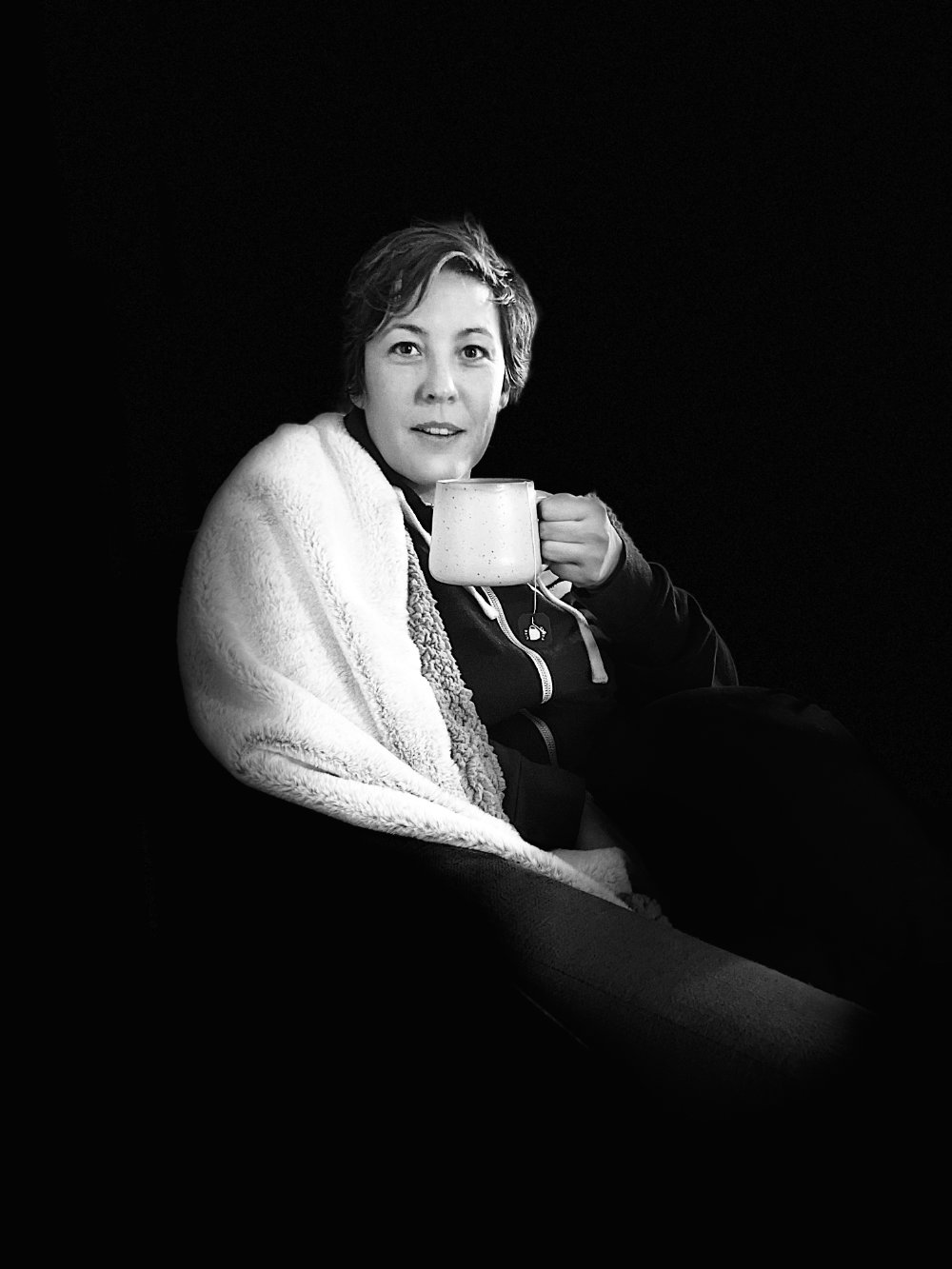
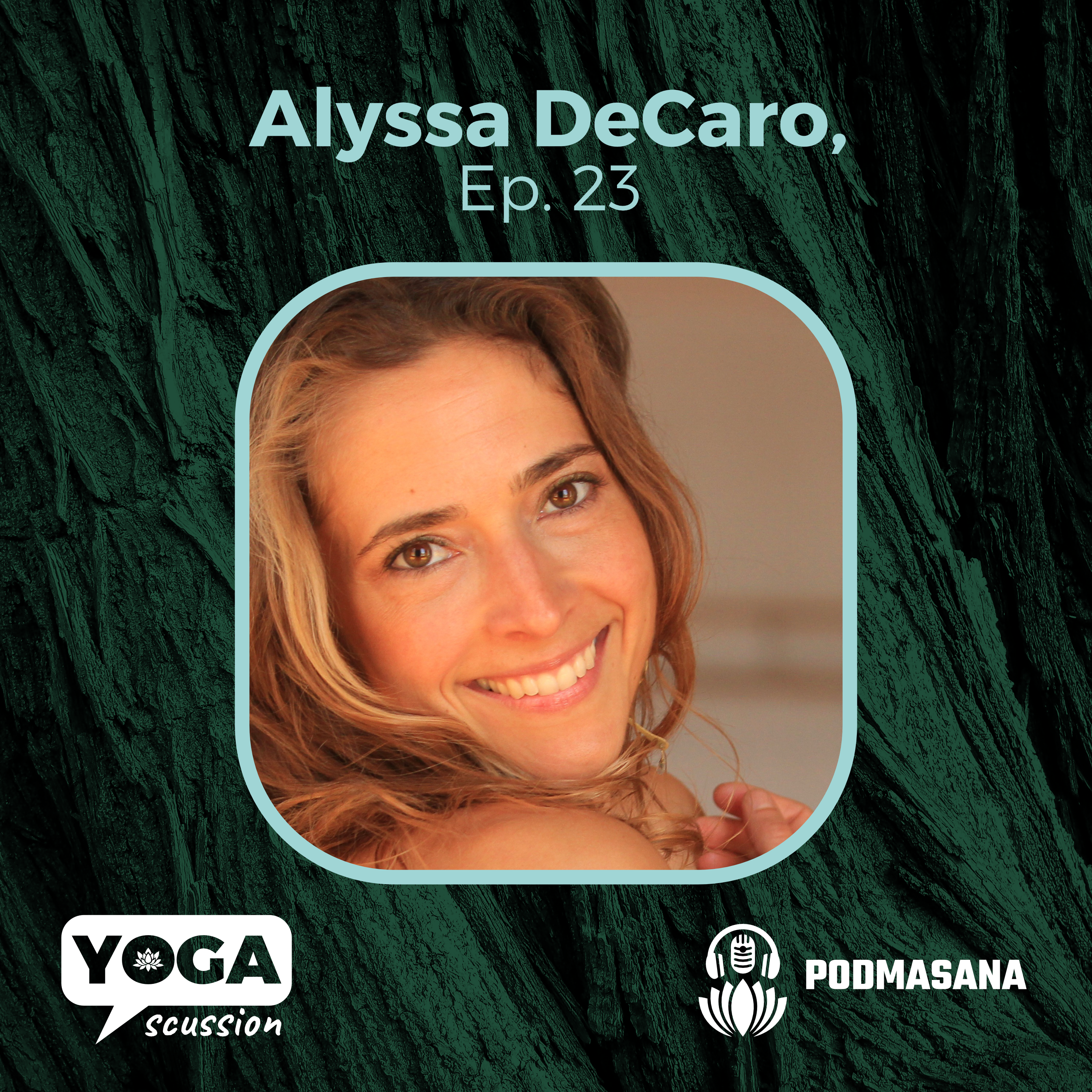
[00:00:46] Speaker B: All right, Gina. Today on Yoga Scution, we Warmly welcome Alyssa DeCaro, embodied leadership coach, movement facilitator, and musician onto the show.
She's got 25 plus years of teaching experience in the San Francisco Bay area, and she blends yoga, somatic, movement, rhythm and voice through what she calls groovement, a group groovement offering, and her one on one core voice method offering.
And she says she's been shaped by studies at Esalen, which is in the Big Sur area.
And she's learned under Anna Halperin and master drummer Babatunde Alatunji.
Alyssa helps people move out of their heads and into their bodies through what she does and find their inner truth with some clarity, confidence and joy. And she also has a TEDx talk that's out that's worth tracking down, I think. And it touches on some of the same topics that we're going to yoga scus today. So I don't know about you, Gina, but I'm ready to groove to the core core of yoga with Alyssa today. So shall we start?
[00:02:01] Speaker A: Let's do. Yeah, I'm excited.
[00:02:04] Speaker B: All right.
[00:02:04] Speaker C: Hello. I see you.
[00:02:07] Speaker B: Hey, Alyssa. Hey, we. We see you too.
So, yeah, thanks for joining yoga discussion. What we like to do, Alyssa, just to kind of start the yoga discussion off, is just for the guests to introduce themselves how they came to yoga. Because sometimes these stories have some commonalities and sometimes they're wonderfully unique. So if you would share with us how you came to yoga and how it has brought you to what you're doing right now, and then we can kind of pull on all those threads for the discussion.
[00:02:41] Speaker C: Yes, absolutely. Well, I'm really happy to be here.
And the way that I came to yoga was as a dancer, growing up as a dancer and also studying to be a professional dancer. I was already in my body, I was doing a lot of movement practices, and then I got some injuries, some major knee injuries. And that basically crushed my ego and, you know, helped me to discover that I have an ego. And it was very much how I was living my life from what I would call the outside in rather than the inside out.
And I began to, I was living down in big surgery and was working at Esalen Institute and starting to discover all of these different practices. And then one of them was yoga. And so when I came to yoga, I thought, oh, yeah, I can do this, I'm. I'm stretchy. I'm good at this stuff.
And of course, I didn't really understand what yoga was at that point, but I'm really glad that I got led to it. And that was part of my journey inward, basically a big deconstruction of what I thought my life was and who I thought I was, what I was identifying as, and how I was connecting my self worth to my dancing or to my body or to some identity that was really based on looking outside of myself.
And so yoga actually created a pathway inward for me. And even teaching yoga, I feel chose me. I don't think I chose yoga. I feel that it chose me. And it has continued to choose me. And now, of course, I continue to choose it, and it's taught me so much. And it's been a grounding practice for me for over 25 years now.
[00:04:37] Speaker B: Oh, boy. Gina, there's, you know, in these introductions, there's so many, those common threads, right? You know, like, some of those words could have been spoken by us or others, but it's like Alyssa's unique packaging. Do you have a take on that, Gina?
[00:04:51] Speaker A: Yeah, I just. So much of what you said was like, wow, how old were you when you hurt your knees?
[00:04:57] Speaker C: I was young. I was in college, so I think I was 19, 20. I was 20 years old when I started teaching, so I think I was just a little bit younger than that when all the injuries happened, man.
[00:05:11] Speaker A: The first thought that came into my head when you were talking about that was like, what an incredibly hard lesson to learn. Right. Like, for so many of us, we just identify outside in, like, these are the things that define me. And then when those things fall away or when something catastrophic happens, it's like, it's just such an ego death. And it's to do that at like, 1920.
Wow, that's. That's really hard.
[00:05:40] Speaker C: Yeah. You know, now I see it as such a gift, but at the time, of course, I did not see that. And it felt like it completely derailed my path. And it was everything that felt like, why is this happening to me? This is not what I had planned, you know, but now I see, as I work with people over and over, it's the same story. It's some version of that story of what I thought my life was or the way I thought it was supposed to go. It's not going. And usually it's some form of illness or injury or something kind of external that people think this external thing has happened to me. And now I can no longer be on the path that I thought I was supposed to be on.
And I just feel a sense of gratitude that that happened to me at such a young age, because I feel like for most people, things like that don't happen until middle aged after. And that's really a time where it's not just suggesting that we go inward, but it's kind of requiring us to go inward. And of course, some people completely resist that. And, you know, there's a lot of struggle there, but a lot of people when we can open up to, okay, what's here now for me to see and look at. And a lot of times that doesn't happen until middle aged. And so even though it was really hard, I. I feel in some way that it helped me to be able to help others be on this path.
[00:07:10] Speaker A: Yeah. And isn't it so interesting, I bet 19 year old you, 20 year old, you could not imagine you today.
Couldn't even have dreamt of that, couldn't even have conceived of it.
[00:07:24] Speaker C: No, no, absolutely. That's great. I like to think about that. Yeah, that's. That is so true. I wouldn't have even had any idea that this is where I would be now.
[00:07:35] Speaker B: Yeah. Alyssa, when the universe essentially said slow down, was there like a moment or a series of moments dealing with the injury that you maybe saw it as less of a setback, but this kind of doorway into a deep internal exploration for yourself and where that ultimately took you?
[00:07:57] Speaker C: Yeah, I think, yeah. Other than the initial feeling of setback, I was also really inspired by living and working at Esalen and being around. I was a seeker, you know, so it kind of like pulled open the curtains a little bit wider. And even though it was like kind of a deep dive into the abyss, it was also a possibility for this part of me that was seeking something more to dive in deeper. And I had a lot. I was lucky. I had a lot of resources being around all these amazing teachers at Esalen and being around other people who are seeking spiritual pathways and movement, pathways and art as a pathway to healing and growth. And so I, I think in some ways it was kind of like a wonderland of like, wow, what is all of this that is possible to learn from? And I actually had this really interesting experience when I first started working at Esalen. I started as a dishwasher, so I started like the bottom of the totem pole and moved all the way up to teaching workshops as a catalog workshop leader, which is amazing. I would have never thought that would have happened either. But I was in Big Sur at the gift store, the Heartbeat gift store. And I was of trying to figure out what I was going to do with my life now that I was thinking, okay, I'm not going to be a professional dancer. I don't know what I'm going to do, but I know I want to do something. Maybe it's like physical therapy or something related to the body. And I found this book called Dance as a Healing Art by Anna Halperin, who's like a postmodern dance pioneer.
She was an incredible woman and she was a teacher for a lot of teachers who are now kind of at the forefront of the ecstatic dance movement and somatic therapy. And a lot of. A lot of these type of movement based expressive arts therapy is then is what her program, the Tamalpa Institute was. But anyways, I found this book, Dance as a Healing Art. I pick it up and I'm like, what? I didn't even know this was a thing. Dance as a Healing Art. What even is this? So I bought the book and then I go down that same day I was going down to work a shift at Esalen, and then I look up at the bulletin board and it says, Wednesday night program Anna Helper. And dance is a healing art. And I was like, oh my God.
And so I went to the program and I just had such an incredible experience. And I told her afterwards, I was like, I think this is the work I want to do. And she said, okay, we got to take my program or come up to Marin and start to, you know, work with me a little bit.
And I ended up driving up once a week to Marin to take her classes and then doing her full time program, the Tamalpa Institute. But that was a really big opening into what is possible. What else is out there that I had no idea was out there? So in addition to yoga, I was really finding my path as a movement therapist, as an embodiment coach.
At the time, I didn't even really know that that existed.
So that was like a big eye opening journey of what else is here? When I just take one step into the unknown and then let each step lead me there.
[00:11:25] Speaker B: Alyssa, in these group groovement sessions or in any yoga classes that you teach, have you encountered people who are maybe navigating their own frustrations with physical limitations? And are you able to draw from your experience in terms of offering any sage, like wisdom, drawing from what you've navigated?
[00:11:48] Speaker C: Yes, absolutely. I would say not only physical injury, there's something that I say at the beginning of each retreat or each workshop is that everyone will come up to me and they have their own version of the story of why they're not, the version of themself that they thought they were going to be on this day that they're doing this retreat or this workshop. So it'll be something like, oh, I was really looking forward to this, but then I hurt my back the other day, and now I feel like I'm not sure what I'm gonna be able to do. Or I was really looking forward to this, but then we got in a big fight on the way here, and now I'm just in a really, really angry mood and I don't even feel like I'm even available to do this thing. So I wouldn't even limit it to physical. But there's some way that we have this story of how we thought we were going to be. That's like the past version ourselves of ourselves or the future version of our, like, ideal self.
But it's very different than who we are actually showing up as. And that's where I think the doorway is into presence. And that's what I really think yoga is, is the willingness to be with the truth of what is in this moment. It's not how do I become happy, even though a lot of people who do yoga find more joy and happiness and peace, I think, but that the truth of just being with what is in the moment and seeing what's here and available, that's where I think physical injury is and can be a doorway.
I don't wish it upon people. I don't. You know, I think injury is really hard and it sucks. But it's also.
It is a doorway. Just like, you know, mental, emotional pain can be if we are willing to see what it has to show us about ourselves.
[00:13:41] Speaker A: I think, too, there's a. There's something to that. Like, I've said this before on different ones, but I broke my pelvis when I was 19 into four pieces.
[00:13:50] Speaker C: Oh, my gosh.
[00:13:52] Speaker A: There was like, a definite before this is me before. And then there's like, the this is me now. And then there's like, this longing to be in the past.
And there's a recognition that I feel like, has to happen of, like, a grieving has to happen. Of like, oh, this thing happened and I can't be that person anymore.
I'm sure you've probably went through this with your knees. Like, these are not access. These things that I thought were gonna be in my life is not accessible to me anymore. And I think that can happen too, in like a mental, emotional way as well. Right? Like you have a big loss or something in your life and it's like, I'm not that person anymore.
But the beauty of it is that when we can. Like you were saying, when you can show up in the present and just be with what is and know where you're at, then there's this next step that's like, oh, but I'm also all of these things. So it's like a yes. And. And then the other. The question I was thinking about as you were talking is, do you think that when people show up and. And they're like, oh, I hurt my back or oh, this thing happened, is it kind of two things were coming into my mind. It was like one is. Is it kind of like a fear of like I'm afraid of what I'm gonna encounter here, so I'm giving you a reason for why I can't fully participate or is the second thing like I'm af. I'm afraid to be who I really am because I don't. Maybe I don't fully know what that is. And it's kind of terrifying because what if it's awesome or what if it's not awesome? What are your thoughts on that?
[00:15:28] Speaker C: Oh, gosh, those are both like really big questions and topics. And I also want to just pinpoint that. I want to respond to the other thing you said in a moment about when you think that like your past version of yourself. Maybe I'll just respond right now since I'm already talking about that. I will say about the past version of the self and what we thought we were supposed to be or capable of and that the ego death for me.
I realized that I. When I got the injuries and then post injury me, pre injury me was trying to be perfect.
Dancing from the outside in, always looking in a mirror to relate to myself and who I was and always comparing myself and my body to everyone around me and having all of these reasons for why I wasn't quite good enough yet. And no matter how much I weighed or what I looked like or all of that stuff, I was always seeing my self worth as in reflection to someone outside of me. And therefore, like, even though I was a good dancer and I was like technically a good dancer, I don't think I really experienced the freedom and the power of really dancing until post injury me, except maybe when I was like a little girl and I didn't care at all. But like post injury me partially I had all of that training inside of me, so there was some like muscle memory, but it was like I somehow unlocked that and I unlocked that to actually have access to all of that to be dancing from the inside out. And then I was all of a sudden capable of so much more. Not just of more pleasure and joy and connection to how I was dancing and moving like to how it actually felt in my own body, but physically I was capable of so much more because I was moving from my center.
And so that's, you know, now a big part of my program is it's all about core clarity. That's related to who you are as a person and your core vision and your core essence, but it's also very much related to your physical core and how to, you know, not only move from your core, but heal lower back pain and si. Joint instability and all the biggest physical problems that people come to me with. So that that post injury me, I would never go back to the pre injury me. Like even though my knees are still the things that are going to tell me my knees are my teachers, they're going to tell me when I'm tired and I need to go home from the party and that's okay. Like if I'm willing to listen, then I'm grateful that my teachers are there. But I've also learned how to support them and to nurture them and to make my legs strong and my glutes strong and my body strong to support. You know, every step that I take as I move from my center is actually putting less physical pressure and weight on each step. Of the millions of steps that I'm going to take as I walk through my life because I've learned how to move from my core is going to take less pressure off or it's going to take more pressure off of my knees for the rest of my life than if I didn't have that insight. And that way of moving and not only moving from a physical place, but quite literally moving as the guiding light of how am I steering my ship along every single moment of my life. And if I'm steering it from my center, then in one week, one month, one year, 10 years, 20 years, that angle of where I'm going in relation to where I want to go is going to be so much more spot on than then. If I'm slightly off and I'm not aware of it, then in 20 years I'm gonna be way off from where I wanna be.
It's a long winded version of saying that I'M grateful for the post injury me.
Um, and then I wanted to address the other thing that you said. What, what was that again? You were talking about how people come.
[00:19:44] Speaker A: Yeah, Just wondering if when people show up and they're like, oh, I have this back injury or I have this, this thing happened in my life and I don't think I'm ready, I'm not the version I wanna be when I show up to be with you. If like a limiting, like self limiting belief or is it like a fearful place or is it like I'm afraid of what I might find out about myself or you know, maybe I'll be so awesome it's overwhelming or maybe I'll be total trash and I'm afraid of both options.
[00:20:12] Speaker C: Right, right, right, right. Which is so funny because it's like the polarities, like the extremes that we go to, which is like the attraction and aversion.
[00:20:20] Speaker A: Yeah.
[00:20:20] Speaker C: I just spoke with someone just a few minutes ago who was saying that his biggest limitation is actually his fear of success, of his fear of being totally awesome. So I do think that it is related to fear of some sort. And you kind of named both of them. One is it's not just the fear of failure or the fear of like, I'm not awesome. I think it's the fear of like nothingness, the fear of like, it's just going to be kind of okay as it is like contentment, like when we get out of like say after you do a big cleanse. And instead of like the highs and lows of all the like sugar high or whatever, the cravings, there's almost like this deep calm that I think is the place that yoga brings us to that can feel a little bit boring if you're not used to it. It can feel like nothing is happening, which is really beautiful when we can just sit it and sit in it and be in it. But I know when I first started to feel that I was confused because I was like, wait, shouldn't there be something more than this?
But I was just so addicted to these highs and lows and this like deciding whether I'm a good or a bad person or deciding whether this moment is enough or not enough.
So I think there's, there's the fear of like those two extremes of being awesome or life being awesome and, and, or life being horrible or I am horrible. And I also think it's just like this addiction to self identifying as something that we can hold onto instead of really just being in the present moment. It's like an aversion to the present moment. Even though that's what we all want so deeply, is to just be here, be enough, feel connected, relax.
[00:22:18] Speaker A: Yeah.
[00:22:19] Speaker B: Do you attribute this elicit to cultural conditioning or what? Or what is it? Is it the times that we live in? I know that those two concepts are related, but you know, yoga essentially teaches us that we are not our body, we are not our mind.
And yet the body and awareness of the mind, awareness of the body are kind of these tools in a tool set to help us understand those concepts and maybe make us more comfortable with stillness. And for some alluding to what you've been talking about, stillness is almost a synonym for nothingness.
And nothingness maybe terrifies people because it's like the lack of stimulus.
So what are, what are your thoughts?
[00:23:08] Speaker C: Yeah, I mean, I think we could say that like over time, forever we could. This has always been happening and that's why all the ancient teachings are kind of all saying the same thing. They're all leading us home to ourself. And so it's like a. Yes. And I would also say that in the time that we live in right now with social media and just so much distraction of scrolling or swiping that that is almost like a deeper reflection or amplifying the going, like living from outside in instead of inside out. It's like so easy for us. We're not just watching TV these days, we're watching other people's reality of however they're choosing to show it to us on these platforms that isn't quite really what's happening on the moment to moment. Like if you were to actually hang out with this person that you're following on social media, it would probably be a really different version of their life that you would see. And some people can be really aligned with who they're showing the world and who they actually are.
But I think there's still this sense of disconnect from the fact that it's very easy to just witness and to view from the outside in and therefore kind of have this feeling of not enoughness, of like we should be doing something more. I mean, this is something I've personally been challenged with this feeling like always I should always be doing something more. Partially it's because I have such a big vision, which is exciting and I want to let that vision come alive. But it's been this point of struggle for me and that's what my whole. I just did a TEDx talk called get out of your head and into the groove. It was all about timing and how timing in our lives is something that's really painful. It causes all this pain around what should have happened by now that hasn't, or what hasn't happened now that should have.
And all of this stuff that's essentially taking us into the past or the future.
And instead of just being right here in the present moment, which is where groove lives, the feeling, the felt sense of groove as a drummer is being in the pocket. It's being, like, relaxed in the pocket. So you're playing the music, you're playing the notes, and in some ways you're actually leading the band as the drummer. But then there's also this sense of sitting back, relaxing, being guided, being held by the groove, being supported by the other musicians. And to feel that felt sense of groove in life is like being in flow state.
And flow state is right here. It's not yesterday and it's not tomorrow. It's here in the present moment. And I think there's a sense of, like, letting go, letting go of control in a certain way. So that that's probably where the fear comes in. For most people, it's this distraction is some way to avoid being present with self. The control is some way to, like, try to grasp onto something instead of really trusting life and trusting self and trusting your relationship to everything around you and within you.
[00:26:27] Speaker A: Yeah.
Oh, I just was getting the beautiful, beautiful picture of connection of. In my mind, I was seeing a band play together. And as you were talking, I was thinking and trusting that they've got you too.
That you're there, but you're also connected and part of it. And I think that's something we really struggle with as humans, is that we have this conception, or I personally would say it's a misconception that we're separate and that, you know, that our suffering is, like, unknown and that we're the only ones going through it. When, like, there's. The reality is, is that we all are suffering from crises of identity or ego deaths or physical stuff happening to us or loss of people or creatures that we love. And that these experiences we go through as human are universal. But they connect us. They connect us like a band. They connect us like.
Like a record. Like the grooves in a record are connected and we don't know where we are on the record. I might be on the outside edge and you might be in the middle, and Brendan might be on the inner edge, but the line from the outside edge to the inner edge is one tremendous connection.
[00:27:42] Speaker C: Love that.
[00:27:43] Speaker B: I think that's too long to fit on a bumper sticker, Gina. But I really love it.
[00:27:48] Speaker C: Yeah, let's distill that down.
I love that, though. Yeah, that's so great. That kind of came up for me earlier when you were asking about some of this stuff. And even just the acknowledgment, like, to kind of break the facade when I say the thing to people about, like, hey, just to let you all know, you've all come to me with your own version of this same story of how you're not showing up as who you thought you'd be. And sometimes if we say it, I'll have them, like, say it out loud to each other, like, go, you know, walk around the space and pause in front of someone and then talk about what just happened.
And just hearing from another person, their own version is such a beautiful way to not only take us out of our own self where we can just be, like, so self absorbed, but just to see the humanness that we're all having. Our own version of a similar story of what's really keeping us disconnected instead of just being connected in our human experience, that we're all going through something that is a little bit different each day. Sometimes we're high, sometimes we're low, and like, the fluctuations of the mind, but underneath it, you know, as we all know, this part of ourselves that can be relaxed and observing can also get a little bit of humor out of it. Like, if you can have some levity around it. That's why I do a big part of what I do that's different than yoga and that has kind of led me into groovement, is because I feel that people need to be uplifted. And yoga is extremely grounding. And it's so wonderful. And it's part of. It's like a foundational part of my practice. And I will always come back to it, especially when I get, you know, really lofty and thinking, oh, I'm going to change the world with all these things. Then it's like, okay, just come back to just being enough right here. So yoga is always bringing me back home.
And I realized during the pandemic, when I. I started my online membership then, because people couldn't go to studios.
And throughout that experience, I realized that people were so down, it was like they were stuck to the ground. Like, gravity got, like, stronger, which is amazing. And gravity is wonderful as a grounding force. But people needed to be inspired to be uplifted, to remember why, why we even want to live.
So that's why that was when my mission became to uplift and inspire through movement, music, and connection. Because I think you can be as grounded as you want. You can go really internal, which is wonderful. But if you don't have the will and desire to live, then nothing really feels worth it.
And so I think it's like this cycle of finding that inner clarity, that inner groundedness that yoga helps us with, and then also expression and being uplifted and bringing that inner world out to the world, and then having this cyclical relationship with where you're constantly feeding off of the world, letting the world in and then coming back to yourself, bringing death out to the world.
And that's why I think joy. Joy is profound.
[00:31:09] Speaker A: Yeah. And I feel like right now we.
And I don't think it's just people in America, I think it's worldwide, are feeling a very big lack of joy. Like, we're having, like, a lack of joy epidemic, you know?
And I also think we take ourselves so seriously in our yoga practice too. You know, like, it's like you'll be like, teaching a flow class, and it is like, damn, everyone in here is, like, doing it to the max. And it is okay to, like, laugh and enjoy yourself. Like, we do not have to be so dang perfect.
[00:31:42] Speaker C: Yes.
[00:31:44] Speaker A: And I think with all of the awful things that we are exposed to today through the news cycle, it's like. And I think it too, feels a little bit like, I know I feel this. And I'm sure there are listeners out there who also feel this. When I do have moments of joy, I feel a little terrible about it. Cause it's like people are being murdered, people are being bombed, People don't have food, people don't have access to healthcare. Like, there's so much suffering right now. And so it's like, God, I have this little shred of joy, and I wanna protect it, but I also feel bad that I'm having joy.
And I think that's not.
I don't think we should do our joy like that. You know, I think if we don't have joy, then we do just kind of submit to the mundane and we do submit to the terribleness of what's happening in the world. And that joy is something that reminds us that we're alive, you know, and that we. We can connect through joy. But I think there are probably a lot of people who, like, feel like it is so hard to find joy. And then when I do have moments of it, I feel guilty because I know there's suffering out there. That's a hard line to walk. I don't know if you have any thoughts about that, but I myself think about it often.
[00:32:58] Speaker C: Yes.
My heart aches in just hearing all of that. I was seeing as you were talking joy as food.
And it's like, when we see all of these starving people, how can we feel okay about eating this food? But if we don't eat this food, we're not going to have any energy to actually help anyone else or to do the thing that we came here to do, that we. That our unique vibration is here to give to the world. And I think joy in these days is almost like a form of protest to the ways that.
That we're being kind of pushed down or shoved down into being smaller and being scared and fearful and separate. It's a big, big, big, big separateness. And yoga, of course, is all about connection, connection to oneself and to spirit and to the divine.
And I think that there's a need to be connected to each other sometimes. And that's where, you know, sometimes, honestly, that's where, like, the challenge has come in. Teaching yoga for me is because I'm like, I don't want everyone to just be on their rectangle. I want people to come off of their mat and to interact. And. And yet I know that that's scary, and I know that sometimes I don't want that. Like, if someone's encouraging me to do that, I just need my little space, you know? So it's a balance of getting nurtured on the inside and really having time, really having that solo practice that's just. Just for you. And then having space where we're encouraged and joy is curated. I want to be a curator of joy. And that's why groovement. That's why I do groovement. Instead of just being like, okay, I'm going to just follow this path of yoga. People like me, I'm a good yoga teacher. I could just kind of go with that.
For me, it's really. Is about joy and humor and.
And kind of breaking people out of their. Their cycle of where we take ourselves too seriously. Like you were saying, especially as yoga teachers. I think yoga teachers think they really have to be serious. I was just teaching in two different yoga teacher trainings this weekend, and I was saying, I was making the joke that, you know, as new teachers, everyone's like, so afraid to step out in front of people. You gotta be wise. You have to.
You have to be grounded. You have to be all these things. And I said, you better get used to the yoga stare, because you're not going to be able to tell anything about what someone's experiencing based on their face.
So it's like stand up. Comedians and yoga teachers should kind of exchange audiences because as a comedian, I can imagine it's like you've got to get used to what happens when people don't laugh at your joke.
And in yoga, you've got to get used to not having any reassurance from people's faces about what they're experiencing. And that's why for me as a teacher, I like to take people into this deep state where they're not even having to come out of themselves, to have this embodied experience. And it's kind of a whole journey. But then every once in a while, I'll just be like, hey, here we are. Look around and like, wave your right hand. And now look around and where I'll make some.
Some sort of weird joke.
Because if people can snap out of it, even just for a second, then you're. The entire rest of your practice could be different. Otherwise you could kind of stay in your own. I mean, if you're left to your own devices, for all of us, we can all just get caught in this loop and loop and loop around our own head. And sometimes we just gotta snap out of it and remember, like, it's not that serious. Like, let's have a little fun here. And then you can approach your practice, but of course, really your life with a little bit more levity.
And I think that all comes down, keeps coming down to connection. Like, how can I snap out of my own little thing to where I could look around and be like, oh, there's another person. Oh, right, here I am. Oh, we're all here together. Let's. Let's be in this life together.
[00:37:06] Speaker B: Alyssa, you know, groovement, and having listened to your TEDx talk, which I would definitely suggest listeners should check out, it reminds me of this.
Whether you want to call it a primal or ancient human practice that is to move to rhythm, to connect to something beyond our lowercase self. Right. And whether this is asana on the mat, whether it's pranayama, wherever, or whether it's a collective dance to rhythm, there's a thread moving through all of this, right? And I'm wondering if you could speak to that. But also, is there maybe a simple practice that you might be able to walk us and listeners through that people could try out if they're trying to shift from anxiety into a presentation state?
[00:38:06] Speaker C: Yes, absolutely. Okay, so two things. I'll get to that simple practice in a second.
The first one I want to respond to is around that movement and breath and rhythm and the way that we've forever more as humans been moving together and breathing together. And really I think this is like the origin of ritual, which they wouldn't even be considered ritual. It was just like what we do together. But there's body language and communication through body language. And there's this term called body music, which was coined by Keith Terry, who's right here in the Bay Area. Keith Terry and Evie Layden are amazing and they have started the international Body music festival that I was a part of for several years. And that kind of gave me insight into this whole global experience of every culture around the world has some sort of body music. It's whatever you can do with your body before you even put it on a drum or on a flute or on any other instrument. It's what do we do? Snapping, clapping, stepping, singing, vocalizing, vocal percussion, all kinds of things that you just do with your body.
And every culture around the world has some version of this.
And it's a way of connecting through vibration. That's part of what we all have as our natural way of dropping in.
I've done a lot of inquiry around trance state and around just like what trance is and cultures that use music as trance and breath as trance. And it's really just about like getting into a non ordinary state and doing that through like we can access that through yoga, we can access that through breath, we can access that through music and especially through rhythm. And our heartbeat is a rhythm. So I think that it's just, it's not even complicated. It's not like, oh, let's study this and figure this out. It just is the most primal basic form of how we communicate. And if you hang out with a group of people who don't speak the same verbal language as you, you will soon realize that there are ways to figure out how to communicate pretty quickly without using your words, without using your verbal language, to know what's happening with the other person or to get what you need. And a lot of it comes down to actually like the feeling of your vibration, like the vibe that you're putting off. And especially if you're act actually wanting something from like you're wanting to, to feel connected, you have to kind of like open up your vibe to feel literally the vibration of the other people or the sound or the laughter or the, even the feeling of a smile.
So I think there's just something that you know, gets really overlooked when we start to overcomplicate things. And that's what I wanted to say about that, is that beneath all of these other things and all these modalities and all these ways of playing music or all these theories about wellness and spirituality is this primal language of vibration and just pure being, which I do think is kind of at the root of yoga as well.
[00:41:39] Speaker A: Yeah, yeah.
[00:41:40] Speaker C: And then there was a second thing you said. Yeah, okay.
[00:41:43] Speaker B: Oh, yeah, yeah.
[00:41:44] Speaker A: Wow.
[00:41:44] Speaker B: Just trying to get that simple. Just trying to get that simple rhythm practice, maybe elicit. Yeah, yeah.
[00:41:49] Speaker C: Oh, yeah. Okay. So I would. I would actually do the ground core presence practice, which is something similar to what I did in the TEDx talk. But so imagine if you could all picture this, like, spiraling energy out from what? From wherever. You picture your center going out in all directions. And you could call this anxious energy, you could call this overthinking, you call this whatever is actually making you feel, like, not grounded. And you're like, oh, my God, I'm trying to figure all this out. I've got so much on my mind, blah, blah, blah.
It's also really common for people who are healers or empaths to, to just always be tuning into something outside of them and just kind of feeling everything that's happening or all the overwhelm that people are feeling these days is like, it's just a lot to feel.
So picture that spiraling energy that's going out and you're going to feel. And imagine spiraling that back in, in, in, in, into your center. So if you're. As long as you're not driving, if you feel comfortable, you could soften your gaze or close your eyes. But if you're driving, keep your eyes open or operating heavy machinery and just feel your breath in your center. If you want to take your hands to your belly, you can just feel your belly breathing and feel that simple breath, no rush to get to the next breath.
And then underneath that, go down from where your sits, bones are touching the surface beneath you or your feet are touching the surface, whatever's touching the actual surface beneath you. And just feel your body making contact with the earth.
Imagine it actually going through the surface beneath you and into the earth.
And then feel and imagine that connection between you and the earth, between the core of the earth and the center of you.
And simply be there. Be right here and breathe.
And remember, there's no rush to get to the next breath, no rush to get to the next moment of your life.
And from this place of simply sitting here or standing here connected to the Earth.
And allow your eyes to open if they're closed.
And welcome to present station. And this is where you get to have choice. You get to decide where you're putting your attention in this next moment. And maybe this only lasts for a few minutes. And then, guess what? You can do this in one breath. If you start to practice this first, you take maybe 10 minutes to practice this and sit with it and do. And, like, discover, okay, get to know this place inside of you. Get to know your connection to the Earth. But then eventually, it can be happening right here. Like, while I'm sitting here listening when you two are talking, I'm doing this. I can do this as I'm just sitting here listening, or if I'm watching TV or if I'm at the dinner table talking to someone. If I'm in a meeting, if I'm in an interview, if I'm on a stage, like, wherever I am, I can do this simple practice that no one is going to see, but I'm gonna feel.
And I feel like it's one of the most accessible things to do. And oftentimes the things that are really valuable can be overlooked because they're just right here in front of us. We're like, but no, but wait. I need to do the other thing that's really complicated, and it costs $10,000. And it's this thing that's gonna make me a better person instead of just doing the thing that's free and available right here.
[00:45:33] Speaker A: There is such a thing right there about the $10,000 thing that's gonna make me a better person versus the thing that's free. Right? That's, like, right here. Because it's like, if something's far out there, that's like, I gotta reach for that, and I know it's gonna make me better, and I gotta strive versus the very simple act of just breathing and grounding. It's.
It's so different, and I don't know why.
Well, let me rephrase that. My brain said immediately why. I was gonna say, I don't know why that is, but then my brain was like, because sitting with the present is really hard.
Being with yourself in these moments is really difficult because sometimes if we need change, we already know. I really do think we already kind of know what we need.
And to acknowledge that is like, I'd rather chase the $10,000 answer because it seems huge. It seems more gratifying. It seems more.
[00:46:29] Speaker B: More expensive. Should be the best one, right?
[00:46:31] Speaker A: Right. It should be the best. It should be the best.
[00:46:34] Speaker C: Sometimes it is. Sometimes it is what you need. I mean, I just spent a lot of money on coaching because that's what I need right now. But I don't want to choose that over being present in the moment with myself. And I don't want to choose that over, like, if that was someone telling me I need something other than. Than being here in the moment with myself, you know, so there's like, appropriate things can be appropriate at different times in different places, but this, I think, is the most foundational. It's the thing not to be overlooked,
[00:47:05] Speaker A: to build upon, and it probably brings you more in line with what you actually do need. And maybe that is the $10,000 thing, and maybe it's actually not. But, yeah, sometimes it feels more aggrandizing to be like, I gotta do this thing over here than to, like, sit down and be like, if I'm sitting with my breath, what actually comes up? Like, am I okay here? Am I okay?
[00:47:28] Speaker C: Exactly.
And that. That's the foundation of my program. The Core Voice program starts with this. Just this simple ground, core presence that's available and accessible to anyone at any time. But if you do this and then you let that lead you into your core clarity, this Core Clarity will guide you wherever you need to go. It's not going to be coming from someone else and having to check in with other people. It's going to be coming from inside, which is actually, you know, eventually going to be what saves you money or is the most effective use of your money and your resources and your time and your decision making is like all of this stuff that we're just kind of like making messes all over the place. We're like. We're like spending money where we don't need to. We're spending our energy. We're like wasting our resources because we don't actually.
Well, we say we don't know what we need, but in response to what you just said, oftentimes we do know what we need. It's in there. It's just covered up by all this other stuff.
And the path that I'm really following and believing in and helping people in is if you can get to that core clarity, then you can build your core voice to be actually able to say what you need, which is a whole other skill.
Say what you need, but you can't say what you need if you don't know what you need. If you're not willing to spend a little bit of time connecting to your core clarity, then your core voice is actually what's not only going to get you what you need, but it's also going to be what gives the world what your medicine is like, what is your unique medicine to give the world. And if you don't know that, then you can't give it. But if you know it and you don't know how to get it out to the world or when it gets out there, it's actually looks and feels like something very different than when it was inside. That's where it gets a little messy. So that's the core voices about when it gets out into the world. It still feels aligned with what's inside. And that's where I think a lot of people get.
There's some sort of like, detour on the path. It gets a little muddied. They either don't know what they want and what they want to give to the world, or they do know and they don't have the tools to get it out there in a way to be like, seen and heard and understood and. And then that's where the actual, like, reciprocal feeling of like, letting the world in is when you see something that's resonating and you. Because you're looking and you're feeling, you're hearing what people are saying to you. Like, then you take it in and it's like food. And then you. You let it come up through you and then you give it out and you feel like you're giving generously. It's not depleting you because you, you're. It's feeding you and you want to give more.
And this is what I believe will change the world is, is if we can feed ourselves and then give back from a generous place, see how it's helping and kind of feeding the world and then bring that in and then keep recycling that through and letting it evolve.
It can be really nourishing, like food for you. Yeah.
[00:50:40] Speaker A: Yeah. When you were speaking earlier about the ship and like navigating, like, if you're going from your core voice and you're navigating, then like, where the ship goes is going to be really close to what you are wanting and. Or are wanting to put out there. And I was thinking, I was thinking, man, that that's. That would take a lot of courage, I think, for a lot of us to do that. Because, because we live in a society or we live in family structures that are like, this is how your life is supposed to be, you know, like graduate high school, go to college. Find your person, get married, have kids, blah, blah, blah. And we get too wrapped up in like the linear, linear ality of like, this is how a life is to actually get quiet and be like, what do I want to do? And I thought the people who are doing this work, which I think are. There's a lot of people doing this work, myself included.
It is hard because you maybe live in a family system that doesn't honor what your gift is, you know, or you may be live in a. Or maybe you don't have a family system and so you feel unsupported. Or, you know, maybe you're living what you thought was the blueprint of your life, but all of a sudden you're like, oh, this isn't it. And so now things have to change. And that seems scary.
And then the other thing that came up was there's a quote that's something like, I know I'll get it wrong. And I can't remember who said it, but it's something to the effect of like, what the world needs is more people who have come alive. So do what makes you come alive, because that is what the world needs. And now I just want to, I want to take your course. I want to take the core thing, core voice. I want just like, yes.
[00:52:15] Speaker C: Oh my God, I love that you just said that quote. Because that's literally what I was thinking of yesterday. I was like, if I could tell people like what I really believe in. And that's what the groove Persona is. That's like your front facing self, who you're presenting to the world. If you were totally living in your groove, completely connected to your core essence. So your groove Persona is not separate than you. It's. It's the, the Persona that comes out to the world that essentially is like, if your core essence could dress up as anything it wanted to be, this is what your groove Persona would be. And that's what I believe. If everyone could be that, that the world would be a better place because you'd be feeling in your groove, but you'd also be giving back in a way that's in the groove with life. And I was completely, I was like, okay, what quote could I use that. That's the most like that. And it was that exact quote. I love that quote about coming alive because that's essentially the heart of my work is creativity. Like, I've been a dancer, musician, like creative person. But creative creativity isn't just like, oh, am I an artist? It's creative energy. It's the second Chakra. It's like how am I creating with life force itself?
And how can I be in this like constant like churning of this fire of ideas and inspiration and feeling like I'm actually utilizing what's been given to me, but also working with like what I see and all the resources of like what's around me right here in this moment.
And the creative energy I think is what is so valuable. That's what can't be taken away from us unless we let it be. Unless we get like pushed down so far that we just forget that we have it.
And so that's the coming alive that I'm relating to in that quote and relating to with what you say is if we can each remember that life force inside of us and to get interested enough in it to believe in ourselves enough. And not even just in yourself, like believe in yourself even, that's kind of like an ego based thing.
I feel like there's this kind of entity that I'm shepherding into the world and I'm just like, okay, how can I be the best host, the best person to facilitate this energy coming into the world? And therefore, when I as I believe in this mission of groovement and the mission to uplift and inspire through music, movement and connection, if I believe in that enough, then I want to get out of the way. I want to get over all my stuff that's going to stand in the way of this mission happening. And when I started to do that, there was like a pretty big shift. This was like towards the middle to the end of the pandemic when every single day I wrote down, I took like five minutes a day in the morning to write down my mission and then to write down why. And I would just ask the question, well, why? Why do I want to do this? And then I'd write whatever answer. And then to that I'd say why? And then I'd write it and to that I'd say why? Why? Why? Why? And it usually comes down to like all these layers that's underneath what you think your reason is. For most people it's like something like because I want to help people feel more connected. Well, why?
Well, because I want to feel more connected.
Why?
Because when I feel connected, I feel more at peace or I feel like life is worth living or whatever. So whatever your why is, if you can stay connected to that as like a bigger mission, even if it's not professional, even if it is quite literally like I want to smile at my neighbors and my family and I want to take care of myself so that I can feel like a more resourced person to be able to give back to the world. Why? Because then I'm giving a little bit of energy. I'm lighting someone else's candle instead of blowing it out.
And that in and of itself is this creative energy that's inside of me that keeps me going, but that also helps everyone around me or everyone that I meet around me, that there's actually, like, a purpose for this exchange as humans.
[00:56:48] Speaker A: Wow.
When you were talking. Sorry, Brendan.
I just kept getting.
[00:56:53] Speaker C: Brendan, we need to let you get a word in here.
[00:56:56] Speaker B: I feel like I'm just here with you. It's all good.
[00:56:58] Speaker C: I know.
[00:56:59] Speaker A: I'm like. I feel like we could be really great friends.
[00:57:03] Speaker C: Okay.
[00:57:06] Speaker A: I was thinking, like, little self, big self. I was thinking, like, little self is what sort of gets in the way, right? And little self is like, you know, I'm in this life and I have wants and desires and whatever. And I'm like, you know, materialistic or whatever. And then big self is like, the connection. Big self is like, yeah, I want to feel out into my community and know that I'm a part of it and that, like, they know I'm a part of it. And we're all, like, mirroring back, you know, and.
What's the word? Kind of like doubling the energy, you know? It's like when. When you're in that state of giving and connection and, like, understanding where your mission is, you're in big self, then it's like you're sending that out into the world. It'll be mirrored back to you so the energy just keeps, like you said, recycling. But really, it's just cycling through.
And that's just like, what a beautiful vision. I wish.
Couldn't we all, like. If we could all just get to that place where it's like, oh, right. Because when I run into people and they're doing things and I ask them, why are you in this field? And it's like, I want to help. I always hear that answer. I want to help make the world a better place. I think it's very rare that you run into a person who's like, I want to make the world a worse place. Like, almost everyone I know is like, I want to make the world a better place.
[00:58:31] Speaker C: Place.
[00:58:32] Speaker A: And so.
[00:58:32] Speaker C: Well, yeah, there's a lot of people who have other. Like, I want to make more money and I want to do these things, which isn't bad, but. Because I. I want that too, you know?
[00:58:41] Speaker A: But I think yeah, we live in a system of money.
[00:58:44] Speaker C: Right, Right. But I, I think that when we switch that for what for the mission, then that's where it gets really muddy and maybe you will succeed in making more money. But ultimately, you know, we can watch any documentary of any successful person. They've all had some sort of experience of like, oh, when I got to this achieved level that I thought was where I wanted to be, it was empty. Like it was devoid of fulfillment. It wasn't what I thought I wanted.
So I think the, I think the goal and something that I do want to help people with is how can you have all these goals that will actually help you, you know, have, have a house and have like your basic needs met and everything like that. But how can you do that from this core clarity place where the vision is connected to this core essence of you that is so pure, it's so deeply like wanting to give your medicine to the world because of, just because of the pure existence of it inside of you that wants to be expressed in the world and then that, that innately will help people by you giving it. If you can get clear with that, then the joy of being it and doing it, even if you get wildly successful or not, the joy of actually living that expression is a worthwhile journey.
[01:00:12] Speaker A: Yeah.
I just want to say, I bet 19 year old you is looking at you now and is like, like, I'm blown away.
I'm blown away at what we just did.
[01:00:23] Speaker C: Yeah, I love that. I want to take that in.
Yes.
[01:00:30] Speaker B: Well, Alyssa, I guess we kind of wind down the yoga discussion. I wanted to ask you one last meaty question, if you'll humor me.
And so you've studied under a variety of people, with a variety of people, integrating yoga, somatic movement, the expressive arts, and if you want to call it global rhythm traditions.
How do you honor these lineages while creating something that feels fresh, accessible?
And we've talked about joy, joyful for modern practitioners.
[01:01:07] Speaker C: Great question.
I honor them by continuing to ask that question first and foremost.
And one of the ways that I answer that question is to continue to guide people towards my teachers, whether they are still living or not. In particular, if they're still living, to guide people towards yoga masters who have really dedicated their life to this, like Christopher Wallace, if you want to study with someone who's like an amazing teacher of history and philosophy of traditional tantric yoga, and Lisa Witters, who's an amazing teacher from that lineage as well. Anna Halperin has passed now, but there's a lot of people who have. Who are still alive, who are teaching that. I think I.
If I can.
I think a good coach is actually hearing what someone needs and then knowing if you have that thing to offer, then to boldly offer it with generosity, and whether they take it or not is up to them.
But to also know if you don't carry that particular medicine of what they need to direct them to who does. And that that's generous to the person who's passed something along to you, and it's also generous to the person who's looking to you to seek guidance. And ultimately, that's where trust comes in. That's what the basis of my work is about, how to build trust so that people can have transformation. Because if people don't trust you or they don't trust the practice, or ultimately they don't trust themselves within the space that you're creating enough to relax, then the transformation won't happen. There'll be all these walls that are up to. Of protection. And so, yeah, that I think that's what I can do is continue to name people who are doing good work and guide people towards that and then also just do my best to, as I do my work in the world, to honor by really embodying it, by, like, really, really receiving the medicine that I've been given by different teachers. But also I've been doing a lot of work with my ancestors and like, really letting that be this innate gift that is being given to me that I didn't have to pay for, and I don't have to acknowledge any other lineage other than my own.
And the way that I do that is through prayer and through ritual and quite literally just through connecting with the earth on a daily basis and connecting with guides and the memory of my mother and remembering that a huge part of the work that I'm doing around Core Voice is because she didn't have a voice that she could trust and that she could rely on, and that her mother and her grandmother and the female lineage and my line wants me to do this work and that that's enough, is to continue to honor them by doing this work.
[01:04:12] Speaker A: Wow, there's so many more podcast sessions, discussions.
[01:04:16] Speaker B: We're gonna have to have Alyssa on again in the future.
[01:04:19] Speaker C: Part two. I would think so.
[01:04:21] Speaker A: Because, boy, I'm just like, all of my brain is churning.
[01:04:25] Speaker B: Yeah. Oh, I love that.
Alyssa. Where can people find out more about you or what you're doing?
[01:04:32] Speaker C: Yeah, my website is my name. My name is my website. Alyssa decaro.com a l y, s, s, A D E, C, A R, O And yeah, you can find out about groovement. You can find out about how to come to something in person like the Joshua Tree Music Festival, which is super fun. You can find out about my coaching programs and training programs and you watch my TED Talk. That would be fun. I would love to hear what you think of it.
[01:04:58] Speaker B: Yeah.
Awesome. All right, Alyssa, if you could describe yoga in three words, what would they be?
[01:05:12] Speaker C: Coming home to Self.
Nice.
[01:05:18] Speaker B: Yes.
All right, that's four words.
[01:05:21] Speaker C: Is that okay?
[01:05:22] Speaker B: We, we've. We've, you know, we've allowed two before, so I think we'll allow it again.
[01:05:28] Speaker C: Okay.
[01:05:29] Speaker B: Alyssa, thanks so much for sharing a yoga session with us.
[01:05:33] Speaker C: Yeah, that was wonderful for having me.
[01:05:35] Speaker A: Thank you for the work you are doing in this world. Like it's. Yeah. Really deep and needed.
[01:05:43] Speaker C: Oh, thank you so much for being with me and having me on. I really appreciate it.
[01:05:50] Speaker B: Want to get early access to ad free episodes of the entire growing yoga discussion archive as well as live recordings. Want to submit comments and questions to the guests and the hosts?
You can join the yoga discussion circle and receive a link to join each yoga discussion episode as it's recorded. During the recording, you will have the chance to ask questions and participate in the yoga scussion yourself.
Feel good about being a sustaining member of the show while also joining the yoga discussion with us.
Thanks for listening and we look forward to you joining the yoga sketching soon.
[01:06:39] Speaker C: Sa.