Episode Transcript
[00:00:05] Speaker A: Yoga is stillness.
[00:00:09] Speaker B: Yoga is self awareness.
[00:00:13] Speaker C: Yoga is time tested.
[00:00:18] Speaker B: Yoga is unity.
[00:00:22] Speaker A: Yoga is secular.
[00:00:26] Speaker B: Yoga is evolution.
[00:00:30] Speaker A: Yoga is spiritual.
[00:00:34] Speaker B: Yoga is.
[00:00:37] Speaker C: Yoga is care.
This is yoga scuttion.
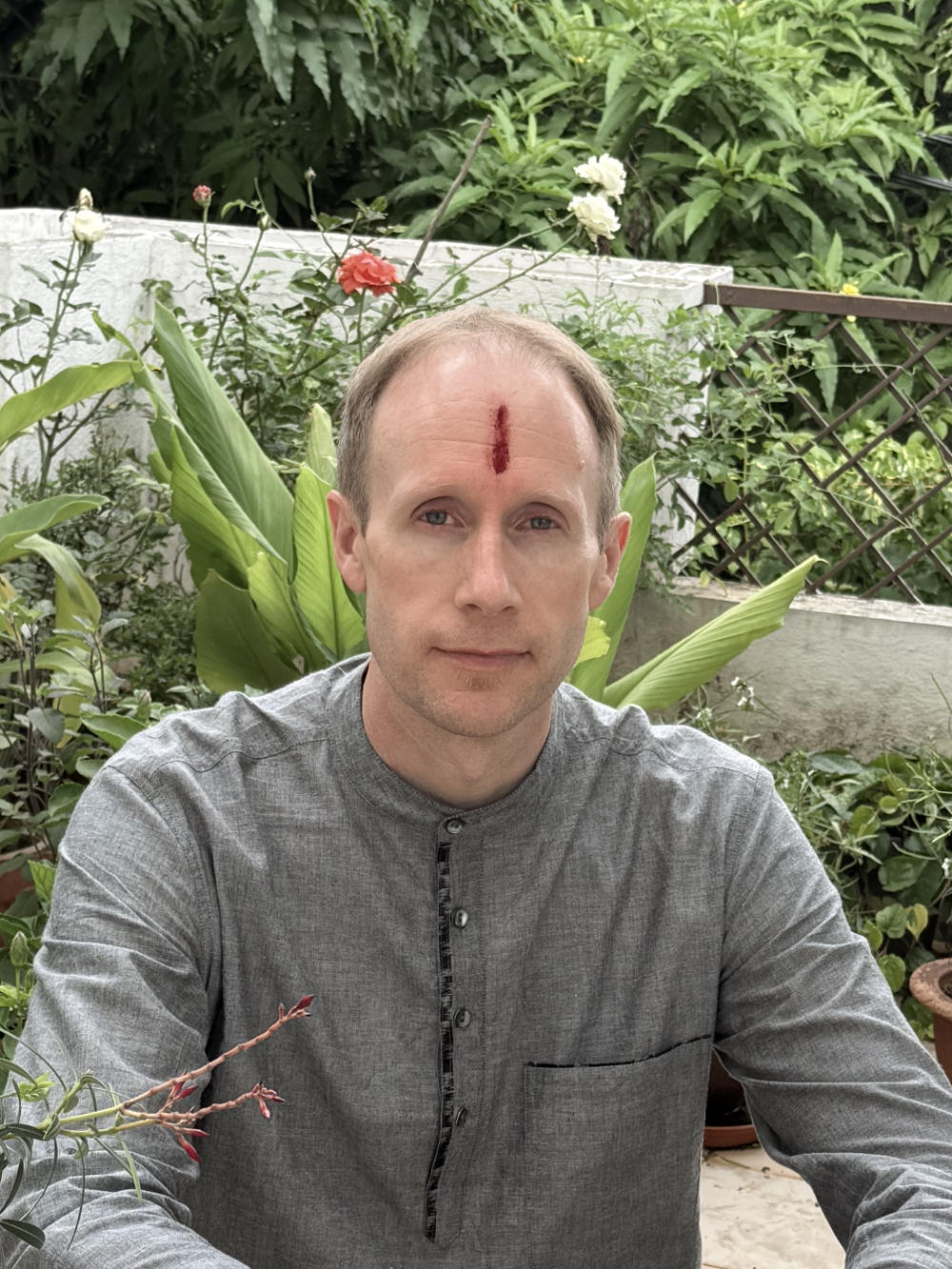
[00:00:45] Speaker B: All right, Gina. Well, interesting guest today on Yoga Scution. We're joined by Michael McCauley, who's an author and former creative writing professor at Northwestern University and also a longtime yoga practitioner and teacher. And he's going to be talking to us a little bit today about, you know, his history, but also his latest book, Walking Chicago's coast, which chronicles an urban pilgrimage from his doorstep to the Indian or the Indiana dunes. And it's kind of like part memoir, part environmental witness, and part like walking meditation, kind of looking at and reflecting on truly where, you know, one lives, you know, maybe from moment to moment. And he's just got a really interesting life story. And his first book that was titled the After Death Room, apparently won a Lambda Award for best spiritual writing and traces his journey teaching yoga to people living with HIV across a bunch of different countries, continents, like in Africa, Asia and the US and he's writing another book again that should come out in the future. So we're looking forward to having a yoga discussion with him.
[00:01:59] Speaker A: Yeah, this is going to be a great one.
[00:02:01] Speaker B: Yeah.
[00:02:02] Speaker C: Hey.
Yes. There you are.
I missed. No, not Mr. Tech, I'll tell you. Oh, man.
[00:02:12] Speaker B: That's.
[00:02:12] Speaker C: All right. Oh, I'm so sorry.
[00:02:15] Speaker B: No, no, no, it's. Glad you could be here. So if you could just tell us a little bit about, like, how you came to yoga and kind of how that experience may be informed, your writing career and how you came to these experiences bringing yoga to people around the world. I'm in your first book, the one that won the award, and also this most recent book about, like, the 63 mile pilgrimage right around Lake Michigan and the Chicago area.
[00:02:43] Speaker C: Okay, sure. Yeah, I'll go for it. You know, I, I guess my entry into sort of Eastern practices started in high school with Transcendental meditation. And I was sort of very much attracted to this woman, you know, who was a senior and I was a junior. And she was, you know, very interested in, into Transcendental meditation. We're talking about 1975. Okay. And I, you know, followed her into a DM session. And then meditation became really important to me and, and open this, this world of mindfulness.
And I was an athlete. My father was, was a coach.
So the whole idea of the body and the physicality, I played football and basketball in high school, so the body was very important to me. But I think the place where it really opened up for me was I studied. I was studying in divinity school at Chicago.
And, you know, I was.
It was very theoretical and very academic, and I began to be more interested in just the actual practice of spiritual work.
And then, you know, I be. I began to do some yoga, but then I contracted hiv, and that was where yoga really became.
I mean, I literally clung to the mat and was. In 1996, the medications were not available yet, so I was facing possible death. And there was a great deal of turmoil about dealing with this, you know, telling people. I mean, it was difficult, but the yoga that I was already practicing really gave me agency. You know, I had something to.
To work with my body, the practice, a community, which was so helpful to me, and a. You know, went to all kinds of workshops and classes, and my practice became a way of life, and it needed to be. And I think many people with chronic diseases have come to yoga for a way to confront the mortality and the body is speaking to us.
And so this language of yoga enabled me to pay attention to care, to not run away from my body and the disease, but to enter into it. And that was really a way in. And then I had some good teachers who were very helpful as well. And I remember going to a clinic where I went, and they. I just asked my doctor, I said, well, you know, is anyone teaching yoga here? And. And they said, no, why don't you? And he knew that I was starting, that I. I was doing a little bit of teaching, and suddenly I was teaching a class with people with HIV and breast cancer and. And various other chronic diseases.
I loved doing it, and I loved to be around people like me who needed this. Needed this practice, needed the mindfulness element of it as well. I mean, it was, as we know, it's both paying deep attention to the body and also paying attention to the way the mind is operating and the emotions.
And yoga just is just, you know, it's an incredible practice to teach us about our bodies, our minds, our emotions, and our spiritual life, which also, of course, was something that I needed, is to have this way in to cultivate an awareness of my bigger self. And I think, you know, teaching was a way that my spiritual life began to unfold.
And then I, as a writer, I. I felt like I should write about this. And I had been in the Peace Corps, and so I knew that the situation in Africa was dire because of public health needs there. I watched all kinds of very troubling things when I was there, and I just knew the way in which the virus was spreading that I should go do some reporting. So I went to South Africa at the AIDS conference in 2000, which was a kind of important moment in the history of HIV and aids because for the first time a conference went to the Southern hemisphere, to the, to the global south. And of course South Africa had an incredible problem with hiv. It was spreading so rapidly.
And, and of course Nelson Mandela was the president. Then he came to the conference and gave this, oh, heart rendering speech because his own son had hiv.
And he said something like, we all are living with hiv.
And you know, I mean, I was crying. Everyone around me is crying.
But at the conference, my way in was, was I taught yoga.
So I had these workshops for, you know, all kinds of people, nurses and doctors and, and activists, some people with HIV and other people who were part of the, the healthcare world and they were from everywhere. It was just. I loved it and it was jammed and they said, can you do another class? Because we have so many people that want to do this.
And so I did another class and, and then I was there for a month or more and doing workshops with various groups of people and it, you know, I just, that, that's, that was seminal for me. And, and then I came back and then I went to Thailand and India and Vietnam. It's nothing like teaching yoga in India to, you know, to, to like social workers. I, I mean, I had this, you know, thing. And then I also taught yoga with, with some young men who were sex workers, but they were also activists because they were going out and handing out condoms and things. And, and so it was the sweetest thing because they, when I spoke whatever little Sanskrit that I, that I knew, you know, Surya, Namaskar, whatever, they would go, they would start giggling, you know, you know, they light up.
And yeah, it was like on a, like a concrete floor, there was no mats and it was, you know, I think when you teach to people who are really desperate in need of, of, of care, it's transforming because, because, you know, I had the medications eventually, of course, and I would go places and they didn't.
And that was so heartbreaking.
And they. I remember in South Africa, some young man wanted to see the medication and he wanted to look at it, you know, this tiny little pill that enabled me to have a future and, and he didn't, you know.
[00:11:08] Speaker A: Yeah, that must be hard to carry.
[00:11:10] Speaker C: It was, yes. The book really was emotionally difficult to write. And I carried it with me and I remember some therapists and people saying, wow, you're carrying all these people's stories because I interviewed hundreds of people.
And so I just took all this stuff in, but, but yoga enabled me to keep, Keep going, you know, for sure, for sure.
[00:11:36] Speaker B: I was just curious, do you think your yoga practice maybe unlocked this awareness of, you know, like a calling that was maybe kind of moving through you to write this book or do the work internationally?
[00:11:53] Speaker C: Oh, yeah, absolutely. Yeah, absolutely. I mean, as I'm sure you know, you, you want to tell, you, you want to tell people about yoga. You, you, you, you wanna, you look at people as a teacher and you, you see their bodies and you want to just help them, you know, open up their chest. And it's just an awareness that we start to cultivate. And so I had a need to do that, but of course I had some really good teachers.
And so it was, Was a calling and it had a huge effect on my attitude and my fears. And as I said, I think many people with, with, with cancers and other things, when they go into it and they, they, they don't run from it, something happens. And I think that's what yoga sort of teaches us to, to the body and into the way it works.
And, you know, I think that it's not something that's abstract, it's an actual physical. We're becoming aware of the body and of the perception that we begin to develop when we do our practice. And I think that that enables us to have more sense of caring for the body and caring for others. You know, sort of the empathy for the body and then the empathy for others comes out of this practice.
[00:13:27] Speaker B: Yeah, yeah. I think you just touched on that meme or whatever it is, the saying, if it's a cliche or not, I'm not so sure. But, you know, you need to be able to love yourself before you can love others. But I think you just touch on the power of actually what that's all about, right? Like that cultivation and connection to the actual self that allows you to really develop that compassion or empathy for other people. So it really seems like you've struck that chord, Michael.
[00:13:52] Speaker A: Yeah. What I noticed when I was reading through your biography and I downloaded this piece of an article you wrote for Yoga Chicago, the Body as Poet.
And what struck me, really good piece. Wow. What struck me was that in your work with these students who are writing and in your teaching as a writer, and you're teaching as a yoga teacher and in yourself too, like just how you are approaching who you are in this world, there's deep care, there's this sense of coming to the body with care and loving kindness and showing up in a yoga practice in a way that's not performative, that's not based on being perfect, but just showing up to care for the body in all of the ways that it can be a body that maybe is not healthy, but also is healthy and is experiencing a lot. And then, yeah, I just get this deep sense of, like, embodiment of, like, coming in and being fully here. And even in the little bit that I read about walking Chicago's coast, it felt like there was a space where it was like, I need to reconnect to the body, to move it in a way that gets me back here inside.
And I don't know if you could speak a little bit to that and your experience with that as a writing teacher and as a yoga teacher, but that was kind of. Of these threads I saw.
[00:15:22] Speaker C: Oh, yeah, no, thank you. Yeah.
You know, I think I had this opportunity to teach yoga with creative writing, which was. Which was new. I mean, there's been people who've been doing it for a few years, and now, of course, there's a lot more of it. But this was like 15 years, 15 years ago, 10 years ago, something like that.
And I wanted again to kind of. To sort of advocate to students to cultivate this caring of the body because they needed it. I mean, college students and. Oh, God, you know, I really felt for them because they're struggling and. And they're, you know, they're creative people. And sometimes they were.
Their lives as. As artists in high schools, they weren't as accepted sometimes. And you. You could tell they. They were struggling and.
But it. It was a way to. It was a. It was a, you know, kind of a philosophy for them to say, you know, if you want to offer an embodied piece of writing, well, then you have to feel it in your own body.
And you have to begin to know that as. As something that is not an abstract idea, but something that's in you. And so then your writing comes out and you're aware of the sense senses and you're aware of the interactions in a place.
I'm very interested, always in place, because I think, you know, sometimes we students are. They don't have any. They don't say anything about where they are. They're just in a scene doing things. I go, where are you? There is a land, there's a city. There is something there. And that is a kind of an awareness that I think yoga has helped me as well, because I think one of the intelligences of yoga is just that we're connected to a place like we're connected to people.
And so I, I wanted to emphasize that, that, that the reader will re. Will engage. And I'm sure, you know, as readers, when somebody is giving a description of bodies and actions and emotions and sensations, we're kind of there with them. We feel it. Our own body feels it. I mean, people have talked about mirror neurons, you probably have heard that, where if somebody's yawning, suddenly we're responding. So we have this like the bodies speak to each other without, you know, the, without necessarily the, you know, the conscious mind saying, this is what I'm doing.
And so I, I did want to reinforce a sense of care for themselves and then to donate that to, in their writing so that, that was something that they began to care about. And, and for their, like I say, for their, for their own sake. Because I, I feel for them. I mean, I had my own emotional struggles, you know, in college. And so this was healthy. And sometimes, you know, they would just go, can we just do yoga and not do anything else. So they needed it, you know, I mean, yeah, college needs more of that kind of thing, I think, you know, so.
Yeah, yeah.
[00:19:07] Speaker B: And so I'm really curious about this whole experience of going on this 63 mile journey around like Lake Michigan, Michael. Because myself, I've gone through or I participated in, I believe it was a 70, 75 mile bike ride. And that was. Yeah, that was, that was an experience. But this is a walk, you know, for 63 miles. 1. I'm wondering, like, did this idea just come to you? Were you ideating a little bit? Did you have the idea for the novel at the time that you were thinking of doing this or you were planning this out? And also, if you can talk to us a little bit about what the actual experience was like. You know, there's walking exercises sometimes in teacher trainings. Walking meditation is often referenced by both authors and teachers or practitioners. So if you can just kind of wrap that all up for us, that'd be great.
[00:20:00] Speaker C: Yeah, you know, walking has been very important to me for a long time. My parents, we went on camping trips and did all kinds of hiking in Wyoming, in the west, all over the place. And so I was invited into going out into the world and hiking and, and enjoying the natural world. And so, I mean, that's always been there. And then when I was in the Peace Corps, I did a lot of walking. Everybody walks in Africa. And I just, you know, my God, I'D walk six miles to get my mail, and then I would walk to another community where I was working. And I just had so much time to walk and, and it became kind of this, you know, a meditative practice.
And I, you know, so that's where it started. And then I, you know, did more hikes and walks and things like that. And then I went to Great Britain and did some walking there, and I came back to Chicago and I said, wow, if you can walk out of London, you should be able to walk out of Chicago. I, I just felt like I should be able to walk anywhere.
And also did. I worked in a prison with a Zen Buddhist group, a Sangha. And we did the walking meditation.
And that, you know, that sort of was very important to me, that experience. For a year I began to go, you know, walking. We're touching the world. And for these men, the practice of walking, meditation and meditation, my God, it was so important to them, the need to have a practice. And I was very affected by them. And then I just felt like walking. It's a practice. It's a way of being in the world. And of course, with our background with yoga, you know, it was just another way to sort of expand, connecting to the earth and of course, with our environmental issues, and it's a scary time. And I wanted to walk through both areas of the city that have been kind of cut off. You know, as, you know, Chicago is very big, and there are sections of the city that have been left behind and vast sections, and people don't have recreation. And the lakefront, which is very beautiful here, stops on the south side, and people don't have the lakefront. And then there's a big industrial area in Indiana, and it's the pollution and people live around all of this heavy industry. There's a massive British Petroleum refinery. And I wanted to just be there as a witness, you know. And the walking kind of has this. It. It cultivates your. Your. Your perception.
You begin to feel things and see things, and you, you sense history in the land and, you know, I mean, especially over long periods of time. And it's in the city. It's not the beautiful, wonderful, you know, Wind River Range. You know, it's. It is Chicago, and it's gritty and there's tree. You know, there's expressways and there's brown fields and super fun sites and. But I kind of wanted to, you know, to walk through that and, and, and. And take the reader through it. I wanted people to, to recognize that the land is is an extension of us. And again, this caring thing when we walk, we, we care and we walk, you know, with, with a sense of sacredness. I mean, many native people of course, have that sense that they're, they're, they're, they're connecting to the, to the kin, their kin. The land, the animals, the water, the trees. We're all related.
And so in the city, no, no less.
I wanted, you know, again, I wanted to take readers through and give them a sense of, of, of being connected by a simple act of walking out of your apartment. I just walked out of my apartment and I just started walking. But you know, one thing that was interesting about it was, and this is yoga too, is that you set an intention, you know, you begin to say, I'm doing this. You know, you mentioned Brandon about the pilgrimage. I mean, I didn't know if it was a pilgrimage, but I did say I'm going to do this.
And that changed how I saw everything because I said, this is going to be valuable and I'm going to write about it. Suddenly, you know, a few blocks away from my apartment, I was like, wow, I'm looking at things in a totally different way because I set out to do this.
[00:25:21] Speaker B: Yeah, for sure. And you know, comparing a seated, you know, meditation practice on a comfortable cushion in a climate controlled space to a walking meditation, I believe I read that this was in August or you know, hot summertime.
[00:25:40] Speaker C: Yeah.
[00:25:40] Speaker B: These are not exactly the same experience. Right. So what, what, what could a, what could this like walking practice or a walking practice maybe in general teach us about mindfulness that might be harder to access or different than a seated meditation or maybe even an asana practice in a yoga class. Do you think?
[00:26:05] Speaker C: Yeah, that's really a good question. I mean, I think there is literally, I think you can walk in this, this way based on being conscious of how the body works. I mean, opening up the body and pressing the feet down and having a sense of the core.
And not that I was doing that for 63 miles, but there was a sense of, you know, the body being a, being a part.
I mean, having to walk a long distance. You have to walk in a certain way. And I, I think, you know, it's an, be an extension of, of, of, of any practice, yoga practice, because we're in the body, we're conscious of the breath, we're conscious of the rhythms. There's such an incredible rhythm when we walk. You know, I'm, I'm sure you know that and feel it when you do things and you get into a certain state that it's almost or it's natural to us. I mean, we are walkers. That's what our bodies.
I mean, that's what we are as creatures.
Yeah, we walked, I mean, in. In earlier time.
Miles and miles and miles. And so I think our physiology is so connected to the act of walking and the connection to an environment. And I think that. That, you know, that's the extension of yoga too, is that our perception is everywhere. It's not just when we're on the mat. We're outside being conscious, developing our empathy and. And developing our awareness of ourselves as we walk. So. And I've. I've heard other good yoga teachers say to, you know, to classes, I can't remember the guy's name. Maybe it was Richard Freeman or I think, who was talking about, wow, people need to walk.
Because it's such a good thing to augment your yoga, you know, kind of strict. Got to do the poses just right. And this is a way to move with a kind of moving asana, you know, and you're still aware of your body and your core and the world and touching the earth.
I mean, I'm a part of a sangha, and we do have a walking meditation, and I'm conscious of just one step, another step, and every time it's a step and a touching of the earth. But again, you know, as we know, you have to cultivate that patience and that focus.
It's hard to sustain it.
And that's part of the journey we're all on with our yoga practices.
[00:29:07] Speaker A: I wrote down some things as you were talking, especially when you were talking about moving through the landscape of Chicago and how there's superfund sites and all of this industrialization and parts of Chicago that's been left behind.
Something that came in. This isn't necessarily a question, but maybe you could speak to it a bit. Is that landscape as part of the human psyche?
As you were talking, I was thinking like, oh, wow, that's so interesting how here's this once beautiful landscape that's been kind of destroyed by industrialization.
And then also the way as humans, we kind of have these ideas that, oh, we should be productive, we should be doing all this stuff, but we're not necessarily bringing. Again, coming back to the care.
We're not bringing that care in.
When we miss out on the care, whether we're a landscape or a human mind or body, we can fall into like, you know, a mental superfund. And I don't know if that occurred to You. While you were, like, walking or while you were writing this. But if.
How does that land with you?
[00:30:19] Speaker C: That's very perceptive. Yeah, that's great. Mental superfund.
I love that.
I agree.
I mean, we can destroy ourselves because of patterns of thinking and not being conscious of how our bodies are really sacred.
And, you know, we use it to do, you know, the things that our ego wants us to do, and we've got to do this and make money and do that. And some of the ideas that we have about.
About interactions with people are sort of superficial. They're, you know, they're. They're not. They're not embodied again, you know. So, yeah, I think, you know, I think the land teaches us things about how to be and how to care.
Again, Native people have. Have that deep history and awareness that they have sustained, and they. They. They honor, you know. Honor. That's a good word. They kind of have this sense of. Of. Of.
Of awe about the history of the land around you. And of course, where you, You. You are. It's so dramatic. And, you know, you go, oh, my. The mountains and this is incredible.
But in the Midwest, you're gonna go, oh, well. And that's something that. The Midwest is a problem because we've manipulated the land completely.
I mean, someplace like Illinois or Indiana, 99% of every acre has been altered by human beings. And I think that affects us because we have this sense of power over everything. Like, we're in control work. And it's like, no, we're really not. We're just a part of the ecology. But that has, as you say, Jen, that's affected our sense of.
Of relationship.
[00:32:34] Speaker A: And yet I do want to point out, because you have a very beautiful path to walk, and you've been walking it. And I want to point out that you're bringing honor to these places that have been sullied, destroyed, broken. You know, whether it's human spirit, like in people who have contracted HIV and are like, oh, my God, my mortality is right in my face. And you're like, I'm bringing honor to this, but also to the landscape too. Like, that's what I see as. Or that's what is coming up in my.
In my thought process as I'm listening to you talk is that you are bringing honor back to these places. And that's a really beautiful work to.
[00:33:15] Speaker C: Well, thank you. I mean, I think it's an extension of the spiritual practice as the sacred.
Everything is the sacred.
[00:33:26] Speaker A: You know, I mean, the Superfund site is still sacred.
[00:33:30] Speaker C: It is still sacred.
I remember walking through a section of it, and I did have that feeling.
This is like such a degraded area.
But again, I mean, I thought this is. This walk is. Is probably the most powerful walk that I've ever taken. And I've been to Grand Canyon, and I've walked in Patagonia and South America and Europe and Camino, Santiago, and all over the west. And, you know, I lived in Seattle. I've walked a lot of beautiful places, and I.
This was the most transformative walk I ever made because, again, it was, you know, and I guess my own brokenness, too, was connected to some of these places. I identified with them in a way. I also grew up in a factory town in Indiana, and it has fallen. And so I have a, you know, a sadness about my hometown. And there's sections of Chicago and Indiana where these parts of America have been left behind. And I think they're all over America, little towns that were vibrant and now people have abandoned them. And people don't have a sense that they're in the middle of everything and they're in the big city and things, they're just forgotten.
I think that's part a lot of our problems is that we have disconnected lots of people from a sense of being a part of the rest, of the moving and shaking and the energy of America, you know, so.
But yeah.
[00:35:19] Speaker B: Yeah. Michael, I'm curious. Was there, like a conscious or intentional thread or through line between teaching yoga to people facing hardship or even facing death and walking through or around Chicago facing all the different forms of kind of like this slow death or decay, or maybe even some of the, like, the positive aspects, you know, in both of these. You know, earlier in the conversation, you were touching about how you saw these smiles, you know, in people who are going through a hard trip. And I'm assuming that even during this walk, even though you were observing a lot of, if you want to use the word, like negative impacted areas, but there was obviously some positivity there. Could you maybe speak to that a little bit?
[00:36:08] Speaker C: Yeah, I met a few people on my walk.
Not enough. I mean, if I would do it again, I would spend more time and kind of use the walking in the state that I was in to kind of, like, connect to some more people and go in and talk to people, because I was in an attitude of being aware of the, you know, of bridges and buildings and the land and.
But I was kind of rushing through in a way because I wasn't sure I was going to make it. I thought you know, I've got to keep going. But I did meet some people, and they were really excited about what I was doing, and I thought, wow, you know, they really are cheerleaders in a way for this. There was a African guy who was always African.
He's from Ivory coast, and. And he actually is from my own neighborhood, but he was way out there, and, and he actually saved me because I, I got lost in one section because it was dark, and, And.
And we just had this really great conversation.
And then he was talking about the land in Africa and it was polluted and oil and all kinds of problems. And.
And it was just. We had this connection, and it was like, wow, is it because I've been walking or what was it? And then another woman who was working at a hotel where I stayed, and I had. Initially, when I first started the walk, I, I kind of went and took a little drive to see where I was going to walk, and then I, you know, kind of went to this hotel. Actually, it was a casino. Actually, it was a casino that Trump built years ago, I'm sorry to say.
And.
And anyway, there was a hotel, and I put my credit card down and I said, well, you know, I'm. I'm. I'm. I'm coming. I'll be coming here because I'm, you know, I'm gonna walk. I'm gonna walk here. And she said, oh, my God, you're gonna walk here. And so when I came back the second time, she said, oh, you made it. You know, and, you know, she was so excited, and it. I was very emotional because she was the only person, because I didn't tell anybody. I don't know why I didn't tell anybody I was doing this. So she was the only person that knew that I had done this, you know, and.
And then I met some other younger people at a restaurant in Gary, Indiana. And.
And then, you know, I, Yeah, I met some people along the way, and that. That was.
That was really, you know, there was some warmth about.
About interacting with people.
And.
Yeah, I think that's. That. That. That's what I sensed. But. But I think that the. The yoga practice, you know, has.
Has reminded me that, you know, it. The yoga, you know, extends outward, you know, into the social world.
And I think that was something I wanted to. To, you know, to emphasize when I was out there was that, you know, all these people are a part of this, and, and they are doing their work and living. And, you know, you. There would be some area of a city that was really, you know, a fallen part of a town. I mean, Gary, Indiana is really a struggling town. But then there's this wonderful little garden and somebody's cultivating all, you know, these roses and this and that. And it's just like this beauty in the middle of, of struggle and, and, and this and, and degradation and it's, it's very inspiring when you see these little acts of beauty. Sometimes I, I actually noticed in people's windows little displays, you know what I mean? Sometimes you're just not paying attention, but if you walk for a long time, you kind of go, oh, somebody has done their yard just like this. Or they, they put all these things in their window, you know, and I thought, wow, these little artistic efforts, you
[00:40:29] Speaker A: know, like those things that you wouldn't maybe see if you were driving, right. It's like, it's almost like the act of walking is its own form of awareness, right? Because you are moving through a landscape at a very different speed than most Americans or most modern people are used to.
And so it brings a totally different level of awareness into it to where you can see beauty and degradation. Whereas if you were in a fast moving car, you might look out and be like, my God, this is terrifying or horrible or awful. And you miss the garden and you miss the little shrines and the windows and you miss the humanness of this landscape that maybe feels devoid of life or nature or those qualities that we think of being associated with.
[00:41:19] Speaker C: Yeah, absolutely. And then I'm somebody who really likes birds. And here we're cranes and right next to the, you know, right next to this awful sort of scrap yard and, and you know, various kinds of birds that, you know, they're there, you know, and in fact in some places in, in Gary, Indiana, they have 30 year old trees that have grown up out of abandoned lots and, and there is bird nests and nature's coming back. I mean, nature will, you know, when we're gone, it's just like, yeah, oh, humans were here for a flash, you know, and you know, so it's crane
[00:42:03] Speaker A: season here and I was walking my dog the other day and I, these three cranes flew over and then last night they flew over again. Sandhill cranes are my sandhill.
[00:42:12] Speaker C: Yeah.
[00:42:13] Speaker A: Oh my gosh, they're the most amazing birds. They're so prehistoric. And I just had this thought, I was like, for millennia these birds have been flying over this area, right.
As a giant species, you know, and like I'm so small, I'm so little and I'm so short lived and these birds have spanned such a long time.
[00:42:37] Speaker C: Yeah.
[00:42:37] Speaker A: And it just, I don't know, there was just such a nugget of appreciation there.
[00:42:41] Speaker C: Oh, God, yeah.
[00:42:42] Speaker B: That's our, that's arguably the best thing to do in Nebraska. And I lived in Nebraska for a time. You know, if you ever have the opportun to go to, what is it, Kearney, I think, or middle Nebraska and see those cranes doing their thing either at sunset or sunrise, that can be a very powerful experience.
[00:43:01] Speaker C: Oh, yeah.
[00:43:02] Speaker B: Amidst, you know, what is probably thousands and thousands of, of birds.
[00:43:06] Speaker C: Oh, yeah.
[00:43:07] Speaker B: Either flying into the sky from the ground or landing on the ground, like sky. But there's definitely like a continuous thread through all this that we've been touching on. Michael. But I'm kind of curious, like, you've had such an amazing life and yoga's been a part of it. I'm curious where you are at now. Like, either within your own practice. Are you still teaching? What does all that look like now?
[00:43:30] Speaker C: Michael? Yeah, yeah, I, I, you know, I teach a little class actually on Fridays today, you know, in my building, you know, in my apartment building, and some people in the building and some people in the neighborhood and, you know, it's just a few people, uh, I mean, I have to teach, you know, still, I, I, the teaching kind of began to fade a little bit about 10 years ago because I was teaching university and I was writing and, you know, my experience of yoga was the original 90s, where people did a little bit here and there and it was little bits and pieces. Nobody was a professional yoga teacher. A few, some of the, you know, really accomplished, but most everybody was just bits and pieces and they did all these other things. There were hardly any studios in Chicago. And, and so I, I always just said, well, I'm teaching and writing too. But as time has gone on, of course it is professionalized and people, that is their work.
They are a teacher at a studio and they do workshops and teacher trainings. And I remember that it was like, are you going to completely devote yourself to that or are you going to keep the writing and the teaching? And I said, yeah. And I realized I want to be the very devoted teacher and learn more about physiology and do everything.
I never, you know, of course the people in the 90s, they, there was no teacher training. You went to all these workshops of, you know, Richard Freeman and go to India with Patabi Joyce and stuff like that. You, you, you, you didn't have a teacher training. You just work with people. But I think that at that point I, I Said you. You've got to make a choice. So you teach one or two classes to keep things going and then write. But it was hard because I'm sorry. I was sorry that I couldn't. Couldn't do. Another thing happened is that I. I took care of my mother with Alzheimer's, and that was a big change, too. And I left Chicago, and so I sort of lost the kind of situation of teaching the two or three classes and then even my teaching in university sort of. You know, I sacrificed that because I. My mother, I. I just had to help out. I had to help out my sisters. And then she lived on for, like, three years. I thought she was gonna live for six months. She lived for four years.
[00:46:13] Speaker B: Yeah. Yeah. Never really.
[00:46:15] Speaker C: And there's the caring thing, too. I just felt like I had to care. And it was an amazing experience to take care of your mother. I mean, I don't have children, so it was a way for me to have that experience of feeding and cleaning and everything. I mean, it was an incredible, very.
And very powerful feeling. It was like a lesson that my mother gave me was to do that. I mean, it can be very difficult. Many people care for their parents, and it's painful and it's hard, and they can't because they have the job.
But I felt like I could because I, you know, I'm single, and I thought, well, I'll. I'll go there. And. And so that kind of changed my yoga practice a little bit. But I'm. You know, my practice is going, and I'm a part of a sangha that I really is really important to me. You know, I have a very good teacher, Gabriel Halpern, who is a kind of a mentor. And I. I mean, keep it going and go to a very good friend of mine's class, you know, and he. He lets me come for free. Because these days, you know, Chicago is like $32, you know, I was like, you know, it's kind of hard to do that. It's like, I'll just roll out the mat in my own apartment, you know?
[00:47:34] Speaker B: Yeah.
[00:47:34] Speaker C: But the community. Chicago yoga tax, community is so important.
[00:47:38] Speaker B: Yeah, absolutely. Yeah. And then the last question for you, Michael, if you could describe what yoga is for you in three words.
[00:47:49] Speaker C: Three words. Okay.
Wow. I mean, it's a writer. Wow. Yeah, yeah, yeah.
Yoga is care, I guess.
[00:48:03] Speaker B: Yeah, I love that, actually.
[00:48:04] Speaker C: Yeah. Yeah, yeah, yeah, yeah, yeah, yeah.
[00:48:08] Speaker B: Well, thank you, Mike.
[00:48:10] Speaker C: Yeah, yeah.
[00:48:10] Speaker B: Joining us for a yoga discussion.
[00:48:12] Speaker C: Thank you, guys. Yeah. I mean, it's been great, great questions great interaction, conversation. Good luck. And I appreciate what you're doing. It's really helpful to have these, these things and think about these, how yoga works for everyone.
[00:48:30] Speaker B: Yeah, we appreciate that. We appreciate that.
[00:48:32] Speaker A: Yeah. Bringing yoga to people who need it and showing them that there's a different way to care for themselves that isn't like, based in some kind of consumeristic, capitalistic extractive system, you know, like I know it. It shows that you care deeply for the, for your students and for yoga and yourself. And I think that's really beautiful. It's a beautiful model to put forward for people.
[00:48:56] Speaker C: Thank you. Thank you.
[00:48:59] Speaker B: Want to get early access to ad free episodes of the entire growing yoga discussion archive as well as live recordings? Want to submit comments and questions to the guests and the host?
You can join the yoga discussion circle and receive a link to join each yoga discussion episode as it's recorded. During the recording, you will have the chance to ask questions and participate in the yoga scution yourself.
Feel good about being a sustaining member of the show while also joining the yoga discussion with us.
Thanks for listening and we look forward to you joining the yoga discussion soon.
[00:49:35] Speaker C: Sam.